
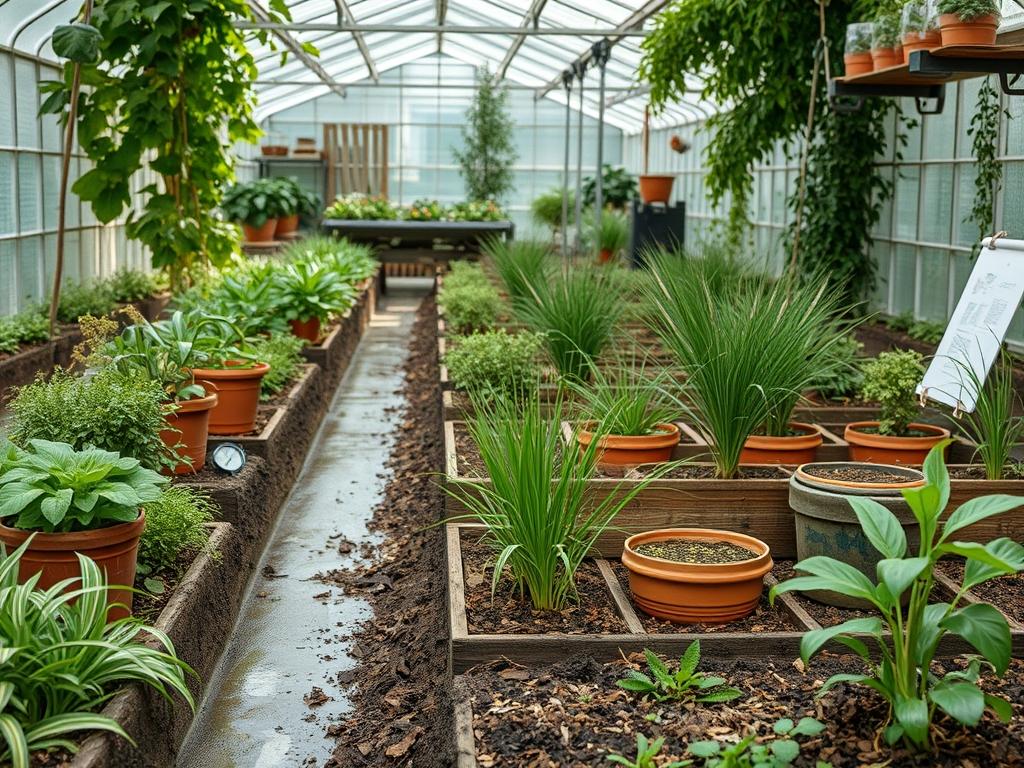
The traditional residential landscape is undergoing a significant architectural shift as homeowners transition away from purely ornamental turf toward functional, aesthetically striking micro-meadows. Ancient grain cultivation has emerged as a primary driver in this movement, offering a unique fusion of structural verticality and ecological resilience. From a design perspective, grains provide a sensory experience that standard groundcovers cannot match; they offer movement in the wind, a changing color palette throughout the seasons, and a sophisticated texture that complements modern hardscaping. Incorporating these crops requires a deep understanding of site orientation, microclimates, and soil mechanics. Unlike modern hybrid wheat, many ancient varieties are deep-rooted and drought-tolerant, making them ideal candidates for low-water landscaping schemes. By treating these crops as architectural elements rather than just agricultural products, designers can solve common site challenges such as erosion on slopes or the need for seasonal privacy screens.
Integrating grain into a residential plan also addresses the growing demand for sustainable outdoor environments. As climate patterns become more unpredictable, the use of Einkorn, Emmer, and Sorghum provides a hardy alternative to water-intensive fescue lawns. These plants thrive in varied conditions and often require fewer synthetic inputs, which aligns with modern organic land care standards. Furthermore, the transition of these grains from green shoots to golden stalks provides a rhythmic visual progression that enhances a property’s curb appeal year-round. When planned correctly, a small-scale grain plot acts as a focal point that anchors the garden, providing a sense of place and a connection to historical land use patterns. This shift is not merely about food production; it is about creating a multi-sensory landscape that prioritizes biodiversity and structural interest.
Landscape Design Principles
Successful grain integration relies on the same fundamental principles used in high-end perennial borders. Symmetry and visual balance are achieved by using grains as a backdrop for lower-growing shrubs or as a repeating vertical element throughout a broad meadow. For instance, planting Pearl Millet in rhythmic clusters can create a sense of formal repetition that guides the eye toward a focal point, such as a water feature or a piece of outdoor sculpture. Elevation layers are equally important. Because many ancient grains reach heights of 3 feet to 5 feet, they should be positioned in the rear of a planting bed or used in the center of an island bed to ensure they do not obscure smaller specimen plants.
Irrigation planning is critical when designing these spaces. While many ancient grains are drought-resistant, they require consistent moisture during the germination and tillering phases. Utilizing Drip Irrigation systems buried 2 inches below the soil surface ensures that water reaches the root zone without wetting the foliage, which reduces the risk of fungal pathogens. Walkways should be designed to weave through or alongside grain plots to allow homeowners to experience the texture and sound of the crop. Using Crushed Granite or Flagstone for these paths provides a hard-edged contrast to the soft, flowing nature of the grain stalks. This juxtaposition of “hard” and “soft” elements is a hallmark of professional landscape architecture.
Plant and Material Selection
The selection of specific grains must be dictated by the local environment and the desired aesthetic outcome. The following table outlines the technical requirements for common ancient varieties used in modern landscape design.
| Plant Type | Sun Exposure | Soil Needs | Water Demand | Growth Speed | Maintenance Level |
| :— | :— | :— | :— | :— | :— |
| Einkorn Wheat | Full Sun | Well-drained Loam | Low to Moderate | Moderate | Medium |
| Amaranth | Full Sun | Rich, Well-drained | Moderate | Fast | Low |
| Black Barley | Full Sun | Neutral pH | Low | Fast | Medium |
| Buckwheat | Full Sun/Part Shade | Poor to Average | Moderate | Very Fast | Very Low |
| Sorghum | Full Sun | Deep, Sandy Loam | Very Low | Moderate | Low |
| Spelt | Full Sun | Clay/Heavy Loam | Moderate | Slow | Medium |
When selecting materials for the surrounding environment, focus on natural textures. Steel Edging provides a crisp, modern boundary that prevents grain seeds from migrating into adjacent mulch beds. For mulch, use Pine Straw or Fine-shredded Hardwood to maintain soil moisture during the establishment phase. These materials blend seamlessly with the organic aesthetic of the grain.
Implementation Strategy
The implementation of an ancient grain plot begins with meticulous site preparation. Proper Grading is the first step; the area must be leveled or slightly pitched to ensure that water does not pool at the base of the stalks, which can lead to root rot. If the site has heavy clay, incorporate Expanded Shale or Coarse Sand to a depth of 6 inches to improve aeration. Once the grade is established, use a Rototiller or a Broadfork to loosen the soil without destroying the delicate soil structure.
The layout should be marked using Surveyor’s Tape or Landscaping Paint to visualize the flow of the beds. For a meadow effect, broadcast seeds at a rate of 3 pounds per 1,000 square feet, ensuring even distribution. If a more structured look is desired, plant in rows spaced 8 inches apart using a Hand Seeder. After sowing, the seeds should be covered with a light layer of Topsoil or Compost no deeper than 1 inch. To define the space, install Natural Stone Retaining Walls if there is an elevation change, or use Cedar Timbers for a more rustic, tiered effect. Finally, apply a 1 inch layer of light mulch to suppress weeds while the grain establishes its canopy.
Common Landscaping Failures
One of the most frequent errors in grain cultivation is improper spacing, which leads to poor air circulation. Overcrowded stalks compete for nutrients and are more susceptible to lodging, a condition where the plants fall over due to wind or heavy rain. To prevent this, adhere strictly to recommended seeding rates and thin the plants if they appear too dense after the first 4 weeks of growth. Soil compaction is another significant hurdle. If the ground is too hard, the deep taproots of grains like Sorghum cannot penetrate the subsoil, resulting in stunted growth and poor stability.
Irrigation inefficiencies often sabotage an otherwise perfect design. Over-watering in the late stages of growth can cause the grains to mold or sprout prematurely on the stalk. Conversely, failing to provide enough water during the flowering stage will result in thin, unattractive heads. Drainage mistakes are also common; if the grain bed is located at the bottom of a slope without a French Drain or a Dry Well, the roots will suffocate during heavy rain events. Professional designers always account for the “exit strategy” of water on the site before a single seed is planted.
Seasonal Maintenance
Managing an ancient grain landscape requires a shift in seasonal routines. In the Spring, the focus is on soil preparation and early weed suppression. Apply a balanced Organic Fertilizer before planting to provide a steady release of nutrients. As the weather warms into Summer, the primary task is monitoring for pests and managing irrigation levels. This is the period of peak aesthetic value, where the grains reach their full height and transition through various shades of green and gold.
In the Autumn, the harvest serves as a functional replacement for the final mow of the season. Once the grain is dry, use a Sickle or Scythe to cut the stalks, leaving about 3 inches of stubble to protect the soil surface. This organic matter can be left to decompose or collected for aesthetic arrangements. During Winter, the empty beds can be planted with a cover crop like Crimson Clover to fix nitrogen and prevent erosion. Keeping the stalks standing through early winter can also provide essential habitat for beneficial birds and insects, adding an ecological layer to the landscape’s winter interest.
Professional Landscaping FAQ
Can ancient grains grow in small urban raised beds?
Yes, grains like Amaranth and Buckwheat thrive in raised beds. Ensure the soil depth is at least 12 inches to accommodate root systems. Use Organic Potting Mix amended with Perlite to maintain the necessary drainage and aeration for stalk stability.
How do I prevent grain stalks from falling over?
Ensure the site receives full sun to prevent “leggy” growth. Select shorter varieties like Einkorn for windy areas. Proper spacing and avoiding excessive nitrogen fertilizer also strengthen the stalks, while Steel Edging helps provide a structural perimeter for the planting.
Are ancient grains invasive in a typical garden?
Most grains are annuals and do not behave invasively. However, if heads are left to drop seeds, volunteer plants may appear next season. Use a Stirrup Hoe to easily manage unwanted sprouts in the spring before they establish deep roots.
Do ancient grains require specific soil pH levels?
Most ancient varieties prefer a neutral pH between 6.0 and 7.0. Test your soil using a Digital pH Meter before planting. If the soil is too acidic, apply Dolomitic Lime; if too alkaline, incorporate Elemental Sulfur to balance the chemistry.
What is the best way to integrate grains with perennials?
Use grains as a textural contrast to broad-leafed plants like Hostas or Hydrangeas. The fine texture of Barley or Wheat creates a soft veil that softens the heavy appearance of large-leafed species, providing a sophisticated, multi-layered aesthetic to the border.