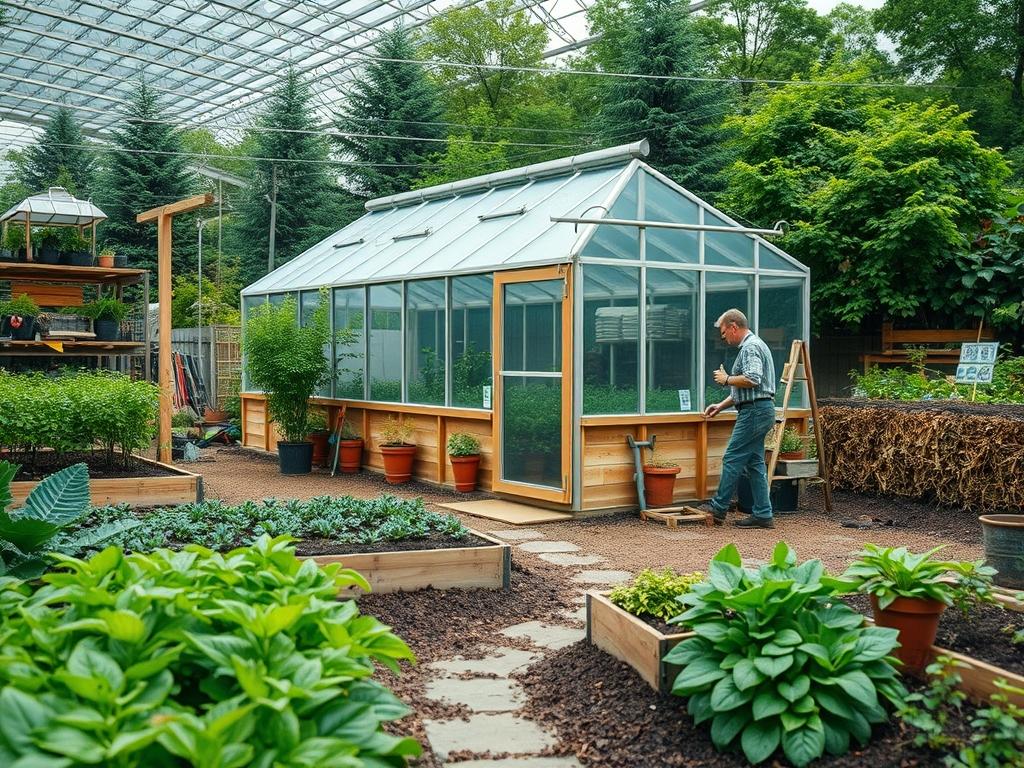
Designing a high-performance landscape for passive solar greenhouses requires a departure from traditional aesthetic gardening. It demands a sophisticated understanding of how solar geometry interacts with the living environment. A well-placed greenhouse serves as more than just a season extender; it acts as a thermal battery for the entire property. As landscape architects, we must consider the microclimate created by both the shadows of the structure and the intense reflections from its glazing. Curb appeal is a frequent concern for homeowners, as the large, south-facing glass surfaces can appear industrial if they are not softened by intentional perimeter plantings and thoughtful grading. The ultimate goal is to blend high-performance glass and thermal mass masonry with organic curves, functional walkways, and resilient outdoor living spaces that complement the home’s architecture.
LANDSCAPE DESIGN PRINCIPLES
The primary principle in designing around passive solar greenhouses is the prioritization of solar access over rigid symmetry. Alignment must follow the sun’s path to ensure that the structure receives maximum irradiation during the winter solstice. We often utilize topographic maps to identify the exact elevation where the greenhouse will sit, ensuring it is not shaded by the primary residence or distant ridgelines. While traditional landscaping might place tall trees near a building for privacy, here we must maintain a clear solar window of at least 30 degrees above the southern horizon.
To create visual balance, we employ elevation layers that lead the eye toward the structure without obstructing light. This is achieved by using low-growing groundcovers and perennials in the immediate foreground, followed by mid-sized shrubs on the eastern and western flanks. These flank plantings serve as windbreaks, protecting the greenhouse from convective heat loss during the night. Irrigation planning is equally critical. We design drip irrigation systems that are zoned separately for the interior and the exterior, often integrating rain barrels or cisterns to capture the significant runoff generated by the greenhouse roof.
Walkways should be constructed from materials that offer high durability and low maintenance, such as flagstone, decomposed granite, or pavers. These paths should connect the greenhouse to the kitchen or tool shed, facilitating a seamless workflow. By using darker stones for paths on the south side, we can even provide a small amount of additional exterior thermal gain, helping to melt snow more quickly during the winter months.
PLANT AND MATERIAL SELECTION
| Plant Type | Sun Exposure | Soil Needs | Water Demand | Growth Speed | Maintenance Level |
| :— | :— | :— | :— | :— | :— |
| Purple Coneflower | Full Sun | Loamy/Well-drained | Moderate | Medium | Low |
| Serviceberry | Full Sun/Part Shade | Acidic/Moist | Moderate | Medium | Medium |
| Lavender | Full Sun | Sandy/Gravelly | Low | Fast | Medium |
| Blue Switchgrass | Full Sun | Various | Low | Fast | Very Low |
| Creeping Thyme | Full Sun | Well-drained | Low | Medium | Low |
| Dwarf River Birch | Part Sun/Full Sun | Wet/Clay | High | Fast | Medium |
| Yarrow | Full Sun | Poor/Dry | Very Low | Fast | Low |
IMPLEMENTATION STRATEGY
The implementation phase begins with professional grading to ensure the site is perfectly level for the foundation while sloping away at a 2% grade at the perimeter. This prevents water from pooling against the insulated foundation or the thermal mass wall. Once the site is shaped, we install geotextile fabric beneath all hardscaped areas to prevent weed growth and soil shifting.
Internal and external drainage is managed through the installation of a French drain system. This consists of perforated pipe buried in a trench of 3/4 inch clean stone, which redirects excess water to a lower part of the property or a dedicated rain garden. For the greenhouse floor, we often recommend a base of 6 inches of compacted gravel followed by flagstone set in polymeric sand. This creates a permeable surface that can still provide thermal storage.
Edging is vital for maintaining a clean transition between the greenhouse structure and the lawn. We prefer 1/4 inch steel edging or heavy-duty aluminum to create crisp lines that will not rot or warp. When applying mulch around the exterior, a depth of 3 inches of shredded cedar or pine bark is ideal. Not only does this suppress weeds, but it also regulates soil temperature and moisture for the foundation plantings that help anchor the greenhouse into the landscape.
COMMON LANDSCAPING FAILURES
One of the most frequent mistakes in passive solar greenhouses design is the placement of evergreen trees on the southern side. While they provide excellent year-round privacy, their permanent canopy blocks vital winter sunlight when the greenhouse needs it most. Deciduous trees are a much better choice, as they provide shade in the summer but drop their leaves to allow solar penetration in the winter.
Another common failure is poor ventilation integration. If the landscape plan places tall hedges directly in front of the intake vents, the airflow is restricted, leading to overheating and plant stress inside the structure. We must maintain a clear zone of at least 5 feet around all mechanical and passive vents. Furthermore, soil compaction during the construction process is often overlooked. Heavy machinery can crush the soil structure, leading to poor drainage and an inability for new landscape plants to establish deep root systems. Aeration and the addition of compost and biochar are necessary before any planting begins.
Finally, we often see irrigation inefficiencies where the exterior sprinklers hit the greenhouse glass. This leaves calcium deposits and hard water spots on the glazing, which significantly reduces the light transmission efficiency over time. All exterior irrigation should be kept at ground level using soaker hoses or emitter tubing.
SEASONAL MAINTENANCE
Spring management involves a thorough inspection of the irrigation lines for leaks or winter damage. This is also the time to apply a fresh layer of organic mulch and to prune any deciduous shrubs that may have grown too close to the glazing. We recommend checking the gutters for debris to ensure that the spring rains are properly diverted to the drainage system.
In the summer, the focus shifts to heat management. If the landscape includes shade trees, ensure their health with deep watering. For greenhouses without natural shading, this is when aluminet shade cloths are deployed. We also monitor for pests like aphids or spider mites which can migrate from the outdoor garden into the controlled environment of the greenhouse.
Autumn is the season for preparation. Clear any fallen leaves from the base of the greenhouse to prevent rot and mold. This is the optimal time to plant new native perennials or bulbs that will provide early spring color. Assess the thermal mass components, such as water barrels or concrete walls, ensuring they are clean and unobstructed by interior summer crops.
Winter maintenance is largely centered on snow removal. It is crucial to clear snow away from the base of the glazing so that reflected light can still enter the structure. Use a soft-bristled broom rather than a metal shovel to avoid scratching the glass or polycarbonate panels. Check the sealants and weatherstripping on doors and vents to prevent heat leaks during the coldest nights.
PROFESSIONAL LANDSCAPING FAQ
How does site orientation affect my plant choices?
Plants on the north side of the greenhouse will be in permanent shadow. Use shade-tolerant species like hostas or ferns. The south side requires heat-tolerant, sun-loving plants that can handle the intense light reflections from the glass.
What is the best material for thermal mass?
We recommend poured concrete, rammed earth, or dark masonry bricks. These materials have high density and can absorb significant heat during the day and then slowly release it at night to maintain a stable interior temperature.
Do I need a professional drainage plan?
Yes. Greenhouses have large non-permeable roof surfaces. Without a plan involving swales, catch basins, or French drains, you risk foundation erosion and basement flooding in nearby structures during heavy rain events or rapid snowmelt.
Can I use treated lumber for my garden beds?
Modern ACQ-treated lumber is generally safe, but for organic gardening, we prefer cedar, redwood, or composite materials. These offer longevity without the risk of chemicals leaching into the soil where you grow food.
How far should trees be from the greenhouse?
Large trees should be at a distance equal to their mature height to avoid structural damage from falling branches. Specifically, keep the southern “solar window” clear of any obstruction that exceeds a 30-degree angle from the base of the glazing.