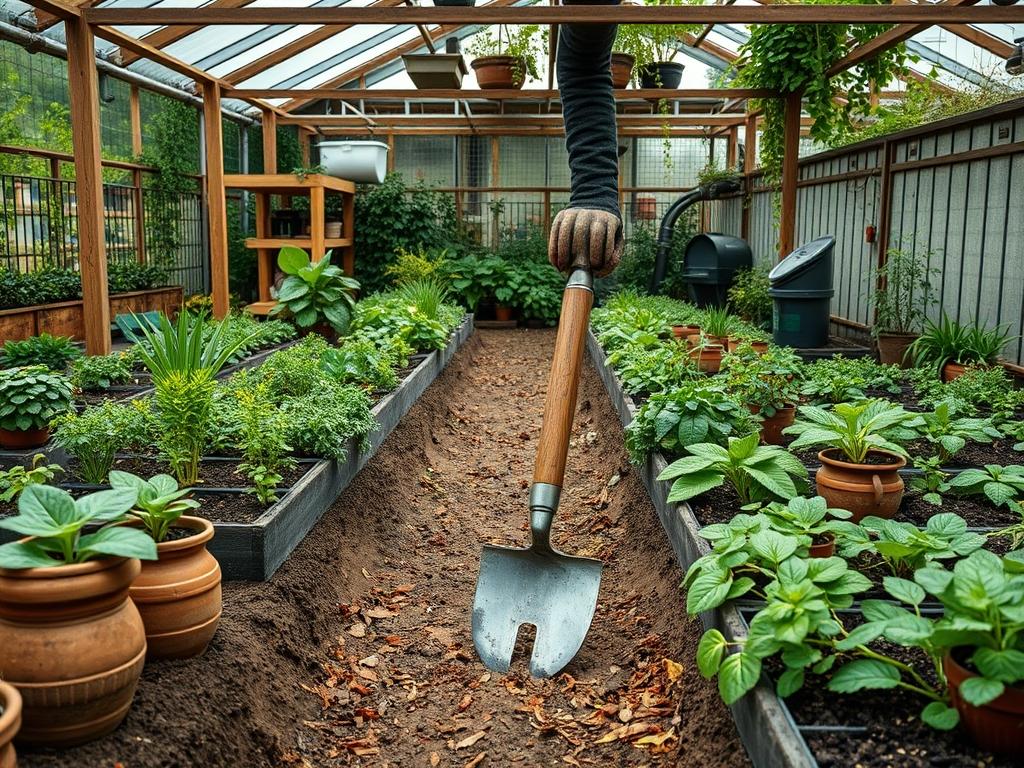
Landscaping in the modern era has become synonymous with the roar of internal combustion engines and the heavy tread of hydraulic machinery. While these tools offer speed and convenience, they frequently come at a significant cost to the long term health of the outdoor environment. As a landscape architect, I have observed a recurring pattern where high end residential projects begin to fail after only five years because the foundational soil structure was pulverized or compacted during the initial installation. This is where the resurgence of Ancestral Hand Tools becomes vital. These implements, ranging from the U-Bar Broadfork to the Hand Mattock, allow for the manipulation of the earth without destroying the delicate macropores and fungal networks that sustain plant life. By prioritizing manual precision over mechanical force, we can create landscapes that not only possess immediate curb appeal but also gain resilience against climate fluctuations and nutrient depletion.
The primary challenge in any landscape design is balancing aesthetic goals with the biological needs of the site. A site with poor drainage or high bulk density will never support a lush, vibrant garden, regardless of how much fertilizer or irrigation is applied. Traditional tools allow the gardener to work with the soil rather than against it. When we use a Broadfork to aerate a planting bed, we are performing deep fracture of the subsoil without inverting the layers. This preserves the aerobic bacteria at the surface and the anaerobic organisms deeper down, maintaining a functional ecosystem that heavy tilling would otherwise erase. This structural integrity is the silent engine behind successful outdoor functionality, ensuring that water infiltrates the root zone rather than pooling on a compacted surface.
Landscape Design Principles
Effective landscape design relies on a marriage of symmetry and organic flow. When planning a site that utilizes manual maintenance, the designer must consider the human scale of the work. Symmetry provides a sense of order and formality near the residence, often achieved through the careful placement of Boxwood Hedges or Stone Plinths. As one moves further from the structural focal points, the design should transition into elevation layers that mimic natural stackings. Using Ancestral Hand Tools like the Scythe or the Hori Hori Knife allows for a more nuanced management of these layers, permitting the designer to tuck sensitive Native Perennials into tight spaces where a machine could never reach.
Focal points are essential for directing the eye and creating a sense of journey within the garden. This might be a solitary Japanese Maple or a hand-carved stone birdbath. To support these features, irrigation planning must be integrated into the initial layout. Rather than relying on invasive trenching machines that tear through existing root systems, hand-dug irrigation lines follow the natural contours of the land, preserving the topography. Walkways should be designed to encourage movement while protecting the planting zones. Using Crushed Granite or Flagstone set in a permeable base allows for visual balance while ensuring that the soil beneath the paths remains somewhat aerated and capable of handling runoff.
Plant and Material Selection
The following table outlines high-performance plants that respond exceptionally well to the soil conditions created by low impact manual cultivation.
| Plant Type | Sun Exposure | Soil Needs | Water Demand | Growth Speed | Maintenance Level |
| :— | :— | :— | :— | :— | :— |
| Purple Coneflower | Full Sun | Well Drained | Low | Moderate | Low |
| Switchgrass | Full / Part Sun | Adaptable | Low | Fast | Low |
| Oakleaf Hydrangea | Part Shade | Rich Organics | Medium | Moderate | Medium |
| Little Bluestem | Full Sun | Sandy / Lean | Very Low | Moderate | Low |
| Creeping Thyme | Full Sun | Gritty / Dry | Low | Fast | Low |
| Hostas | Full Shade | Moist Loam | Medium | Moderate | Medium |
| Serviceberry | Full / Part Sun | Acidic Loam | Medium | Moderate | Low |
Material selection should favor natural, locally sourced elements. Cedar Mulch, applied to a depth of 3 inches, provides an excellent thermal blanket for the soil while breaking down into beneficial organic matter. For retaining walls, Fieldstone or Dry-Stack Limestone is preferred over poured concrete. These gravity-based structures allow for moisture weepage and provide habitats for beneficial insects, further enhancing the ecological value of the property.
Implementation Strategy
The transition from a conceptual drawing to a physical garden requires a disciplined implementation strategy. The process begins with grading. Instead of using a bulldozer which can leave a “dead zone” of compacted clay, a consultant should recommend manual grading using a Landscape Rake and a Pointed Shovel. This ensures that the natural “A” horizon of the soil remains on top. Edging is the next step; a sharp Half-Moon Edger creates a clean, professional line between turf and garden beds that defines the space without the need for plastic or metal barriers.
For drainage, the installation of a French Drain can be done by hand. Digging a trench that is 12 inches wide and 18 inches deep allows for the precise placement of Perforated Pipe and Clean Gravel. Because this is done manually, you can navigate around the roots of established trees, a feat nearly impossible with a backhoe. Once the infrastructure is in place, the planting begins. Each hole should be dug twice as wide as the root ball but no deeper. Using a Hand Trowel to loosen the sides of the hole prevents “glazing,” a common problem in clay soils where the roots cannot penetrate the smooth, hard sides of a machine-dug hole. Finally, a layer of Arborist Chips or Straw is applied to hold moisture and suppress weeds during the establishment phase.
Common Landscaping Failures
The most frequent failure I encounter in the field is severe soil compaction. When heavy equipment drives over wet soil, it collapses the air pockets. This results in an anaerobic environment where roots literally suffocate. Homeowners often mistake this for a lack of water or a need for more fertilizer, when in reality, the soil architecture is broken. Another common mistake is improper spacing. In an attempt to achieve “instant” curb appeal, plants are often placed too close together. Within three years, they begin to compete for light and nutrients, leading to stunted growth or fungal infections due to poor air circulation.
Irrigation inefficiencies are also a major hurdle. Over-reliance on automated spray heads can lead to water waste and surface crusting. Ancestral methods favor deep, infrequent watering at the base of the plant, often facilitated by Ollas (unglazed clay pots buried in the soil) or simple hand-watering with a Long-Necked Can. This encourages the roots to grow downward into the cooler, moister subsoil rather than staying near the surface where they are vulnerable to heat waves. Lastly, the failure to understand the local climate can lead to the “winter kill” of non-native species that were chosen solely for their looks rather than their hardiness.
Seasonal Maintenance
Landscape management is a year round commitment that changes with the tilt of the earth. In the Spring, the focus is on “awakening” the beds. This involves removing winter debris with a Leaf Rake and using a Broadfork to gently lift the soil in vegetable or flower beds. This is the ideal time to apply 1 inch of high quality Compost to provide a slow release of nutrients.
Summer maintenance revolves around moisture retention and weed control. Using a Scuffle Hoe or a Dutch Hoe, a gardener can slice through young weed roots just below the surface with minimal effort. This disturbs the soil much less than hand-pulling large weeds later in the season. Autumn is for preparation and planting. It is the best time to install Deciduous Trees and Spring Bulbs. Deadheading spent blooms with Bypass Shears helps the plant direct energy back into its root system rather than seed production.
In the Winter, chores move toward structural pruning and tool care. Removing crossing or diseased branches from Fruit Trees ensures a healthy canopy for the coming year. This is also when ancestral tools should be cleaned, sharpened with a Whetstone, and oiled with Linseed Oil. Proper tool maintenance is not just about longevity; it is about the quality of the cut. A sharp blade leaves a clean wound on a plant that heals quickly, whereas a dull blade tears the tissue and invites pathogens.
Professional Landscaping FAQ
How do hand tools specifically improve soil structure?
Manual tools like the Broadfork create deep fissures for air and water without flipping the soil. This preserves the existing microbial life and prevents the destruction of soil aggregates, which are essential for nutrient cycling and root penetration.
Is it possible to manage a large estate without heavy machinery?
Yes, though it requires specialized design. By using Permaculture principles and zoning the landscape, the high-maintenance areas are kept close to the home. Further out, low-maintenance meadows managed by occasional Scything replace labor intensive mown turf.
What is the best way to fix compacted soil in an existing lawn?
Avoid power aerators that pull small plugs. Instead, use a Pitchfork or a heavy duty Broadfork to deeply penetrate the turf every 6 inches. Wiggle the tool slightly to create space, then top-dress with fine Compost or Sand.
Which ancestral tool is most versatile for a new gardener?
The Hori Hori Knife is indispensable. It functions as a trowel, a saw, a measuring device for bulb depth, and a weeding tool. Its forged steel construction handles heavy clay and rocky soil better than standardized plastic garden tools.
Why does hand-grading matter for drainage?
Hand-grading allows for micro-adjustments in the slope that machines cannot achieve. By creating subtle Swales and Berms, you can direct rainwater toward thirsty landscape features and away from the foundation, preventing erosion and stagnant pooling.