Designing a forest garden within the confines of a small urban or suburban yard requires a paradigm shift from traditional ornamental landscaping. While standard gardens often focus on aesthetic rows and monocultures, a forest garden mimics the multi-layered structure of a young woodland, maximizing three-dimensional space to produce food, support biodiversity, and create a resilient microclimate. The challenge for many homeowners lies in balancing this ecological complexity with the need for curb appeal and usable outdoor living space. A poorly planned forest garden can quickly devolve into an overgrown thicket that suppresses light and invites pests. However, by applying deliberate architectural principles, one can transform a modest backyard into a high-yielding, low-maintenance sanctuary that serves as both a functional retreat and a biological powerhouse.
The primary goal of this design style is to establish a self-sustaining ecosystem where plants support one another through nutrient cycling and pest management. In a small yard, every square foot must perform multiple duties. We look at the verticality of the site, considering how high-canopy trees might shade lower-story shrubs, while simultaneously evaluating how native plants can provide the necessary biomass to fuel the soil. Drainage and irrigation are also paramount. Small yards often suffer from runoff issues due to compacted soil or neighboring hardscapes. Designing for these conditions ensures that your forest garden survives the transition from a fledgling installation to a mature, thriving environment.
Landscape Design Principles
Successful design begins with understanding the seven layers of a forest garden: the tall tree canopy, the low tree layer, shrubs, the herbaceous layer, the rhizosphere (root zone), the soil surface (groundcovers), and vertical climbers. In a small space, you might omit the tall canopy layer entirely, opting instead for a “mid-sized” canopy of fruit or nut trees that do not exceed 15 feet in height. Symmetry can be achieved through the strategic placement of structural elements like retaining walls and stone pathways, which provide a visual anchor for the more organic, wilder growth of the plants themselves.
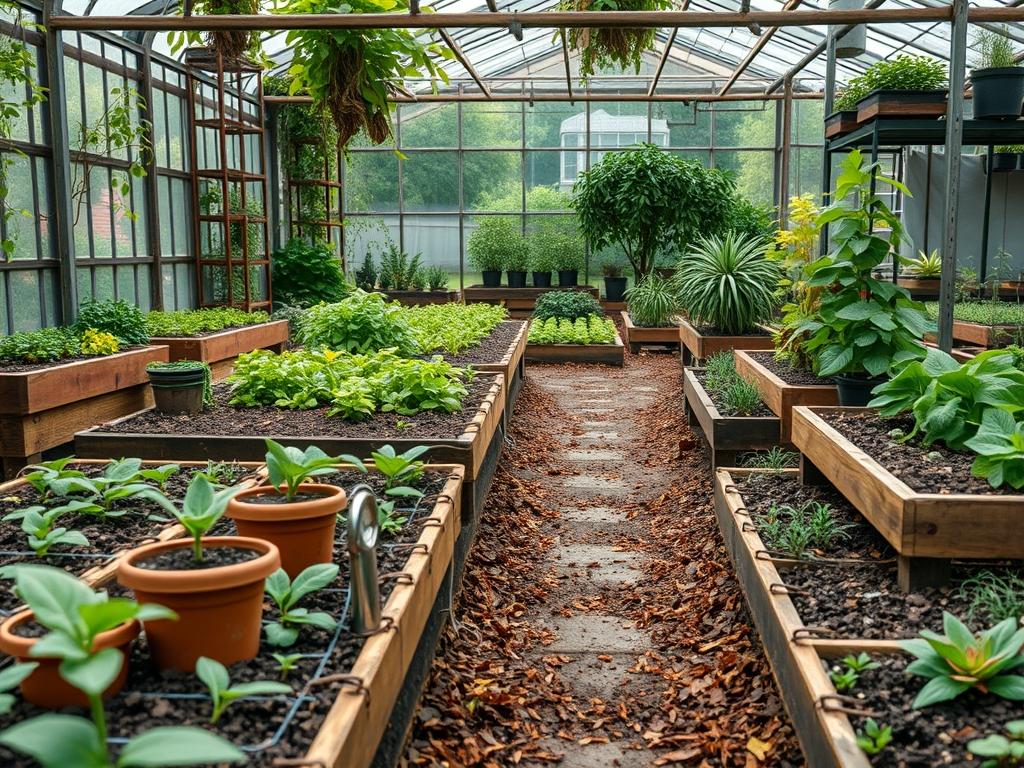
Focal points are essential to prevent the garden from looking cluttered. A high-quality bench, a stone birdbath, or a well-placed specimen tree like a Pawpaw can draw the eye and provide a sense of intentionality. Elevation changes also play a critical role. If your yard is flat, creating small berms or using timber edging to build raised beds can add visual depth. These elevation shifts also assist with drainage. By directing water flow toward swales or rain gardens, you can capture moisture for thirstier species while keeping the root systems of others from becoming waterlogged. Walkways should be wide enough for a wheelbarrow, typically at least 36 inches, and should utilize materials like crushed limestone or shredded bark to allow for natural water infiltration.
Plant and Material Selection
Selecting the right species involves matching the plant’s biological needs with the specific microclimates of your yard. Use the following table to guide your initial selections for a temperate forest garden.
| Plant Type | Sun Exposure | Soil Needs | Water Demand | Growth Speed | Maintenance Level |
| :— | :— | :— | :— | :— | :— |
| Serviceberry | Full to Partial | Well-drained | Moderate | Medium | Low |
| Highbush Blueberry | Full Sun | Acidic/Organic | High | Slow | Moderate |
| Wild Ginger | Full Shade | Moist/Loamy | Medium | Medium | Low |
| Hardy Kiwi Vine | Full Sun | Rich/Humus | High | Fast | High (Pruning) |
| Comfrey | Variable | Deep/Loose | Moderate | Fast | Low |
| Rhubarb | Full Sun | Heavily Manured | High | Medium | Moderate |
| Alpine Strawberry | Partial Shade | Well-drained | Moderate | Medium | Low |
Beyond the flora, the materials used for infrastructure must be durable and non-toxic. Avoid chemically treated lumber when building raised beds or compost bins; instead, opt for cedar, black locust, or natural stone. For irrigation, soaker hoses or drip lines tucked under a thick layer of arborist wood chips will minimize evaporation and ensure water reaches the rhizosphere directly.
Implementation Strategy
The transition from a lawn to a forest garden should follow a logical sequence to ensure long-term stability. Start by performing a site survey to identify sun patterns and existing drainage issues. Once the plan is finalized, the first physical step is often grading. If the site requires it, install french drains or catch basins to manage heavy rainfall. Hardscaping should always precede planting. Laying down pavers, installing irrigation mains, and constructing permanent edging ensures that you do not disturb delicate root systems later.
Once the skeleton of the garden is in place, focus on the soil. Most urban soils are compacted and lack the fungal networks necessary for a forest environment. Rather than tilling, which destroys soil structure, employ sheet mulching. Layer corrugated cardboard over the existing grass to suppress weeds, then add 6 inches of organic compost followed by 4 inches of mulch. This creates a nutrient-dense environment for your plants. When it is time to plant, start with your “anchor” species, the trees and large shrubs. Use a sharpened spade to cut through the mulch and cardboard, ensuring the planting hole is twice as wide as the root ball. As these larger plants establish, gradually fill in the herbaceous and groundcover layers over the next two seasons to create a living mulch that protects the soil surface.
Common Landscaping Failures
The most frequent mistake in small-scale forest gardening is root overcrowding. It is easy to underestimate the mature spread of a tree when it is in a 3-gallon pot. Within five years, poorly spaced trees will compete for light and nutrients, leading to stunted growth and poor fruit production. Always research the mature “drip line” of your species and provide at least 2 feet of buffer space between competing root zones.
Another significant failure is the neglect of drainage. Many designers focus so heavily on the plants that they forget the movement of water. Improper grading can lead to water pooling against a home’s foundation or drowning the roots of sensitive species like Cherries or Hazelnuts. Additionally, many novices rely too heavily on landscape fabric. In a forest garden, we want organic matter to decompose into the soil. Synthetic fabrics create a barrier that prevents earthworms from surfacing and traps methane, which can turn the soil anaerobic and kill beneficial microbes.
Seasonal Maintenance
Maintenance in a forest garden is front-loaded; the first two years require diligent weeding and watering, but as the canopy closes, the system becomes more autonomous. In Spring, the focus is on pruning fruit-bearing species to improve airflow and light penetration. This is also the time to apply a fresh layer of compost and check irrigation emitters for clogs.
Summer brings the need for moisture management. Monitor the soil at a 3-inch depth to ensure it remains damp but not saturated. If you notice wilting, check for hidden leaks or soil hydrophobicity. By Autumn, the goal shifts to biomass accumulation. Leave fallen leaves on the ground; they are the “brown gold” of the forest garden, providing habitat for predatory insects and essential carbon for the soil. Finally, Winter is the season for structural repairs and dormant pruning. Use this time to sharpen your loppers and pruning saws, and inspect retaining walls for any shifting caused by frost heave.
Professional Landscaping FAQ
How do I prevent my forest garden from looking like a mess of weeds?
Use defined steel edging or stone borders to create clean lines. Plant groundcovers in high-density clusters to outcompete weeds and use wood chips to maintain a tidy appearance while the system matures into its natural form.
Can I grow a forest garden in a yard with heavy clay soil?
Yes, but you must focus on aeration and organic matter. Incorporate gypsum to break up clay bonds and use sheet mulching to build topsoil. Avoid digging when wet to prevent further soil compaction.
What are the best trees for a very small forest garden canopy?
Opt for dwarf fruit trees or naturally small species like Elderberry, Fig, or Serviceberry. These provide significant vertical structure without overwhelming the footprint of a small yard or casting too much shade on understory layers.
How much irrigation does a forest garden actually require?
During the establishment phase, usually the first two years, plants need deep watering twice weekly. Once mature, the thick mulch layer and diverse root systems retain moisture efficiently, often requiring supplemental water only during extreme drought cycles.
Are forest gardens safe for pets and children?
They can be, but you must select your species carefully. Avoid toxic plants like Yew or Foxglove. Instead, focus on edible species like Blueberries, Currants, and Mint, which provide a safe, interactive environment for exploration.