
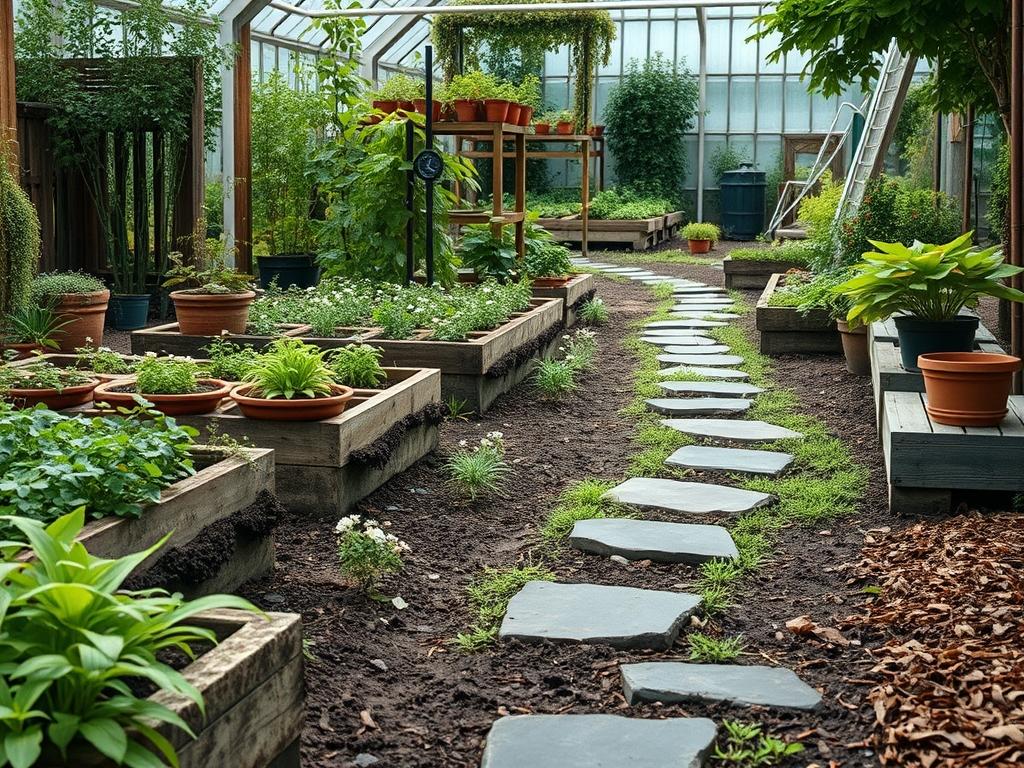
Selecting the right material for a garden walkway involves more than just aesthetic preference; it requires a deep understanding of site conditions, historical context, and the long term durability of the medium. Traditional Clay Pathways offer a unique combination of structural integrity and organic warmth that few other hardscape materials can replicate. Unlike concrete pavers, which are often colored with pigments that fade over time, clay bricks are fired at extreme temperatures to produce a permanent, rich hue derived from the minerals in the earth itself. Architects often select these materials to bridge the gap between high end architecture and the natural world, creating a transition that feels intentional rather than industrial. In varied climates, clay provides a breathable surface that manages heat efficiently, though it requires precise installation to prevent the shifting that often occurs in regions with heavy freeze and thaw cycles. By integrating these pathways, a designer can significantly elevate the curb appeal of a property while ensuring that every step taken through the landscape feels grounded and stable.
Landscape Design Principles
Effective landscape design starts with the concept of circulation, which is the primary role of any pathway system. For Traditional Clay Pathways, designers often utilize symmetry to create a formal aesthetic, especially in historical or colonial style gardens. If the home features a central entry point, a straight, wide walk constructed of clay pavers reinforces that central axis and draws the eye directly toward the primary architectural focal point. Conversely, in a more contemporary or cottage style environment, curvilinear pathways offer a sense of discovery, slowing the pace of the visitor and allowing them to appreciate the elevation layers within the planting beds.
Visual balance is achieved by matching the scale of the walkway to the surrounding structures. A narrow three foot path may feel cramped against a large, multi story residence, while a five foot width allows two people to walk side by side comfortably. Furthermore, focal points should be strategically placed at the termination of a path or at a major curve. This could be a limestone fountain, a specimen tree, or a piece of sculptural art. Designers must also consider the irrigation planning during the early layout phase. Running PVC conduits under the path before the base is compacted ensures that future irrigation repairs or light installations do not require the removal of the pavers.
Plant and Material Selection
Choosing the right flora to frame a clay path requires a balance of texture and color. The deep reds and oranges of the clay provide a warm backdrop that contrasts beautifully with cool greens and silvery foliage.
| Plant Type | Sun Exposure | Soil Needs | Water Demand | Growth Speed | Maintenance Level |
| :— | :— | :— | :— | :— | :— |
| Creeping Thyme | Full Sun | Sandy, Well-drained | Low | Moderate | Low |
| Dwarf Boxwood | Full to Part Sun | Loamy, Neutral pH | Medium | Slow | Moderate |
| Lenten Rose | Full Shade | Humus-rich | Medium | Moderate | Low |
| English Lavender | Full Sun | Low Fertility, Gritty | Low | Moderate | Medium |
| Blue Fescue | Full Sun | Well-drained | Low | Moderate | Low |
| Common Sage | Full Sun | Light, Sandy | Low | Fast | Low |
For the hardscape itself, the selection of the clay paver type is critical. Fired-clay bricks are rated by their weather resistance. For outdoor paths in harsher climates, always specify SX grade pavers, which are designed to withstand repeated freezing and saturation without cracking.
Implementation Strategy
The longevity of Traditional Clay Pathways depends entirely on the preparation of the ground beneath them. The process begins with a detailed site analysis to determine the high and low points of the yard. Once the layout is marked using landscape stakes and masonry line, the excavation process begins. For a standard residential walkway, you must dig to a depth of at least 8 inches. This allows for a 6 inch crushed stone sub-base, a 1 inch sand bedding layer, and the thickness of the clay pavers themselves.
Proper grading is the most vital step in this phase. The sub-grade should be sloped at a 2 percent grade, or roughly a quarter inch per foot, away from any building foundations to prevent water accumulation. After the soil is excavated and the base is sloped, a layer of geotextile fabric should be laid down. This fabric prevents the native soil from mixing with your clean crushed stone, which maintains the structural integrity of the base over time.
The crushed stone is added in two inch lifts, with each layer being thoroughly compacted using a vibratory plate compactor. Once the base is rock hard, a bedding layer of sharp sand or fine grit is screeded across the surface. This layer should not be compacted until after the bricks are laid. When placing the bricks, a Herringbone or Running Bond pattern is typically used for increased stability. Finally, edge restraints made of aluminum or heavy duty plastic are secured with 12 inch steel spikes to prevent the bricks from migrating outward over time. To finish, sweep polymeric sand into the joints and vibrate the surface once more to lock everything in place.
Common Landscaping Failures
The most frequent failure in clay path installation is inadequate drainage. When water is allowed to sit beneath the pavers, it softens the sub-grade, leading to localized sinking known as subsidence. This is often caused by omitting the geotextile fabric or using a base material with too many “fines” that trap moisture. Another common error is improper spacing between the bricks. If the bricks are placed too tightly against one another without a sand buffer, they can chip during thermal expansion.
Root overcrowding is another significant issue. Planting large, vigorous trees like Silver Maples too close to a path will eventually lead to the roots heaving the pavers upward, creating a trip hazard. Designers should always respect the “critical root zone” of existing trees. Furthermore, soil compaction in the planting beds adjacent to the path can lead to poor plant health. When heavy machinery is used to install the path, the surrounding soil is often squashed, destroying the pore spaces needed for air and water to reach plant roots. Always finish the project by tilling the adjacent beds and adding a 3 inch layer of organic mulch to restore soil structure.
Seasonal Maintenance
A well built clay path is low maintenance, but it is not “no maintenance.” In the spring, the primary task is a thorough cleaning. Use a pressure washer on a low setting or a stiff brush with a mild detergent to remove any efflorescence, which is a white salty residue that can rise to the surface of the clay after a wet winter. Check the joints for any lost polymeric sand and replenish it to prevent weed seeds from taking hold.
During the summer, focus on the surrounding vegetation. Prune back any native plants or shrubs that are beginning to encroach on the walking surface to ensure the full width of the path remains usable. In the autumn, the removal of fallen leaves is essential. Decomposing organic matter on top of clay can cause temporary staining and create a slippery surface. As winter approaches, avoid using rock salt or harsh chemical de-icers on Traditional Clay Pathways. These chemicals can penetrate the pores of the brick and cause mid-winter “spalling,” where the surface of the brick flakes off. Instead, use plain sand or birdseed for traction, which provides grip without compromising the structural integrity of the fired clay.
Professional Landscaping FAQ
How deep should the base be for clay pathways?
For residential foot traffic, a 6 inch base of compacted crushed stone is standard. In areas with high clay content in the soil or cold climates, increasing this to 8 inches provides better stability and drainage.
What is the best way to prevent weeds between bricks?
Using high quality polymeric sand in the joints creates a hardened barrier that resists weed growth and ant hills. Maintaining the integrity of this sand layer is the most effective long term prevention strategy.
Can I lay clay pavers directly on top of soil?
No, laying clay directly on soil leads to rapid unevenness and sinking. Without a compacted crushed stone base and sand bedding, the path will shift during rain events or temperature changes within the first season.
Are clay bricks the same as clay pavers?
Standard face bricks used for houses have holes and are not designed for foot traffic. Clay pavers are solid, fired at higher temperatures for durability, and shaped specifically to withstand the weight and friction of walking.
How do I handle a slope in my garden?
For steep inclines, it is best to use a series of retaining walls and landscaping steps rather than a continuous sloped path. Clay pavers work excellently as “treads” when supported by a solid concrete or stone riser.