
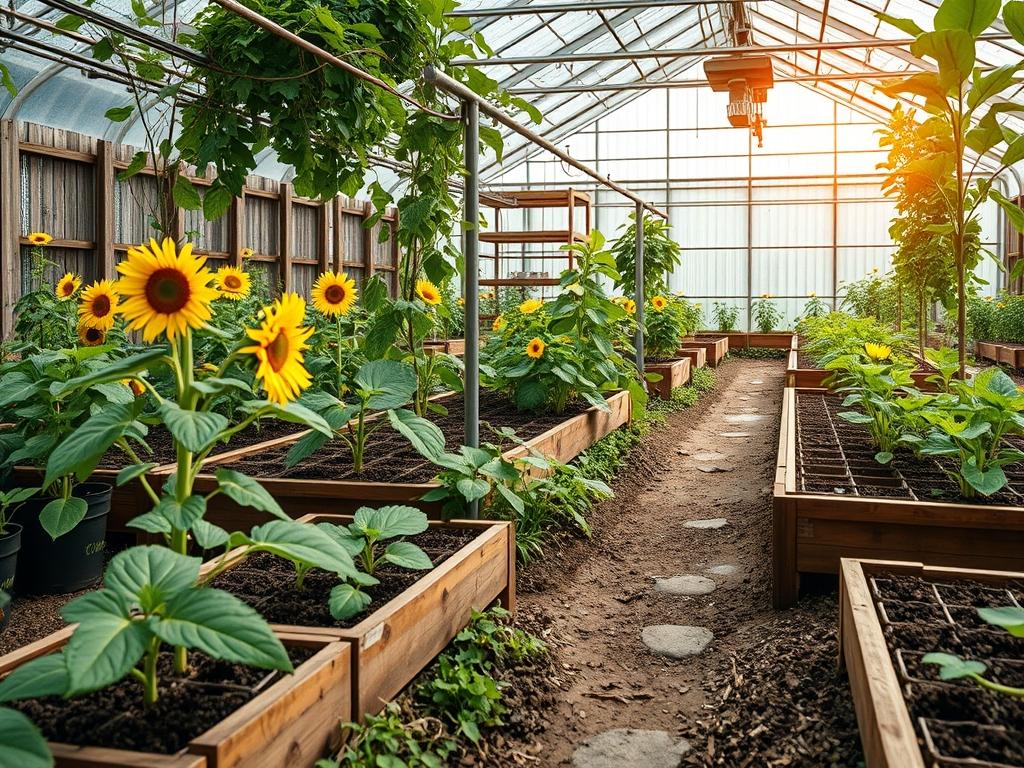
Integrating sunflowers into a professional landscape design presents a unique architectural challenge. These botanical giants provide unparalleled verticality and structural interest, yet their life cycle requires careful planning to maintain curb appeal during the final stages of maturity. As a landscape architect, I view the sunflower as more than a simple annual; it is a temporary focal point that demands a strategic transition from a vibrant ornamental feature to a functional harvest source. Successful landscape integration involves managing the senescence phase, where the plant begins to brown and droop. This transitional period is critical for Saving Sunflower Seeds, requiring the designer to balance the aesthetic needs of the property with the practical requirements of seed maturation. Proper site placement, wind buffering, and soil preparation ensure that these tall stalks remain upright and productive through the autumn harvest.
Weather patterns and microclimates dictate the success of any seed saving endeavor. High winds can decapitate heavy-headed cultivars, while excessive late-season humidity can lead to fungal rot in the seed heads. We must approach the landscape as a functioning system where drainage and airflow are prioritized. By selecting the correct cultivars and positioning them in zones with optimal solar exposure and air circulation, we prevent the moisture entrapment that often ruins a crop. The goal is to allow the seeds to lose moisture gradually while the plant is still standing, or to provide a secondary curing environment that mimics the ideal outdoor conditions without the risks of predation or weather damage.
Landscape Design Principles for Vertical Accents
In structural landscaping, symmetry and focal points define the rhythm of the garden. Sunflowers serve as natural focal points due to their height and solar-tracking behavior. When planning a layout for Saving Sunflower Seeds, we use elevation layering to place these tall specimens at the rear of the border. This ensures that as the plants enter their drying phase and lose their vibrant yellow petals, the surrounding middle-layer perennials—such as Rudbeckia or Echinacea—can mask the lower foliage, which often becomes desiccated and unsightly.
Walkway planning is equally vital. Designing a 36 inch wide access path behind sunflower rows allows the homeowner to monitor the back of the seed heads without disturbing the primary view from the patio or lawn. Irrigation must be planned around the root zone specifically; while sunflowers are drought-tolerant once established, they require consistent deep watering during the head-swelling phase. Drip irrigation systems are preferred over overhead sprinklers because moisture trapped in the dense petals of a maturing sunflower head is the primary cause of mold and mid-season crop failure. Visual balance is maintained by grouping sunflowers in odd numbers or repeating them in structured intervals to prevent them from looking like a neglected agricultural patch within a refined backyard setting.
Plant and Material Selection
| Plant or Tool Type | Sun Exposure | Soil Needs | Water Demand | Growth Speed | Maintenance Level |
| :— | :— | :— | :— | :— | :— |
| Mammoth Grey Stripe | Full Sun | Loamy, Well-drained | Moderate | Fast | Medium |
| Autumn Beauty Blend | Full Sun | Average to Rich | Moderate | Fast | Low |
| Burlap or Mesh Bags | N/A | Dry Environment | None | N/A | Low |
| Pruning Shears | N/A | N/A | N/A | N/A | High Quality |
| Organic Mulch | N/A | Weed Suppressant | N/A | N/A | Low |
| Titan Sunflower | Full Sun | Nitrogen Rich | High | Rapid | High |
Implementation Strategy for Seed Harvest
A professional installation begins with the grading of the site. For heavy-headed varieties, a gentle 2 percent slope away from the root zone ensures that any late-season storms do not lead to soil saturation and subsequent lodging. Staking should be integrated early; using half-inch rebar or heavy-duty bamboo poles driven 18 inches into the subsoil provides the necessary leverage to support heads that can weigh up to five pounds when full of ripe seeds.
Once the flower petals begin to shrivel and the back of the head turns from green to a pale lemon yellow, the process of Saving Sunflower Seeds enters the critical curing phase. In a professional landscape, we often recommend “field drying” if the climate is arid. This involves securing breathable mesh bags over the heads using garden twine. These bags serve a dual purpose: they catch any seeds that drop prematurely and protect the crop from avian predation. If the landscape faces an exceptionally wet autumn, we implement an “indoor curing” strategy. This involves cutting the stalks approximately 12 inches below the head and hanging them upside down in a ventilated structure like a garden shed or a covered porch. Airflow is the most important variable here; stagnant air will lead to internal rot within twenty-four hours.
Common Landscaping Failures
The most frequent mistake in residential landscapes is root overcrowding. Because sunflowers are heavy feeders, planting them too closely leads to stunted growth and thin, brittle stalks that cannot support the weight of the seeds. A minimum spacing of 24 inches between giant varieties is mandatory for structural integrity. Soil compaction is another silent killer; if the earth is too dense, the taproot cannot penetrate deep enough to anchor the plant against the leverage of a 10 foot stalk.
Irrigation inefficiencies often manifest as “late-season collapse.” If a homeowner switches off the irrigation too early in the drying process, the plant may die before the seeds have fully developed their nutrient-dense kernels. Conversely, over-watering during the final weeks can cause the seeds to sprout while still attached to the head. Proper drainage must be maintained through the use of organic compost and coarse sand amendments in the planting hole. Finally, many gardeners fail to account for “lodging,” where the entire plant tips over. This is usually due to a combination of shallow planting and lack of windbreaks. We recommend planting in a slightly recessed area or using a retaining wall to shield the lower third of the stalk from prevailing gusts.
Seasonal Maintenance and Care
Spring marks the beginning of the cycle with soil testing and amending. We look for a pH between 6.0 and 7.5. Nitrogen levels should be high in the early stages to promote leaf and stalk girth, but as the flower head forms, we transition to a phosphorus-rich fertilizer to encourage seed development. Summer maintenance focuses on monitoring for pests like the sunflower moth and ensuring the mulch depth remains at a consistent 3 inches to regulate soil temperature.
Autumn is the primary season for Saving Sunflower Seeds. This is when the visual landscape transitions from gold to brown. We recommend a “phased harvest” where heads are removed as they ripen to keep the garden looking tidy. Once the seeds are hard and the hulls have developed their characteristic stripes, the heads are removed. Winter maintenance involves the removal of the fibrous stalks. These should not be left in the ground as they can harbor pests and pathogens. Use a heavy-duty spade to remove the root ball, then backfill the hole with aged manure to prepare the site for the next season’s architectural accents.
Professional Landscaping FAQ
How do I know the seeds are ready for harvest?
The back of the sunflower head will turn from green to yellow, then brown. The seeds will appear plump and the tiny florets covering the seeds will rub off easily with light finger pressure.
Should I wash the seeds after harvesting?
Yes, rinse the seeds in a colander under cold water to remove debris or insects. After washing, pat them dry and spread them in a single layer on a drying rack for several days before storage.
How do I prevent birds from eating the seeds?
Cover the maturing heads with cheesecloth, burlap, or specialized mesh garden bags. Secure the base with a rubber band or twine to ensure birds cannot get underneath the fabric.
Can I save seeds from any sunflower variety?
You can save seeds from any variety, but only “open-pollinated” types will grow true to the parent plant. Seeds saved from hybrid varieties may produce plants that look significantly different the following year.
What is the best way to store saved seeds?
Store completely dry seeds in an airtight glass jar or a paper envelope kept in a cool, dark, and dry location. For long-term viability, many professional growers store their seeds in a refrigerator or freezer.