Integrating Native Oak Seedlings into a residential or commercial landscape represents a commitment to environmental stewardship and architectural longevity. Unlike temporary floral displays or decorative shrubs, an oak tree functions as a foundational anchor for an entire outdoor environment. As a landscape architect, I view these seedlings not merely as plants, but as long term structural elements that influence property value, curb appeal, and microclimate regulation. The challenge often lies in the transition from a fragile sapling to a towering canopy. This process requires a sophisticated understanding of site conditions, soil biology, and spatial planning. When we design around these species, we are planning for the next century of shade and shelter. Modern landscaping is increasingly pivoting toward native restoration, and Native Oak Seedlings sit at the center of this movement. They provide a sense of place that exotic ornamental species simply cannot replicate. By selecting the right species for your specific USDA zone and soil profile, you ensure that your outdoor living space evolves into a resilient ecosystem.
Landscape Design Principles
Successful landscape design with Native Oak Seedlings begins with spatial awareness and the concept of succession planning. One must consider the eventual mature spread of the tree, which can reach 50 feet to 80 feet in width depending on the species. We use symmetry to create formal entrances, often flanking a driveway with White Oak or Red Oak to establish a sense of arrival. Alternatively, an asymmetrical placement can create a naturalistic woodland feel that mimics the local wilderness. Focal points are essential; a single Bur Oak positioned on a slight elevation can become the primary visual destination in a large backyard.
Elevation layers are critical for a professional aesthetic. We never plant a tree in isolation. Instead, we design “softscapes” around the base, using native grasses and mid sized shrubs to create a tiered effect. This mimics natural forest fringes and helps manage drainage by slowing runoff. Walkways should be planned with enough offset to accommodate future root flare. We typically recommend a distance of at least 15 feet from any permanent hardscaping or foundation to prevent structural damage decades down the line. Visual balance is maintained by ensuring that the scale of the young seedling does not get lost among faster growing, shorter lived nursery stock.
Plant and Material Selection
Selecting the right variety of Native Oak Seedlings depends on the specific site analysis, including light levels and hydrologic patterns. A Live Oak is ideal for coastal or southern climates with high humidity, whereas a Pin Oak thrives in lower spots where moisture accumulates. The following table provides a professional baseline for selecting common varieties for your project.
| Plant Type | Sun Exposure | Soil Needs | Water Demand | Growth Speed | Maintenance Level |
| :— | :— | :— | :— | :— | :— |
| White Oak (Quercus alba) | Full Sun | Deep, Moist, Acidic | Moderate | Slow | Low |
| Red Oak (Quercus rubra) | Full Sun | Well-drained, Loamy | Moderate | Moderate | Medium |
| Bur Oak (Quercus macrocarpa) | Full Sun | Adaptable/Alkaline | Low | Slow | Low |
| Live Oak (Quercus virginiana) | Full Sun / Part Shade | Sandy, Well-drained | Moderate | Medium | High (Pruning) |
| Pin Oak (Quercus palustris) | Full Sun | Moist, Acidic | High | Fast | Medium |
Implementation Strategy
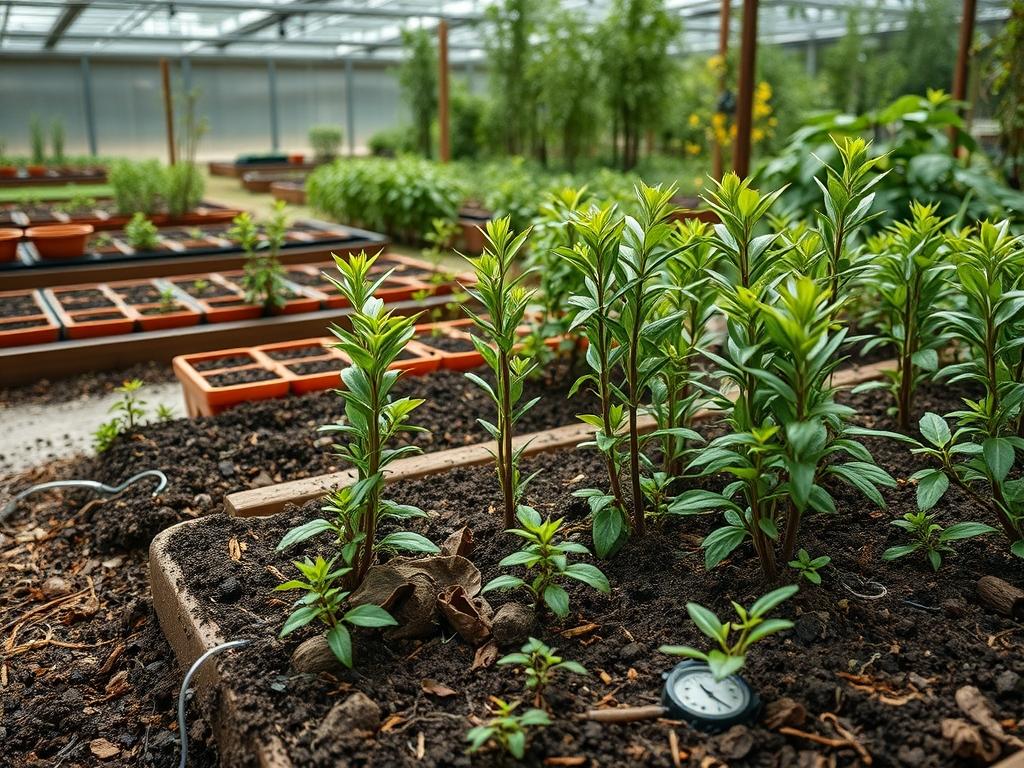
The actual installation of Native Oak Seedlings requires more precision than a standard garden flower. We begin with a thorough site grading to ensure that water moves away from the trunk while remaining accessible to the deep taproots. Before the first shovel hits the ground, the soil should be tested for pH. Most oaks prefer slightly acidic conditions, though species like the Bur Oak are more tolerant of alkalinity.
When digging the hole, follow the “twice as wide, never deeper” rule. A planting hole that is 24 inches to 36 inches wide provides the loosened soil necessary for lateral root expansion. The most common error is burying the root flare, which is the point where the trunk widens at the base. This must stay level with or slightly above the finish grade. Once the tree is set, backfill with native soil rather than heavy amendments; this encourages the roots to adapt to the surrounding environment immediately.
After backfilling, apply a layer of organic mulch approximately 3 inches deep in a wide circle around the tree. Avoid the “mulch volcano” look where material touches the bark, as this invites rot and pests. Instead, leave a 4 inch gap around the trunk. For irrigation, a soaker hose coiled around the drip line is more effective than overhead sprinklers. During the first two years, deep soakings once a week are far superior to frequent light mistings.
Common Landscaping Failures
The most frequent failure I encounter in the field is improper drainage resulting from soil compaction. During construction or heavy renovation, heavy machinery compresses the soil, destroying the pore space needed for oxygen. Native Oak Seedlings planted in compacted soil often suffocate, leading to stagnant growth or crown dieback. To solve this, we often utilize vertical mulching or air-spading to reintroduce air to the root zone.
Another common pitfall is root overcrowding. It is tempting to plant several young trees close together for immediate visual impact, but this leads to competition for nutrients and sunlight. Without proper spacing, the trees will develop stunted, misshapen canopies. Furthermore, many homeowners ignore irrigation inefficiencies. Automated spray heads often hit the trunk of the oak, leading to fungal diseases like hypoxylon canker. Professional systems should keep water focused on the ground, specifically the outer edges of the root zone where the feeder roots reside.
Seasonal Maintenance
Landscape management is a year round commitment that changes with the rhythm of the seasons. In the Spring, the focus is on growth support. We check the mulch depth and refresh it if it has decomposed. This is also the time to apply a slow release, low nitrogen fertilizer if a soil test indicates a deficiency. Avoid heavy pruning during the spring flush, as the tree is diverting all its energy to new foliage.
Summer is the most critical time for young Native Oak Seedlings. High temperatures and drought can quickly kill a sapling that has not yet established its deep root system. We monitor soil moisture at a depth of 6 inches. If the soil feels dry, a deep, slow watering session is required. This is also the season to watch for pests like aphids or oak gall wasps, though mature natives usually tolerate these with minimal damage.
During Autumn, maintenance shifts to preparation. This is the ideal time for structural pruning once the tree enters dormancy. Removing rubbing branches or narrow crotch angles now will prevent limb failure during winter storms. Clear away any fallen debris if there were signs of fungal spotting during the summer to prevent the spores from overwintering in the soil.
In Winter, the landscape is at rest. This is the best time for “dormant pruning” because the absence of leaves allows the architect to see the true skeleton of the tree. It is also the perfect time to plan and install hardscaping elements like retaining walls or walkways near the tree, provided that the root zone is protected from heavy equipment.
Professional Landscaping FAQ
How much space do Native Oak Seedlings need from a house?
You should plant large oaks at least 20 feet to 30 feet from any structure. This prevents future root interference with the foundation and keeps heavy limbs from overhanging the roof, which can cause moisture and debris issues.
Can I plant flowers at the base of my new oak?
Yes, but avoid aggressive digging. Use small, drought tolerant native perennials. Maintain a mulch buffer of at least 3 feet around the trunk to prevent competition for water and to protect the bark from lawnmower damage.
How often should I water my seedling in the first year?
Provide approximately 10 gallons of water per inch of trunk diameter every week. In extreme heat, you may need to increase this to twice weekly. Always use a slow drip method to ensure deep soil penetration.
Why are the leaves on my young oak turning yellow?
This is often iron chlorosis, usually caused by high soil pH or poor drainage. Check the moisture levels in the soil first. If the soil is not oversaturated, a soil test can confirm if a pH adjustment is necessary.
When is the best time of year to plant oaks?
In most climates, late autumn or early spring is ideal. Planting during dormancy allows the Native Oak Seedlings to focus on root development before the stress of summer heat or the energy demands of spring leaf production begin.