Establishing a productive fruit grove within a residential or estate landscape requires a delicate balance between aesthetic architectural goals and the biological requirements of the trees. While a manicured lawn or a paved patio offers immediate structural satisfaction, an orchard represents a long term investment in the local ecology and the visual character of the property. The primary challenge for any site manager lies in the timing of intervention. Traditional Orchard Pruning is not merely a task of removal; it is an exercise in light management and structural engineering. When conducted during the correct physiological window, pruning strengthens the skeletal integrity of the tree, enhances the curb appeal of the estate, and ensures the outdoor space remains a functional, safe environment for residents. Climate considerations play a decisive role here, as the shift from dormancy to active growth dictates how a tree responds to a cut. A poorly timed incision can invite pathogens or stimulate excessive, weak vegetative growth that compromises the visual symmetry of the landscape design.
Properly executed pruning transforms a sprawling, unkempt thicket into a sophisticated focal point. In high end landscape architecture, we view the orchard as a rhythmic element that defines the transition between manicured gardens and the more rugged, natural boundaries of a property. By focusing on the health of individual specimens, we ensure that the orchard provides a sense of enclosure and privacy without overwhelming the broader site plan. The goal is to create a sustainable outdoor environment where the architecture of the trees complements the hardscaping and irrigation systems. When we align our maintenance schedules with the natural cycles of the species, we reduce the need for chemical interventions and intensive labor in the future. This proactive approach to Traditional Orchard Pruning guarantees that the orchard remains a vibrant, structural asset rather than a declining liability.
Landscape Design Principles
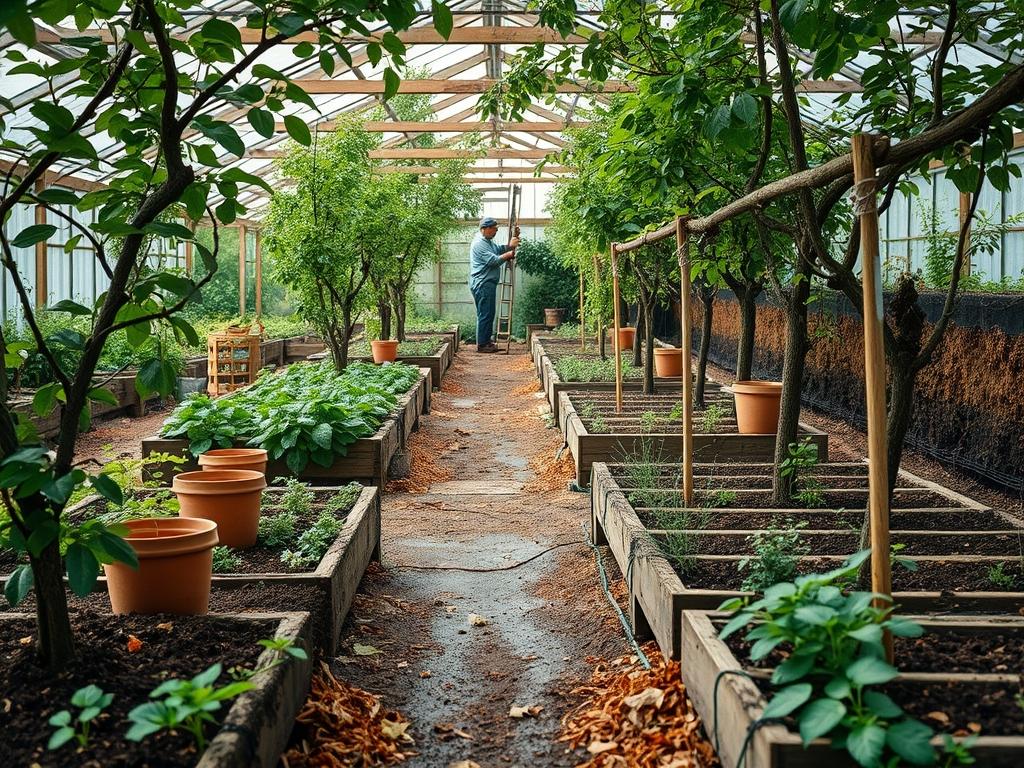
Integrating an orchard into a comprehensive landscape plan requires an understanding of symmetry and focal points. We often use fruit trees to create a sense of rhythm along farm tracks or to frame specific views from the primary residence. Elevation layers are critical; taller species like Standard Apple trees serve as the overstory, while dwarf varieties or fruiting shrubs provide a mid-level transition to the ground plane. This layering creates a sense of depth that makes even smaller gardens feel expansive.
Visual balance is achieved by spacing trees to allow for “view corridors,” which ensure that the orchard does not become a dark, impenetrable wall. Light must reach the lower interior branches of every tree to maintain health, but it must also permeate the orchard floor to support understory plantings or manicured turf. Irrigation planning must be integrated into the initial design to ensure that moisture is delivered directly to the root zones without causing surface runoff or erosion near walkways. By using natural stone or permeable pavers for paths through the orchard, we maintain functionality during the wet pruning season while adding a refined, permanent texture to the layout.
Plant and Material Selection
| Plant Type | Sun Exposure | Soil Needs | Water Demand | Growth Speed | Maintenance Level |
| :— | :— | :— | :— | :— | :— |
| Apple (Malus domestica) | Full Sun | Well-drained Loam | Moderate | Medium | High |
| Pear (Pyrus communis) | Full Sun | Deep, Rich Soil | High | Medium | Medium |
| Plum (Prunus domestica) | Full Sun | Moist, Fertile | Moderate | Fast | Medium |
| Cherry (Prunus avium) | Full Sun | Light, Sandy Loam | Moderate | Fast | High |
| Arborists Woodchips | N/A | Organic Matter | N/A | N/A | Low |
| Composite Stakes | N/A | Structural Support | N/A | N/A | Low |
Implementation Strategy
The successful layout of an orchard area begins with precise grading. The land must be sloped enough to prevent standing water, which can lead to root asphyxiation, yet leveled enough to allow for safe ladder work and equipment access. We recommend a gentle 2 percent grade for optimal surface drainage. Once the master plan is set, edging is used to define the “drip line” of each tree. This prevents competition from turf grass and protects the trunk from mechanical damage caused by mowers or string trimmers.
A critical step in Traditional Orchard Pruning and maintenance is the application of mulch. We specify a depth of 3 inches to 4 inches of aged organic material, keeping it at least 6 inches away from the trunk flare to prevent fungal rot. For drainage, we often install French drains or gravel siphons in areas where heavy clay soil persists. Hardscaping elements, such as retaining walls or seat walls, should be positioned to take advantage of the shade provided by the mature canopy. During the implementation phase, every tree should be staked with 2 inch by 2 inch hardwood pickets to ensure upright growth during the first three years of establishment.
Common Landscaping Failures
One of the most frequent mistakes in orchard management is over pruning during the wrong season. Pruning too early in the autumn can stimulate a flush of new growth that will be killed by the first hard frost, wounding the tree. Conversely, waiting too long into the spring can lead to excessive sap loss and high stress for the plant. Irrigation inefficiencies also plague many landscapes; overhead sprinklers often wet the foliage, which encourages scab and mildew. Instead, a dedicated drip line or a soaker hose system should be utilized to keep the bark dry.
Root overcrowding is another common failure, often caused by planting trees too close to existing structures or to one another. This leads to competition for nutrients and poor air circulation, which is a primary driver of pest infestations. Soil compaction from heavy machinery or high foot traffic can also suffocate roots, particularly in newer developments where the topsoil has been stripped. We combat this by incorporating high quality compost and using narrow profile aeration tools to improve oxygen exchange within the root zone.
Seasonal Maintenance
Seasonal timing is the heart of Traditional Orchard Pruning. In late winter, while the trees are still dormant, the primary structural pruning occurs. This is the best time to remove “the three Ds”: dead, damaged, and diseased wood. Using sharp bypass secateurs and long handled loppers, thin out interior branches to allow wind to pass through the canopy. This reduces the risk of blow down during summer storms and ensures sunlight reaches the center of the tree to ripen fruit.
In the spring, maintenance shifts toward monitoring for pests and ensuring the irrigation system is pressurized and leak free. Summer is the time for “thinning,” where excess fruit is removed to prevent branch breakage and to ensure the remaining produce reaches a desirable size. This is also the window for light formative pruning on young trees to guide their growth. Autumn involves sanitation; all fallen fruit and leaves should be cleared to prevent pathogens from overwintering in the soil. Finally, winter is the season for applying dormant oil sprays to the bark to suffocate scale insects and mite eggs before the new growth begins in the spring.
Professional Landscaping FAQ
What is the best month for Traditional Orchard Pruning?
For most pome fruits like apples and pears, late January through early March is ideal. You want to prune while the tree is dormant but just before the sap begins to rise in early spring.
Can I prune stone fruits in the winter?
It is generally safer to prune cherries and plums in late spring or summer. These species are susceptible to silver leaf disease, which is more prevalent in the damp, cold winter months.
How much of the canopy can I safely remove?
As a general rule, never remove more than 25 percent of the live canopy in a single year. Removing too much wood at once can shock the root system and trigger an explosion of unproductive water sprouts.
What tools are essential for orchard maintenance?
Every estate manager needs a pair of high quality bypass pruners, a folding pruning saw for larger limbs, and a sturdy tripod ladder for reaching the upper canopy safely. Always sanitize tools with 70 percent isopropyl alcohol.
Why is air circulation so important in a landscape?
Proper air drainage prevents the buildup of humidity, which is the primary cause of fungal infections. It also helps mitigate frost damage by preventing cold air from pooling in low spots around the trees.