
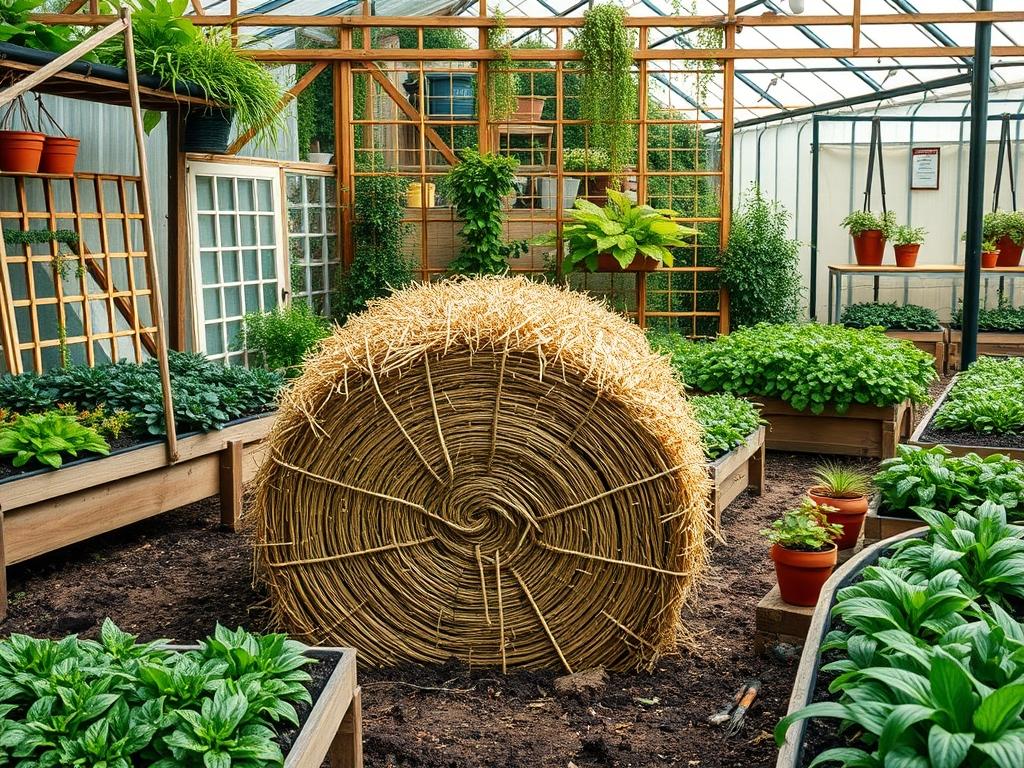
Integrating a productive vegetable garden into a high end residential landscape requires a delicate balance between utilitarian output and aesthetic cohesion. Traditional landscape design often segregates food production to hidden corners. However, the use of Traditional Straw Bales offers a unique opportunity to create elevated, modular, and temporary architectural interest while solving the perennial problem of poor site soil. When we approach garden planning from an architectural perspective, the straw bale is not merely a planting medium; it is a structural element. It provides instantaneous height, mimics the form of low retaining walls, and offers a controlled environment for species like Solanum tuberosum that typically demand deep, friable earth. For sites with heavy clay, high salt content, or poor drainage, these bales function as a raised bed system that requires no permanent timber or masonry construction. This allows for a flexible site plan that can evolve as the homeowner’s needs change over the seasons.
The primary landscaping challenge when using straw is managing its visual decay. As a biological material, straw undergoes rapid decomposition. To maintain curb appeal, the placement of these units must be intentional. We treat these bales as geometric blocks that define outdoor “rooms” or pathways. By considering the elevation of the bales, which typically stand 18 inches tall, we can create tiered planting schemes that reduce the physical strain on the gardener while adding vertical layers to the backyard horizon. This approach addresses both outdoor functionality and the ergonomic requirements of modern gardening. When the bales are properly conditioned and aligned, they provide a clean, rhythmic appearance that complements contemporary or rustic design palettes.
Landscape Design Principles
In professional landscape architecture, symmetry and focal points are the foundations of visual stability. When arranging Traditional Straw Bales, we often utilize a formal parterre layout. This involves placing bales in rows or U-shaped configurations to create defined walking paths. Use landscape fabric beneath the bales to prevent weed growth and to maintain a sharp edge between the gardening area and the surrounding lawn or gravel. The contrast between the golden texture of the straw and a dark wood mulch or slate chipping path enhances the visual impact of the installation.
Elevation layers are equally important. Because the bales provide an immediate 12 to 18 inch lift from the grade, they act as a mid-level shrub layer in your design. You can soften the hard edges of the straw by planting trailing companion species along the sides. Irrigation planning must be integrated into the initial footprint. For a professional finish, install a 0.5 inch drip irrigation line across the top of the bales, hidden slightly beneath the surface of the straw. This ensures consistent moisture delivery without the unsightly appearance of oscillating sprinklers.
Visual balance is achieved by anchoring the straw bale installation with permanent landscape features. Position your bales near a stone patio or a heavy timber trellis. The mass of the straw provides a heavy visual weight that needs to be balanced by open space or “negative space” in the lawn. If the bales are left as standalone islands, they can appear cluttered. Instead, frame them with boxwood hedges or ornamental grasses to transition from the wilder texture of the straw to the manicured sections of the yard.
Plant and Material Selection
The success of a straw bale system depends on choosing the right cultivars and supporting materials. The following table identifies the best components for this specific landscaping strategy.
| Plant Type | Sun Exposure | Soil Needs | Water Demand | Growth Speed | Maintenance Level |
| :— | :— | :— | :— | :— | :— |
| Russet Potatoes | Full Sun | High Nitrogen | High | Moderate | Medium |
| Yukon Gold | Full Sun | Conditioned Straw | Moderate | Fast | Low |
| Red Pontiac | Full Sun | Porous Medium | Moderate | Fast | Low |
| Sweet Alyssum | Partial to Full | Surface Only | Low | Very Fast | Low |
| French Marigold | Full Sun | Minimal | Medium | Fast | Low |
| Wheat Straw | N/A (Medium) | Tight Binding | High (Initial) | N/A | High (Initial) |
Implementation Strategy
The implementation phase begins with site grading. The area designated for the Traditional Straw Bales must be level or slightly sloped toward a drainage exit. If water pools at the base of the bales, the straw will rot prematurely from the bottom up, leading to structural collapse and anaerobic conditions that kill potato tubers. Once the site is leveled, lay down a heavy duty geotextile fabric to separate the bales from the native soil.
The conditioning process is the most critical technical step. This is a 10 to 12 day period where you transform a dry bale into a biologically active composting environment. On days 1 through 3, saturate the bales thoroughly with water. From days 4 to 6, apply a high nitrogen fertilizer, such as blood meal or a specialized organic starter, at a rate of 0.5 cups per bale each day. Water the fertilizer in deeply. By day 7, the interior of the bale will begin to generate heat as microbial activity spikes. On days 10 through 12, the temperature should stabilize. Use a compost thermometer to ensure the core temperature is below 95 degrees Fahrenheit before planting your seed potatoes.
For the actual planting, use a hand trowel to create a small opening in the straw about 4 to 6 inches deep. Place the seed potato inside and fill the void with a handful of potting soil or aged compost. This provides the initial nutrients the eyes need to sprout before the roots penetrate the straw. Space the potatoes approximately 12 inches apart. To finish the look, apply a thin layer of fine mulch over the top of the bale to help retain moisture and hide the irrigation lines.
Common Landscaping Failures
The most frequent mistake in straw bale gardening is failing to account for the internal volume loss as the straw decomposes. As the potatoes grow, the bale will “slump.” If you have not secured the bales with T-posts or a sturdy landscape frame, the rows may lean or fall over. Furthermore, drainage mistakes are common. If the bales are placed directly on a concrete patio without a drainage mat, the tannin-rich runoff will stain the hardscape.
Root overcrowding is another issue specific to potatoes. While it is tempting to plant many seeds in a single bale, excessive density leads to small tubers and poor airflow. Proper spacing of 3 to 4 plants per standard 3 foot bale is the professional standard. Additionally, avoid soil compaction by never stepping on the bales once they are conditioned. The goal is to maintain the maximum porosity of the straw to allow for rapid tuber expansion and gas exchange between the roots and the atmosphere.
Seasonal Maintenance
Landscape management for straw bales changes significantly with the seasons. In the spring, the focus is entirely on conditioning and temperature monitoring. This is the time to check the integrity of the polypropylene twine holding the bales together. If the twine snaps, the bale will lose its structural form.
During the summer, water management is the primary task. Straw is highly porous and can dry out within hours during a heatwave. Monitor the drip system daily and ensure the foliage of the potatoes is not showing signs of heat stress. You may need to apply a liquid seaweed fertilizer every 2 weeks to provide micronutrients that the straw lacks.
By autumn, the potato vines will naturally wither. This is the signal for harvest. One of the greatest benefits of this system is the “clean harvest.” You simply cut the twine and push the bale over. The potatoes will be clean and easy to retrieve from the decomposed straw. In the winter, the remaining straw acts as a fantastic mulch for other areas of the landscape. It can be spread over perennial beds or added to a compost pile to enrich the soil for the following year.
Professional Landscaping FAQ
How do I prevent the straw bales from looking messy in a formal garden?
Frame the bales with 1×12 cedar boards or wrap them in burlap fabric. This creates a finished “planter box” look while preserving the benefits of the straw medium and maintaining clean geometric lines within your landscape design.
Can I use hay instead of traditional straw bales for potatoes?
No, hay contains thousands of weed seeds that will germinate and compete with your potatoes. Traditional Straw Bales, usually wheat or oat, are the stems of the plant and are virtually seed free, ensuring a much cleaner gardening environment.
What is the best way to handle irrigation for raised straw beds?
Install a drip irrigation manifold with emitters spaced every 6 inches. This ensures deep penetration into the bale core. Overhead watering should be avoided to prevent foliar diseases like early blight from splashing between plants.
How do I stabilize bales on a sloped backyard site?
Drive 3 foot rebar stakes or wooden garden stakes through the center of the bales and into the ground. This anchors the bales against gravity and prevents shifting during the heavy watering required during the summer months.
What should I do with the straw once the potatoes are harvested?
The decomposed straw is a high quality soil conditioner. Work it into your native garden beds to improve organic matter content, or use it as a winter protective mulch around sensitive shrubs and ornamental perennials.