
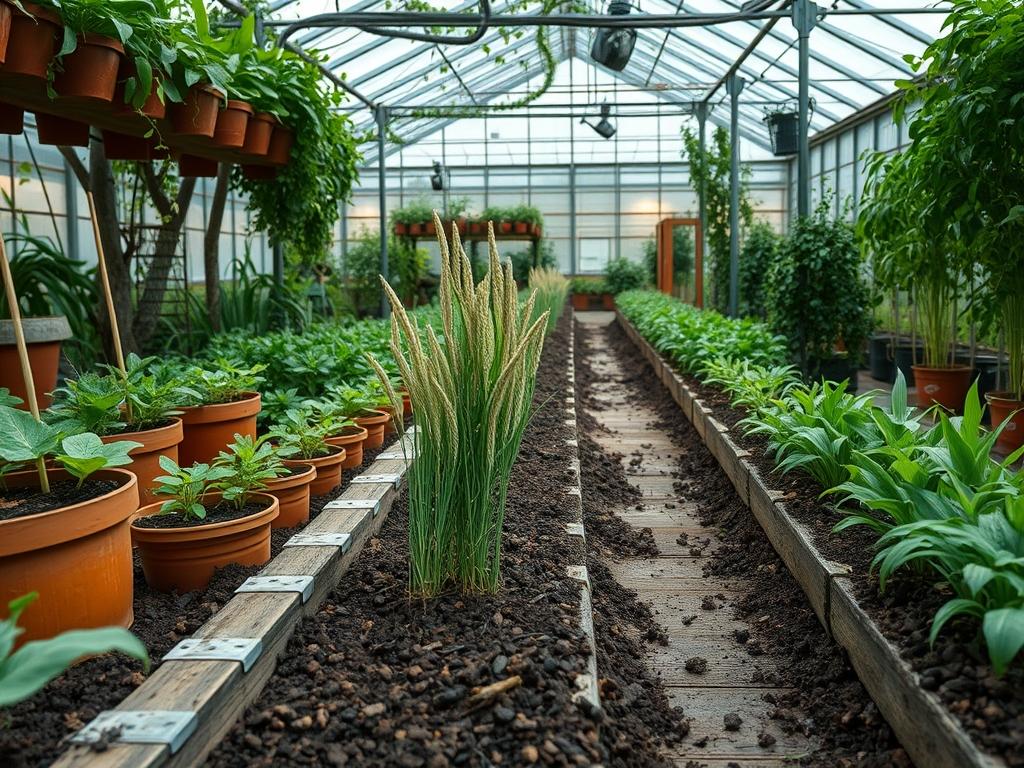
Achieving a high-performance landscape requires a shift in focus from purely aesthetic choices to the underlying engineering of the site. Most homeowners prioritize curb appeal and plant selection, yet the ultimate success of any outdoor environment depends entirely on the health of the rhizosphere. In regions where heavy clay or compacted earth hinders root development, the challenge of moisture management becomes a primary concern for the landscape architect. Traditional solutions like perlite or vermiculite offer aeration but often come with environmental costs or high price points for large-scale projects. Using rice hulls in soil has emerged as a professional-grade alternative that addresses drainage issues while supporting sustainable garden goals. Use of these organic byproducts ensures that the soil remains porous, preventing the hydrostatic pressure that can destabilize retaining walls or lead to anaerobic conditions in expensive ornamental beds.
Landscape Design Principles
Sustainable landscape design is built upon the pillars of symmetry, focal points, and elevation layers. When planning an outdoor space, we must consider how the eye moves through the environment. A focal point, such as a Specimen Tree or a custom Water Feature, requires a stable and well-drained base to prevent shifting over time. Elevation layers contribute to visual depth, but they also complicate drainage patterns. By incorporating rice hulls into the raised tiers of a garden, we create a lighter soil structure that facilitates the movement of water toward designed runoff zones.
Symmetry provides a sense of order, yet it is easily disrupted if one side of a garden thrives while the other suffers from poor drainage. Using rice hulls in soil across the entire site ensures consistency in growth rates and plant health. Irrigation planning must be integrated into this design early. A professional layout utilizes a combination of Drip Emitters and In-line Valves, but these systems are only effective if the soil can absorb and distribute the moisture. Rice hulls prevent the “crust” that often forms on the surface of silt-heavy soils, allowing water to penetrate deep into the root zone where it is needed most. Walkways and hardscaping also benefit from this soil preparation, as improved drainage around Stone Pavers reduces the risk of frost heave and shifting during seasonal temperature fluctuations.
Plant and Material Selection
Selecting the right materials involves balancing the biological needs of the flora with the structural requirements of the terrain. The following table outlines how various plant types interact with soil amendments and environmental conditions.
| Plant Type | Sun Exposure | Soil Needs | Water Demand | Growth Speed | Maintenance Level |
| :— | :— | :— | :— | :— | :— |
| English Lavender | Full Sun | High Drainage | Low | Medium | High |
| Japanese Maple | Partial Shade | Loamy / Porous | Moderate | Slow | Medium |
| Dwarf Boxwood | Full to Partial | Well-Aerated | Moderate | Slow | Low |
| Switchgrass | Full Sun | Versatile | Low | Fast | Low |
| Creeping Thyme | Full Sun | Gritty / Dry | Low | Fast | Low |
| Hydrangea | Partial Shade | Moisture Retentive | High | Medium | Medium |
Implementation Strategy
The transition from a design concept to a realized garden requires a systematic implementation strategy. The process begins with professional grading to ensure that the site slopes away from the foundation of the home at a minimum of 2 percent grade. Once the initial leveling is complete, the soil must be amended. For most residential projects, we recommend a mix of 30 percent organic compost, 40 percent native topsoil, and 30 percent rice hulls. Using rice hulls in soil at this ratio significantly increases the macroporosity of the medium.
After the soil is prepared, we establish the edging. Steel Edging or Boutique Brick Edging provides a clean transition between turf and planting beds. Before the first plant enters the ground, the hardscaping elements, such as Flagstone Paths or Retaining Walls, must be installed. This prevents heavy machinery from compacting the newly amended soil. When planting, the root ball should be placed in a hole twice the width of the container. We backfill with the rice-hull-amended mixture and apply a 3 inch layer of hardwood mulch to regulate temperature. This mulch layer works in tandem with the rice hulls to maintain a consistent moisture profile while the plants establish their root systems.
Common Landscaping Failures
The most frequent failure in professional landscaping is the neglect of subsurface drainage. Many contractors focus on the visible surface, leading to the “bathtub effect” where plants are essentially sitting in water-tight pits of clay. This lack of oxygen results in root rot and the eventual death of high-value specimens. Another common error is soil compaction caused by foot traffic or heavy equipment. Compacted soil loses its ability to breathe, which is why using rice hulls in soil is so critical; they provide a physical buffer that resists compression over time.
Improper spacing is another hallmark of amateur design. Designers often plant for immediate impact without considering the mature spread of a species. This leads to overcrowding, which restricts airflow and encourages fungal pathogens. Irrigation inefficiencies, such as over-watering or poorly aimed Spray Heads, can saturate the soil and wash away vital nutrients. By utilizing porous amendments like rice hulls, the soil can better manage excess water, providing a safety net for minor irrigation mistakes and ensuring that the structural integrity of the landscape remains intact.
Seasonal Maintenance
Maintenance is an ongoing commitment that changes with the calendar. In the spring, the focus is on replenishment. This is the optimal time to test soil pH and add additional organic matter. If the soil feels dense, tilling in a fresh layer of Rice Hulls can revitalize the bed for the growing season. Summer maintenance revolves around water management. We monitor the Drip Irrigation system to ensure it is meeting the demands of high heat, while checking the mulch depth to prevent evaporation.
Autumn is reserved for cleanup and protection. We remove fallen leaves to prevent them from mats on the soil surface, which can trap moisture and cause rot. It is also the time to plant spring-blooming bulbs, which thrive in the well-drained environment created by your earlier soil amendments. During the winter, the primary goal is protecting the root zones of sensitive perennials. A thick layer of straw or additional mulch can provide the necessary insulation. By maintaining the soil structure year-round, you ensure that the landscape remains a functional and beautiful extension of the home for decades.
Professional Landscaping FAQ
How often should I add rice hulls to my soil?
Rice hulls typically last for two to four seasons before they fully decompose. In high-traffic or annual beds, we recommend adding a fresh layer of 2 inches every two years to maintain optimal aeration and drainage.
Do rice hulls change the pH of the garden?
One of the primary benefits of using rice hulls in soil is their near-neutral pH. Unlike peat moss, which is acidic, rice hulls will not significantly alter the chemical balance of your soil, making them safe for most plant species.
Can I use rice hulls as a surface mulch?
Yes, they function well as a light mulch, particularly for vegetable gardens or seed starting. However, because they are lightweight, they can blow away in high winds. Integrating them into the top 6 inches of soil is usually more effective.
Is using rice hulls in soil better than using perlite?
Rice hulls are a renewable byproduct and often more cost-effective than perlite. While perlite is permanent, rice hulls contribute organic matter to the soil as they break down, which improves long-term soil health and microbial activity in the landscape.
Will rice hulls attract pests or rodents to my garden?
Rice hulls consist primarily of silica and cellulose, which provide little nutritional value to common pests. When properly incorporated into the soil mixture, they do not attract rodents or insects more than any other organic soil amendment or mulch.