
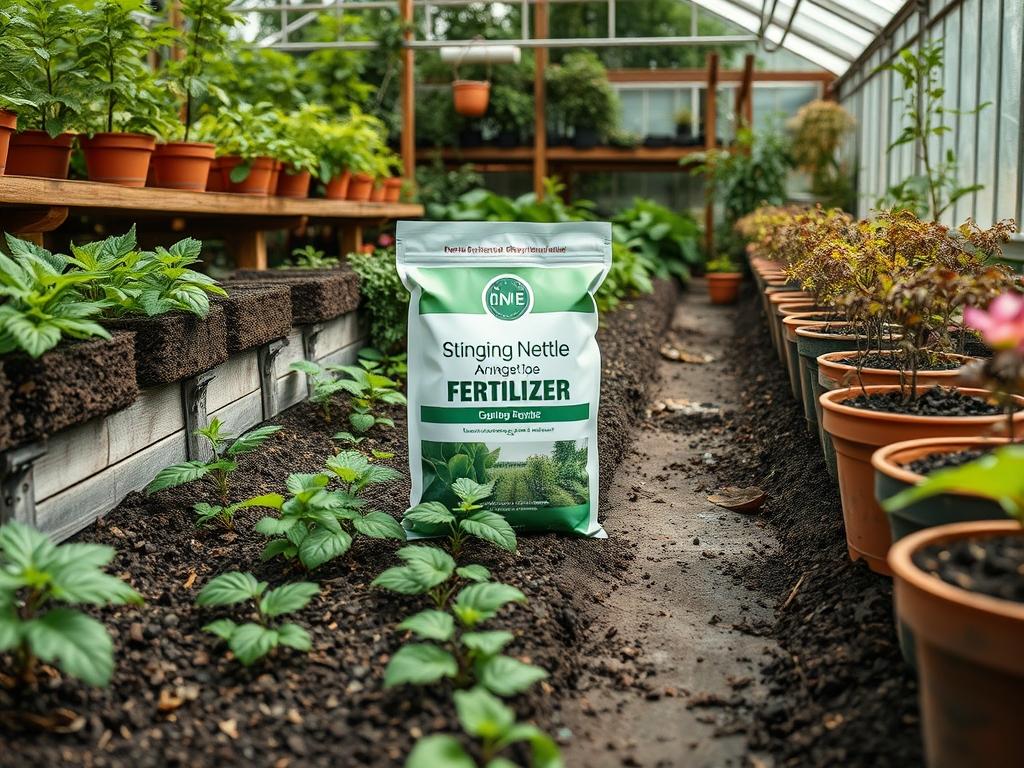
Achieving a high-end landscape requires more than just a keen eye for aesthetic balance; it demands a deep understanding of soil chemistry and plant physiology. For most homeowners and commercial developers, the primary challenge involves maintaining a vibrant, deep green canopy that resists the stresses of heat and drought. Curb appeal is often measured by the lushness of the foliage, yet many rely on synthetic salts to achieve this look. These chemical interventions frequently result in long-term soil degradation, leading to compaction and the loss of beneficial microbial life. In contrast, professional landscape architects are increasingly turning toward Stinging Nettle Fertilizer as a sophisticated, sustainable alternative. This botanical extract serves as a potent nitrogen source that aligns with the biological needs of the garden without the risk of salt buildup. By integrating such organic solutions, we move beyond simple gardening into the realm of environment consulting, where every input enhances the longevity and functionality of the outdoor living space.
Landscape Design Principles
A successful landscape design begins with the intelligent use of symmetry and the establishment of clear focal points. Whether we are designing a formal English garden or a modern minimalist retreat, the placement of dominant features like a Japanese Maple or a custom Retaining Wall dictates the flow of the entire space. We must also consider elevation layers; this involves staggering plant heights to create a sense of depth and enclosure. By placing taller screens like Arborvitae at the perimeter and lower Perennial Salvia near the foreground, we establish a visual hierarchy that guides the eye.
Beyond the visuals, professional design prioritizes infrastructure. This includes comprehensive Irrigation Planning to ensure that water delivery is targeted and efficient. We look for ways to minimize runoff by implementing specific Grading techniques that direct moisture toward thirsty root zones rather than paved walkways. Walkways themselves should be more than just paths; they are the arteries of the landscape, constructed from durable materials like Flagstone or Decomposed Granite. When these elements are balanced with consistent nutrient applications, such as the pure nitrogen provided by fermented nettle tea, the plants maintain their structural integrity and vibrant color throughout the growing season.
Plant and Material Selection
| Plant Type | Sun Exposure | Soil Needs | Water Demand | Growth Speed | Maintenance Level |
| :— | :— | :— | :— | :— | :— |
| English Boxwood | Full Sun to Part Shade | Well-drained | Moderate | Slow | Low |
| Hostas | Full Shade | Loamy / Rich | High | Moderate | Low |
| Panicle Hydrangea | Full Sun to Partial | Moist / Acidic | High | Fast | Medium |
| Japanese Maple | Dappled Shade | Slightly Acidic | Moderate | Slow | Medium |
| Clematis | Full Sun (Roots Shaded)| Rich / Loamy | High | Fast | High |
| Feather Reed Grass | Full Sun | Variable | Low | Fast | Low |
Implementation Strategy
The transition from a design concept to a finished landscape requires a disciplined implementation strategy. We begin with clearing and Grading the site, ensuring that the ground slopes away from any permanent structures at a rate of at least 2 percent. This prevents moisture from pooling near foundations. Once the site is leveled and prepared, we establish the hardscaping, such as Retaining Walls or stone borders, which define the edges of the planting beds. These edges are critical for preventing encroachment from lawn grasses and for containing 3 inches of hardwood mulch which preserves soil moisture and temperature.
The application of Stinging Nettle Fertilizer fits perfectly into the maintenance phase of this implementation. To create this “liquid gold,” professional landscapers often ferment 2 pounds of fresh nettles in 10 gallons of rainwater for approximately 14 to 21 days. This process breaks down the plant matter, releasing high concentrations of nitrogen, iron, and magnesium. Once the fermentation is complete, the liquid is diluted at a 1:10 ratio and applied via a Backpack Sprayer or through a specialized Drip Irrigation system. This method ensures that the nitrogen is delivered in a chelated form that is immediately available for root uptake. Because this source is organic, it does not burn the delicate roots of new transplants, making it an ideal choice for the initial establishment phase of a new garden layout.
Common Landscaping Failures
One of the most frequent errors in landscape management is the tendency toward root overcrowding. While a densely planted garden looks impressive on day one, failing to account for the mature width of Oak Trees or spreading Shrubs leads to poor air circulation and disease. Another significant failure is improper Drainage. When water cannot exit the root zone, it displaces oxygen, leading to anaerobic conditions that rot the plant from the bottom up. We often see this in heavy clay soils where no Soil Amendments were used during the installation phase.
Irrigation inefficiency also ranks high among common mistakes. Over-watering is just as damaging as under-watering; it encourages shallow root systems that cannot withstand the winter freeze or summer heat. Furthermore, the use of heavy machinery during construction often leads to Soil Compaction. This creates a physical barrier that prevents water and nutrients from penetrating more than 1 inch into the surface. Utilizing a high-quality nitrogen source like Stinging Nettle Fertilizer can actually help combat some of these issues over time by fostering a healthier microbial community that naturally aerates the soil via increased earthworm activity.
Seasonal Maintenance
A professional landscape is not a static object; it is a living entity that requires seasonal adjustments. Spring is the primary season for rejuvenation. This is when we apply a heavy layer of Compost and begin the first applications of Stinging Nettle Fertilizer to stimulate new leaf growth. It is also the time for structural pruning of Deciduous Trees before the sap starts to flow heavily. Early Spring is the window for checking the Irrigation System for leaks or clogged nozzles to ensure the garden is ready for the rising temperatures.
Summer maintenance focuses on preservation. We monitor for pests and ensure that Mulch Depth is maintained to protect the soil from the sun. Liquid feeding with nettle tea continues every 2 weeks to support heavy-fruiting plants or fast-growing ornamentals. As we transition into Autumn, the focus shifts to preparation for dormancy. We reduce nitrogen applications to allow the plants to harden off their new growth. This is the ideal time for planting Spring Bulbs and applying a final layer of protection to the root zones of sensitive species. Finally, Winter is a season of observation and protection. We use Winter Guards on young trees and ensure that hardscape elements like Pavers are kept clear of heavy snow and ice to prevent heaving.
Professional Landscaping FAQ
How often should I apply Stinging Nettle Fertilizer?
During the active growing season, apply a diluted solution every 14 days. For established woody plants, once a month is sufficient. This provides a steady stream of nitrogen without the risk of foliage burn common with synthetic pellets.
Is nettle fertilizer safe for all plant types?
Most leafy greens, perennials, and shrubs thrive on it. However, avoid heavy applications on plants that prefer low-nitrogen environments, such as certain Root Crops or drought-tolerant Succulents, as excessive nitrogen can inhibit flower and fruit production.
Can I use dry nettles for fertilizer?
Yes, dried Urtica dioica can be crushed and mixed directly into the top 2 inches of soil. However, the liquid fermentation process provides faster nutrient delivery, as the minerals are already suspended in a bioavailable form for the roots.
Will the fertilizer smell during the fermentation process?
The fermentation process does produce a strong, earthy odor. To manage this, keep the Fermentation Barrel covered and located in a secluded area of the landscape. Adding a handful of Rock Dust can help neutralize some of the scent.
Does this fertilizer affect soil pH?
Nettle tea is generally neutral to slightly alkaline. It serves as an excellent buffer for acidic soils. If you are growing acid-loving plants like Azaleas, monitor the pH and balance the application with Pine Needle Mulch if necessary.