
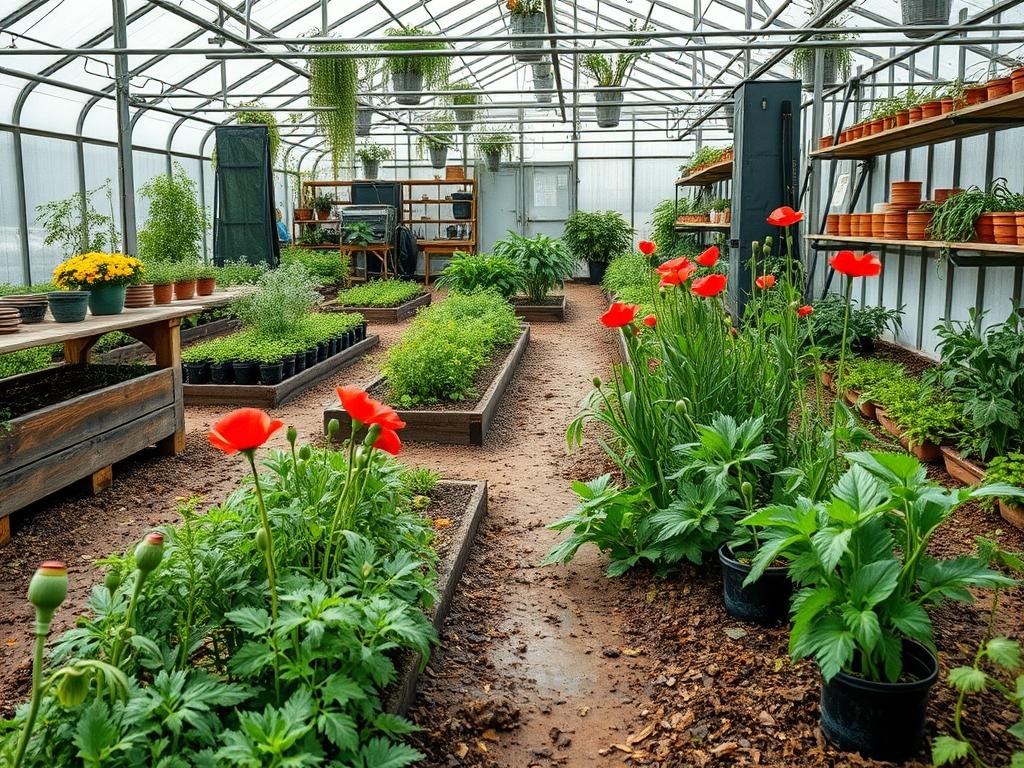
Integrating rare botanical specimens into a professional landscape requires a delicate balance between aesthetic impact and rigorous horticultural preservation. When a landscape architect approaches the challenge of saving rare poppy strains, the focus shifts from simple ornamentation to the creation of a living seed bank. These annual and perennial species, known for their ephemeral brilliance and architectural seed pods, present unique challenges in a high end residential or commercial setting. The primary difficulty lies in their short blooming window and their sensitivity to soil moisture. To maintain curb appeal throughout the growing season, these plants must be strategically placed within a matrix of late summer perennials and evergreen shrubs. This ensures that as the poppy foliage declines during the seed ripening phase, the surrounding landscape takes over the visual workload. Functional outdoor design must account for the specific lifecycle of the Papaver genus, ensuring that seed collection does not detract from the overall cleanliness of the garden beds. By mastering the art of saving rare poppy strains, a designer can guarantee the return of specific, often unattainable color palettes year after year, effectively bypassing the limitations of commercial seed availability.
Landscape Design Principles
Successful integration of rare poppies starts with site engineering and spatial hierarchy. Symmetry often plays a role in formal poppy displays, where twin beds of Papaver somniferum act as seasonal sentinels along a primary axis. However, for the purpose of saving rare poppy strains, designers often prefer a drift approach. This mimics natural distribution and allows for the slight genetic variations that occur in heirloom populations to appear more intentional. Focal points are essential; a concentrated mass of Papaver orientale in a vibrant “Turkish Delight” or “Black and White” cultivar can anchor a garden corner, drawing the eye upward with its tall, sturdy stems.
Elevation layers are critical when planning for seed production. Poppies should be situated in the middle ground of a border. This placement allows the early spring foliage to be visible, while the developing seed pods, which can reach heights of 36 inches, provide structural interest after the petals have fallen. Irrigation planning must be precise. Overhead watering is the enemy of rare poppy strains, as it can damage delicate petals and lead to fungal issues in the seed heads. A dedicated drip irrigation system, buried 2 inches below the surface, provides moisture directly to the root zone without risking crown rot or seed mold. Designers should also consider the movement of people. Walkways should be wide enough, at least 48 inches, to ensure that passersby do not inadvertently brush against ripening pods and scatter the precious seeds prematurely.
Plant and Material Selection
| Plant Type | Sun Exposure | Soil Needs | Water Demand | Growth Speed | Maintenance Level |
| :— | :— | :— | :— | :— | :— |
| Papaver somniferum | Full Sun | Well-drained, Loamy | Low to Moderate | Fast | Moderate |
| Papaver orientale | Full Sun | Rich, Deep Soil | Moderate | Slow to Medium | Low |
| Papaver rhoeas | Full Sun/Part Shade | Poor to Average | Low | Very Fast | Low |
| Papaver nudicaule | Full Sun | Sandy, Cool Soil | Moderate | Medium | High |
| Papaver atlanticum | Full Sun | Rocky, Dry | Very Low | Medium | Low |
Implementation Strategy
The process begins with professional site preparation, specifically addressing grading and drainage. Poppies despise standing water. The area should be graded at a 2 percent slope away from building foundations and hardscapes. If the native soil is heavy clay, a landscape architect will specify the incorporation of 3 inches of coarse sand and organic compost to a depth of 10 inches. This creates the friable structure necessary for the deep taproots that many rare poppy strains develop.
Once the soil is prepared, the layout is marked using landscape marking paint. Edging is then installed; steel or heavy duty aluminum edging provides a crisp line that prevents lawn grass from encroaching on the poppy beds. For seed saving, isolation is key. If a designer is trying to maintain the purity of multiple rare strains, they must be separated by at least 25 feet, or be scheduled to bloom at different times to prevent cross pollination by bees.
Direct sowing is the preferred method for most rare poppies because their taproots do not tolerate transplanting. Seeds should be mixed with fine sand at a ratio of 1 part seed to 10 parts sand to ensure even distribution. After sowing, the area should be lightly tamped down with a flat shovel or a lightweight roller to ensure good seed to soil contact. A thin layer of vermiculite can be applied to retain surface moisture without smothering the light dependent seeds. As the plants grow, thinning is mandatory. Aim for a final spacing of 12 inches between plants to allow for maximum air circulation and robust pod development.
Common Landscaping Failures
The most frequent failure in saving rare poppy strains is improper drainage leading to root asphyxiation. When water sits around the crown, the plant collapses before the seeds can fully mature. Another common mistake is soil compaction. In high traffic areas, the soil becomes too dense for the delicate poppy seedlings to penetrate, resulting in patchy growth and stunted plants. Designers often overlook the impact of mulch. While wood chips are excellent for many shrubs, a thick layer of heavy mulch can prevent poppy seeds from germinating or can trap too much moisture against the stems.
Irrigation inefficiencies also plague these projects. Using a standard lawn sprinkler system often leads to powdery mildew, which can ruin a seed crop in days. Furthermore, spacing is often neglected. Overcrowding rare poppy strains results in competition for nutrients and light, leading to smaller seed pods and less viable seeds. Finally, many gardeners harvest seeds too early. The pods must be allowed to dry completely on the stem until the small vents at the top of the pod open and the seeds rattle inside. Harvesting green pods is a guaranteed way to lose a rare strain.
Seasonal Maintenance
Spring management focuses on thinning and support. As seedlings emerge, they should be thinned to their final spacing using garden snips to avoid disturbing the roots of neighboring plants. If the strain is known for heavy, double blooms, small bamboo stakes or wire cages should be installed early so the plants can grow into their supports.
Summer is the critical period for saving rare poppy strains. Once the bloom phase ends, resist the urge to deadhead. The pods must remain on the plant. During this time, reduce irrigation to allow the pods to dry naturally. Monitor for pests like aphids and use a neem oil solution if necessary, but avoid heavy pesticides that might harm the pollinators required for seed set.
Autumn involves the harvest and site cleanup. Once the pods are brown and crisp, cut them with bypass pruners and place them in a paper bag. Store them in a cool, dry place. The remaining plant material should be removed and composted, unless disease was present, in which case it should be discarded. This is also the time to lightly cultivate the soil and prepare for a fall sowing if the climate allows for overwintering seedlings.
Winter is the time for planning and seed processing. Sift the seeds through a fine mesh screen to remove chaff. Store the clean seeds in glass vials or airtight envelopes labeled with the specific variety and harvest date. In the landscape, ensure that the poppy beds are marked with permanent plant labels so they are not accidentally dug up during early spring maintenance.
Professional Landscaping FAQ
How do I prevent my rare poppies from cross-breeding?
To maintain genetic purity, separate different strains by a minimum of 25 feet. Alternatively, use physical barriers like fine mesh blossom bags to cover the flowers before they open, then hand pollinate using a small artist brush.
What is the best mulch for a poppy focused landscape?
Avoid heavy wood mulches. Instead, use a 1 inch layer of fine pine bark or leaf mold. This protects the soil while allowing the self-sown seeds of the rare strains to reach the soil surface easily in the next cycle.
Can I save seeds from hybrid poppy varieties?
You can, but the offspring will not be “true to type.” They will likely revert to a more basic form. To guarantee the specific color of rare strains, always start with open-pollinated heirloom seeds rather than F1 hybrids.
How do I know the seeds are ready to harvest?
Wait until the pod turns from green to a dusty tan or brown. The most reliable sign is when the tiny pores beneath the “cap” of the pod open and you can hear the seeds shaking inside like a natural rattle.
Why did my rare poppies disappear after one successful year?
This is usually due to aggressive mulching or over-zealous weeding. Poppy seeds need light to germinate. If you cover the bed with 3 inches of cedar mulch, the seeds from your rare strains will remain dormant or rot instead of sprouting.