
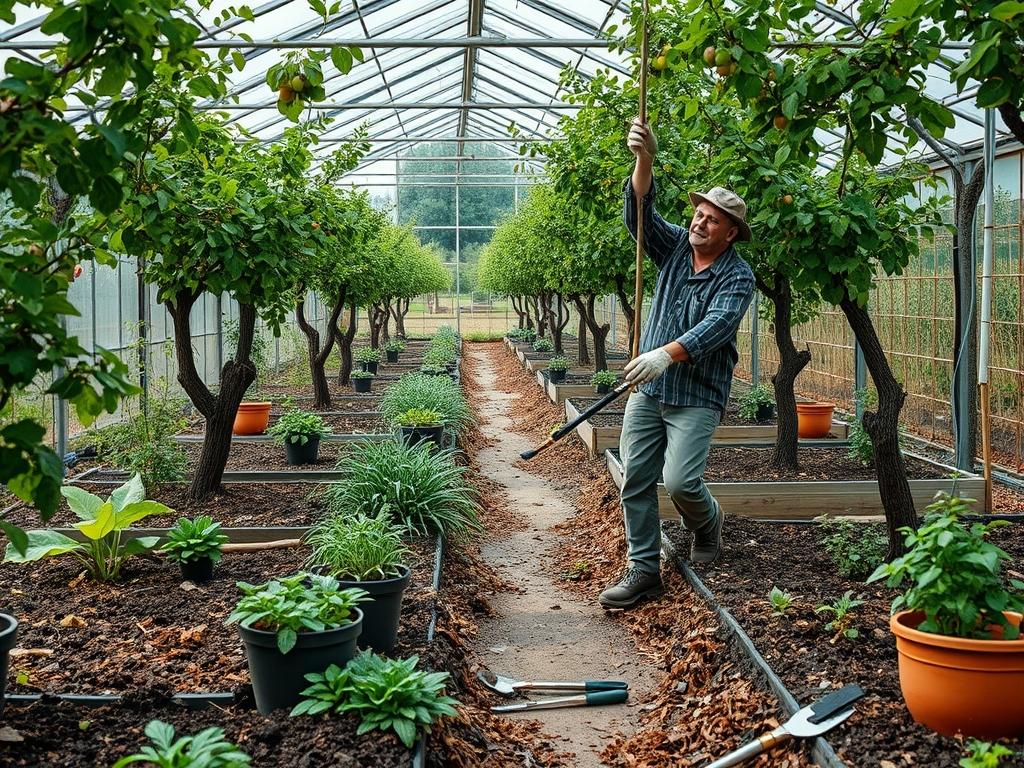
The integration of a productive orchard into a residential or commercial landscape requires a sophisticated understanding of light physics and atmospheric circulation. Traditionally, the primary objective of wood management in fruit-bearing trees has been the optimization of inner-canopy environments. This approach, often referred to as Traditional Orchard Pruning, is not merely an aesthetic choice. It is a functional requirement for tree health, fruit quality, and the longevity of the landscape design. When a landscape architect designs a space that includes species such as Apple (Malus domestica) or Peach (Prunus persica), they must account for the way sunlight interacts with the architecture of the tree. Without purposeful intervention, a tree will naturally prioritize upward growth to compete for light, often leading to a dense, shaded interior that becomes a breeding ground for pathogens. By focusing on sunlight and air, the practitioner ensures that every leaf operates at maximum photosynthetic efficiency while maintaining a microclimate that discourages fungal growth. This strategy enhances curb appeal by creating structured, sculptural forms that provide visual interest throughout the four seasons, turning a simple backyard into a high-functioning outdoor environment.
Landscape Design Principles
In the realm of professional landscape architecture, an orchard must be treated with the same rigor as a formal garden or a structural hardscape. Symmetry and focal points are essential when laying out a grove. A well-placed Pear tree can serve as a primary focal point at the end of a long axis, provided its canopy is managed to allow light to filter through to the understory. We utilize elevation layers to create depth; this involves placing taller canopy trees in the background while keeping smaller, pruned specimens in the mid-ground. Visual balance is achieved by mirroring the branching habits of adjacent trees, ensuring that the entire orchard feels like a cohesive unit rather than a disparate collection of plants.
Irrigation planning is inextricably linked to these design principles. We must calculate the water demand of each species and design a system that delivers moisture directly to the root zone without wetting the foliage, which can exacerbate disease in a crowded canopy. Walkways should be planned to provide easy access for maintenance tools like bypass pruners and pole saws, while also guiding the eye through the landscape. By maintaining a clear “line of sight” through the lower thirds of the trees, we create a sense of openness and security, preventing the orchard from feeling claustrophobic or neglected.
Plant and Material Selection
Selecting the right cultivars and materials is the foundation of a successful orchard project. The following table outlines several species commonly utilized in temperate landscape designs and their specific environmental requirements.
| Plant Type | Sun Exposure | Soil Needs | Water Demand | Growth Speed | Maintenance Level |
| :— | :— | :— | :— | :— | :— |
| Apple (Malus) | Full Sun | Well-drained Loam | 1 inch per week | Moderate | High |
| Cherry (Prunus) | Full Sun | Sandy Loam | Low to Medium | Fast | Medium |
| European Pear | Full Sun | Deep, Rich Soil | Moderate | Medium | High |
| Blueberry Bush | Full Sun/Partial | Acidic (pH 4.5) | High | Slow | Medium |
| Lavender | Full Sun | Gritty, Alkaline | Very Low | Fast | Low |
| Dwarf Nectarine | Full Sun | Well-drained | Moderate | Moderate | High |
For structural support and edging, we recommend using powder-coated steel or pressure-treated timber for raised beds. When choosing mulch, a 3 inch layer of arborist wood chips or shredded cedar is ideal for moisture retention and weed suppression.
Implementation Strategy
The successful implementation of an orchard starts with precise site grading. The ground must be sloped at a minimum of 2 percent away from the trunks of the trees to ensure that water does not pool at the basal flare. Once the grading is finalized, the layout of the trees should follow a predetermined grid or a naturalistic cluster, depending on the desired aesthetic. We recommend a spacing of at least 15 feet between standard fruit trees to allow for adequate air movement.
The first step in planting is to excavate a hole that is two times wider than the root ball but no deeper. This encourages lateral root growth into the native soil. After backfilling with a mix of native earth and organic compost, a 5 gallon initial watering is necessary to settle the air pockets. Edging should be installed at this stage to define the orchard boundaries and prevent turf grass from encroaching on the root zones. Finally, we apply a 3 inch layer of organic mulch, ensuring that the material is kept at least 4 inches away from the trunk to prevent bark rot. This structural foundation allows the Traditional Orchard Pruning techniques to be more effective, as the tree starts its life in a perfectly prepared environment.
Common Landscaping Failures
The most frequent mistake in orchard management is a lack of interior thinning, which leads to “shading out.” When sunlight cannot reach the interior wood, the tree stops producing fruit buds in those areas, and the crop migrates to the very tips of the branches. This makes harvesting difficult and increases the risk of limb breakage. Another common failure is improper drainage. If a site is not graded correctly, water will collect in the root zone, leading to anaerobic conditions and root rot.
Root overcrowding is another significant issue. Many homeowners plant trees too close to existing structures or to one another, failing to account for the mature spread of the canopy. This competition for nutrients and light weakens the trees, making them susceptible to pests like aphids or borers. Furthermore, improper irrigation, such as using overhead sprinklers, keeps the leaves damp for too long, which is a primary cause of apple scab and powdery mildew. Finally, soil compaction caused by heavy foot traffic or machinery can suffocate the root system, preventing the tree from absorbing the nitrogen and minerals necessary for vigorous growth.
Seasonal Maintenance
Effective Traditional Orchard Pruning is a year-round commitment that adapts to the biological cycle of the tree. In the winter, while the trees are dormant, the focus is on structural pruning. This is the time to remove the three Ds: dead, damaged, and diseased wood. Using a sharp hand saw or loppers, we remove large branches that are crossing or growing toward the center of the tree to open up the “vase” for maximum sunlight penetration.
Spring maintenance involves thinning the developing fruit. If a tree sets too much fruit, the weight can snap branches, and the individual fruits will be small and poorly flavored. We recommend thinning so that there is only one fruit every 6 inches along a branch. Summer is the time for light “water sprout” removal. These are the fast, vertical shoots that suck energy away from the fruit-bearing wood and block airflow. In the autumn, the focus shifts to sanitation. All fallen fruit and leaves should be removed from the site to prevent pests and fungi from overwintering in the soil. A final application of 0.5 inches of compost can be spread under the mulch to provide slow-release nutrients for the following growing season.
Professional Landscaping FAQ
How does Traditional Orchard Pruning improve fruit quality?
By removing excess interior branches, sunlight reaches the ripening fruit directly. This increases sugar production through photosynthesis and improves the color and size of the harvest while ensuring the wood remains strong enough to support the weight.
What tools are essential for maintaining a small home orchard?
A high-quality pair of bypass pruners is essential for small twigs. For larger branches, a folding pruning saw and a pair of long-handled loppers provide the necessary leverage and reach to maintain a clean, professional canopy.
Why is airflow considered as important as sunlight?
Stagnant air allow moisture to sit on the leaves and fruit, which promotes fungal infections. Increased circulation dries the foliage quickly after rain or dew, significantly reducing the need for chemical fungicides in the landscape.
When is the best time of year to prune for growth?
Heavy structural pruning should be performed in late winter before the buds break. This allows the tree to direct all its springtime energy into the remaining healthy branches, resulting in more vigorous and controlled growth.
How deep should mulch be around fruit trees?
Maintain a depth of 2 to 3 inches of organic mulch. This thickness is sufficient to suppress weeds and retain moisture without preventing oxygen from reaching the roots or creating a habitat for bark-gnawing rodents.