
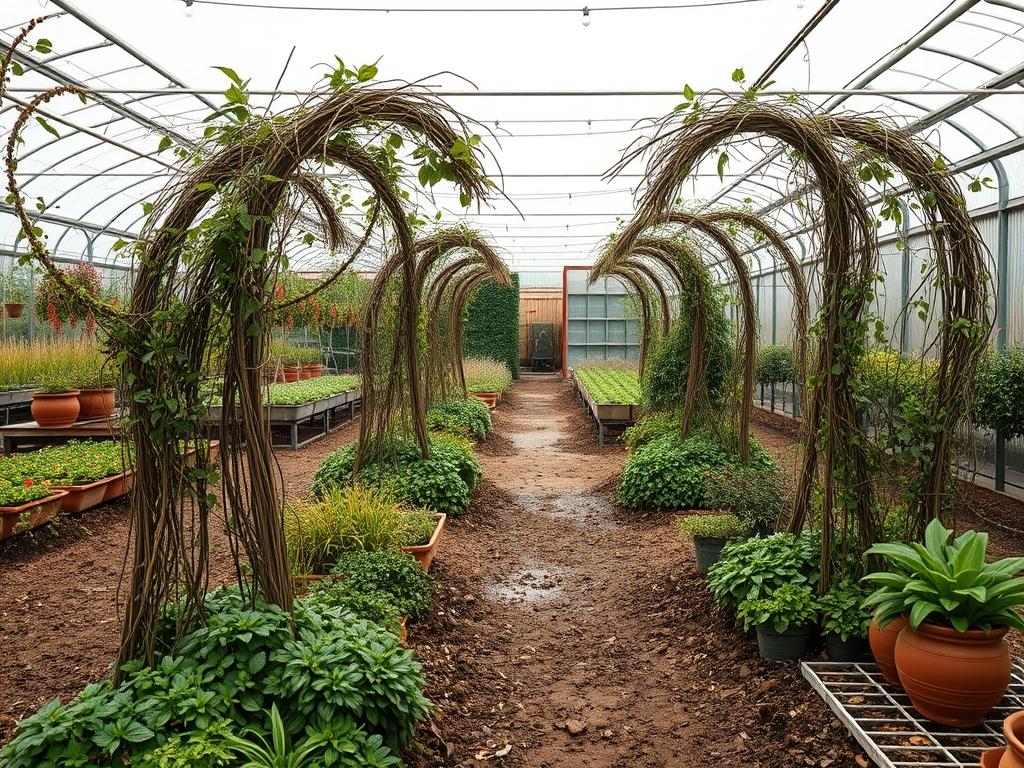
Integrating structural elements into a professional landscape requires a delicate balance between organic growth and architectural precision. Traditional willow arbors represent a unique bridge between these two worlds; they provide immediate vertical interest while evolving into living sculptures over several seasons. For the landscape architect or dedicated property owner, the challenge lies in placing these structures within a climate that supports the specific hydraulic needs of the Salix genus without compromising the soil stability of surrounding flora. A well placed willow arbor enhances curb appeal by softening the transition between formal entries and more naturalized garden zones. It serves as a functional gateway that creates an invitation to move through the space rather than simply observing it from a distance. Beyond mere aesthetics, these structures provide essential shade and can serve as micro-habitats for beneficial insects. The success of a willow installation depends heavily on site analysis, specifically regarding moisture availability and sun exposure. Because willow is a riparian species, it thrives in environments that might be too damp for traditional timber pergolas, making it an excellent solution for low-lying areas or properties with high water tables.
Landscape Design Principles
When incorporating traditional willow arbors into a master plan, symmetry and focal points dictate the visual flow. An arbor acts as a transition element, often placed at the intersection of two distinct garden rooms. To ensure the structure does not feel lost in the greater landscape, architects must consider elevation layers. A successful design places the arbor as the mid-to-high level canopy, supported by ground-level layers such as creeping thyme or clover and mid-level shrubbery like viburnum. This layering creates a cascading effect that draws the eye upward, highlighting the intricate weaving of the willow rods.
Visual balance is achieved by mirroring the arbor with similar textures. If the arbor is rustic and woven, incorporating wattle fencing or similar natural textures nearby provides a sense of cohesion. Irrigation planning is also a primary design pillar. Since willow is a heavy drinker, the structure should ideally be located near a primary water source or integrated into an existing automated drip system. If the arbor is a living installation, the irrigation must be buried deeply enough to reach the subterranean root zone without causing surface runoff that might erode the foundation of nearby walkways. Walkway integration requires a minimum clearance of eight feet in height and five feet in width to accommodate both pedestrian traffic and the natural inward growth of the willow branches over time.
Plant and Material Selection
Choosing the correct variety of willow is the difference between a structure that lasts three years and one that lasts twenty. For living arbors, Salix viminalis is the industry standard due to its incredible flexibility and rapid growth. If the goal is a non-living, dried structure, thicker rods of Salix triandra provide superior structural rigidity. The table below outlines the requirements for the most common species used in these installations.
| Plant Type | Sun Exposure | Soil Needs | Water Demand | Growth Speed | Maintenance Level |
| :— | :— | :— | :— | :— | :— |
| Salix viminalis | Full Sun | Heavy Clay/Loam | Very High | 6-10 ft/year | Moderate |
| Salix purpurea | Full Sun/Part Shade | Sandy Loam | High | 4-6 ft/year | High |
| Salix alba | Full Sun | Variable/Wet | High | 3-5 ft/year | Moderate |
| Salix caprea | Part Shade | Well-Drained | Moderate | 2-4 ft/year | Low |
| Salix x sepulcralis | Full Sun | Deep Moist Soil | Very High | 5-8 ft/year | High |
Selection also extends to the binding materials. While jute twine is traditional and biodegradable, it may rot before the willow rods have grafted together. Many professionals prefer annealed copper wire or biodegradable paper-wrapped wire for the initial construction phase. These materials provide the necessary tension to hold the arch in place while the living wood lignifies and gains its own structural integrity.
Implementation Strategy
The implementation of a traditional willow arbor begins with site preparation and grading. The footprint of the arbor must be level to prevent lopsided growth and structural leaning. Start by marking the site with landscaping paint or surveyor stakes. For a living arbor, excavate a trench approximately twelve inches deep and eight inches wide along the intended perimeter. Ensure the bottom of the trench is not compacted; use a tilling fork to loosen the soil and improve root penetration.
Once the site is prepared, the primary uprights, or “masts,” are installed. These should be the thickest rods available, usually one to two inches in diameter at the base. Insert these rods at least ten inches into the ground, spacing them every twelve inches. Use a rubber mallet to secure them without damaging the bark. Once the masts are in place, begin the weaving process using thinner, more pliable “weavers.” A standard diagonal weave or harlequin pattern is most effective for distributing weight. As you reach the apex of the arch, overlap the tops of the masts from opposing sides and secure them firmly.
After weaving is complete, backfill the trench with a mixture of native soil and organic compost. Apply a layer of hardwood mulch at a depth of three inches to retain moisture. If the arbor is located on a slope, integrate a small retaining wall or swale on the uphill side to capture rainwater and direct it toward the root zone. Proper drainage is essential; while willow loves water, it requires oxygenated moisture rather than stagnant, anaerobic mud.
Common Landscaping Failures
The most frequent failure in willow arbor construction is improper hydraulic management. If the soil becomes too compacted during the installation of surrounding hardscaping, the willow will suffer from stunted growth or root rot. Another common mistake involves the timing of the installation. Willow rods should be harvested and planted during the dormant season, typically late winter or very early spring. Attempting to build a living arbor in the heat of mid-summer leads to rapid desiccation and a high failure rate.
Overcrowding is another pitfall. Designers often plant too many rods in an attempt to make the structure look “full” on day one. As the rods grow in girth, they will eventually choke each other out, leading to dead patches within the lattice. Furthermore, neglecting the initial “training” of the structure results in a messy, wild appearance that detracts from the property’s curb appeal. Regular tensioning of the ties and selective pruning are required during the first two years to ensure the living architecture maintains its intended shape.
Seasonal Maintenance
Seasonal care is what separates a professional landscape from a neglected one. In the Spring, the primary focus is pruning and tie inspection. Remove any rods that did not survive the winter and replace them with fresh cuttings. This is also the time to apply a balanced, slow-release fertilizer to support the rapid growth phase. As Summer arrives, irrigation becomes the priority. During periods of drought, a willow arbor may require deep watering two to three times per week. Monitor for pests like the willow aphid or rust fungus, which can spread quickly in the dense foliage of an arbor.
During the Autumn, maintenance shifts toward structural stabilization. The weight of the summer’s new growth can put a strain on the arch. It is necessary to prune back the “whips” or long, vertical shoots to prevent the structure from becoming top-heavy. Apply a fresh layer of mulch to insulate the root system against the coming frost. In Winter, the arbor reveals its true skeletal beauty. This is the best time for “coppicing” or heavy structural pruning. Removing up to one-third of the old wood encourages vigorous new growth in the spring and keeps the structure from becoming overly woody and brittle.
Professional Landscaping FAQ
How long does a living willow arbor typically last?
With proper seasonal pruning and consistent irrigation, a living willow arbor can thrive for twenty-five to fifty years. The rods eventually graft together through a process called inosculation, creating a singular, incredibly strong wooden structure that gains strength with age.
What is the best way to prevent the arbor from becoming overgrown?
The most effective method is pollarding or coppicing every winter. By cutting back the long vertical shoots to the main structural frame, you maintain the desired shape while encouraging the development of a dense, lush canopy during the following spring.
Can I build a willow arbor in a dry climate?
It is possible but requires a robust automatic drip irrigation system. You must also use a heavy organic mulch to minimize evaporation. Selecting a more drought-tolerant species like Salix caprea can also increase your chances of success in arid regions.
Do I need a permit for a willow arbor?
Generally, living willow structures are classified as landscaping rather than permanent buildings. However, if the arbor exceeds a certain height or is anchored into concrete footings, you should check local zoning laws regarding height restrictions and setbacks from property lines.
Why are my willow leaves turning yellow in mid-summer?
Yellowing leaves, or chlorosis, usually indicates either a lack of nitrogen or, more likely, insufficient water. Check the soil moisture at a depth of six inches. If the soil is dry, increase the frequency of your deep-watering sessions immediately.