
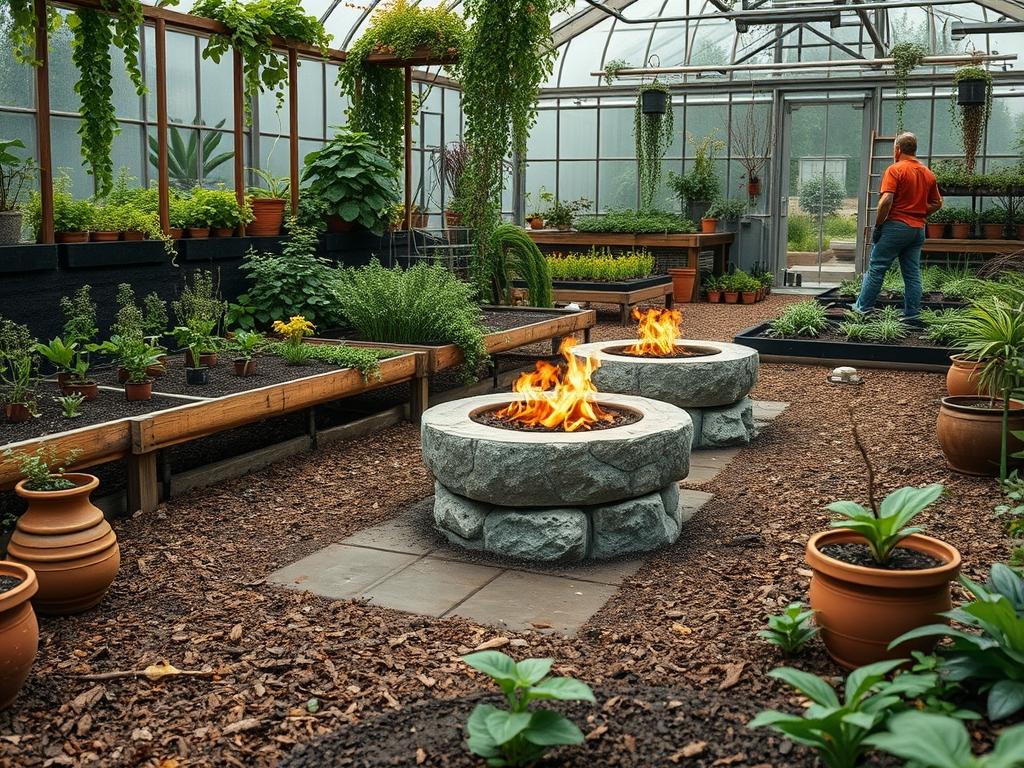
Creating a cohesive outdoor living space requires more than just placing a few chairs around a flame; it demands a sophisticated understanding of spatial geometry, material science, and safety engineering. Traditional stone fire pits serve as the quintessential focal point for modern landscapes, bridging the gap between rugged naturalism and refined architectural design. When a homeowner or developer decides to integrate a permanent fire feature, they are not merely adding an amenity. They are altering the thermal profile of the garden, influencing local drainage patterns, and establishing a new center of gravity for social interaction. The challenge lies in balancing the aesthetic desire for rustic charm with the technical necessity of heat management and structural stability. A well-placed fire pit enhances curb appeal by suggesting a lifestyle of leisure and permanence, yet it must be anchored by a rigorous site analysis that accounts for prevailing wind directions, overhanging canopies, and the proximity of combustible structures. In regions with volatile weather patterns, the choice of stone becomes even more critical. The material must withstand freeze-thaw cycles without spalling or cracking, ensuring that the investment remains safe and beautiful for decades.
Landscape Design Principles
Successful integration of traditional stone fire pits begins with the principle of intentional placement. A fire pit should never feel like an afterthought dropped onto a lawn. Instead, it should be the terminus of a well-defined walkway or the heart of a sunken terrace. Symmetry often plays a role in formal designs, where the pit is centered on a primary axis extending from the home’s back door. However, in more naturalistic settings, an asymmetrical approach that utilizes elevation layers can create a sense of discovery. Using retaining walls to carve a fire nook into a hillside provides both a windbreak and additional tiered seating, maximizing the utility of the square footage.
Visual balance is achieved by mirroring the scale of the fire pit with the surrounding hardscape. A 36-inch diameter pit requires at least a 10-foot to 12-foot diameter patio to allow for comfortable movement around the flame. Focal points should be reinforced through lighting and texture. For example, using a different laying pattern for the pavers immediately surrounding the pit can create a “rug” effect that defines the zone. Irrigation planning is often overlooked in fire pit design, but it is vital. All supply lines for localized plantings or lawn sprinklers must be rerouted at least 5 feet away from the heat source to prevent the melting of PVC pipes or the boiling of water within the lines.
Plant and Material Selection
The materials selected for a traditional stone fire pit must be rated for high thermal stress. While the exterior can feature decorative Fieldstone or Flagstone, the interior must be lined with Fire brick and held together with High-temperature refractory mortar. The following table outlines suitable plantings to surround the periphery, chosen for their resilience and low-litter profiles.
| Plant Type | Sun Exposure | Soil Needs | Water Demand | Growth Speed | Maintenance Level |
| :— | :— | :— | :— | :— | :— |
| Blue Fescue | Full Sun | Well-drained | Low | Medium | Low |
| Lavender | Full Sun | Gritty/Lean | Low | Moderate | Low |
| Boxwood | Part Sun | Loamy/Rich | Medium | Slow | Medium |
| Creeping Thyme | Full Sun | Sandy | Medium | Fast | Low |
| Little Bluestem | Full Sun | Varied | Very Low | Moderate | Low |
Implementation Strategy
The construction of traditional stone fire pits begins with a comprehensive site layout and grading plan. You must first mark a circle that is at least 2 feet wider than the intended finished inner diameter of the pit. Excavate this area to a depth of 12 inches. The first 6 inches should be filled with 3/4-inch crushed stone or processed gravel, which must be compacted using a power tamper. This provides a stable, well-draining base that prevents the structure from heaving during winter months.
Once the base is level, the first course of stone is laid. If you are using a Steel fire ring as a liner, place it in the center first to act as a guide. The stones are then built up around the ring. For a traditional look, a dry-stack method or a mortared joint can be used, but you must ensure there are at least two or three small gaps, or “weep holes,” left in the bottom course to allow for airflow and water drainage. The interior wall should be lined with Fire brick if the exterior stone is a sedimentary variety like limestone, which can explode when trapped moisture turns to steam. Finally, the area surrounding the pit should be finished with a 3-inch layer of hardwood mulch or decorative pea gravel to provide a non-combustible transition to the rest of the landscape.
Common Landscaping Failures
One of the most frequent failures in building traditional stone fire pits is the neglect of subsurface drainage. If the pit is built in a low spot without a gravel sump, it will act as a basin, collecting rainwater and becoming a breeding ground for mosquitoes or a muddy mess that prevents fire starting. Another critical error is improper spacing between the fire feature and nearby vegetation. Overhanging branches should be pruned back to a minimum height of 15 feet above the pit to prevent scorched leaves or accidental ignition from rising embers.
Soil compaction is another silent killer of landscape longevity. During the construction of the fire pit, heavy machinery or repeated foot traffic can collapse the pore spaces in the soil, leading to the death of nearby trees whose roots can no longer breathe. Furthermore, many DIY builders use decorative river rocks to line the base of their fires. This is a dangerous mistake; river rocks often contain internal moisture that expands rapidly when heated, causing the stones to shatter and throw sharp fragments toward guests. Always stick to Lava rock or Fire-rated glass for the interior floor of the pit.
Seasonal Maintenance
Maintaining traditional stone fire pits is a year-round commitment that changes with the seasons. In the spring, inspect the mortar joints for any cracks caused by shifting ground. Use a stiff-bristled brush to remove moss or algae that may have accumulated on the shaded side of the stones. Summer maintenance focuses on ash management. You should never let ash build up to the level of the air vents, as this chokes the fire and produces excessive smoke. Empty the ash into a metal bucket only after it has cooled for at least 48 hours.
During the autumn, the primary goal is debris removal. Dry leaves are a major fire hazard; they must be cleared from the pit and the surrounding 10-foot safety zone daily. As winter approaches, if you live in a climate with heavy snowfall, consider covering the pit with a weatherproof vinyl cover or a custom metal lid. This prevents water from entering the stone crevices, freezing, and eventually bursting the masonry. If you use the pit during winter, clear a wide path of snow around it to ensure a stable footing on what may be icy stone surfaces.
Professional Landscaping FAQ
What is the safest distance for a fire pit from a house?
A traditional stone fire pit should be located at least 10 feet to 15 feet away from any standing structures, including your home, garage, or wooden deck. Local building codes may require even greater distances depending on your specific municipality.
Can I build a fire pit directly on my lawn?
No, you should never build a fire pit directly on grass. The heat will kill the turf and the weight of the stones will cause uneven settling. Always excavate and install a proper crushed stone or paver base first.
Which stone is best for the exterior of a fire pit?
Granite, Basalt, and Sandstone are excellent choices for their durability and aesthetic appeal. However, the interior must always be protected by a steel liner or fire brick to prevent the exterior stones from cracking under direct flame.
How do I prevent my fire pit from smoking excessively?
Ensure your design includes adequate ventilation at the base to feed oxygen to the flames. Only burn seasoned hardwoods like Oak or Hickory, and avoid burning green wood or trash, which creates heavy soot and dangerous sparks.
Do I need a permit for a permanent stone fire pit?
Requirements vary significantly by location. Many suburban areas require a site plan review and a fire marshal permit for permanent structures. Always check with your local building department or Homeowners Association before beginning excavation or purchasing materials.