Integrating edible components into a high-end landscape requires a fundamental shift in how we perceive property aesthetics and lifecycle management. Saving leek seeds is not a weekend hobby; it is a two-year commitment to biological infrastructure and outdoor environment planning. Most modern landscape designs prioritize annual rotations or perennial stability, yet the biennial nature of the Leek (Allium porrum) creates a unique architectural challenge. To successfully harvest seed while maintaining curb appeal, a designer must account for the plant’s structural changes across twenty four months. This process demands precise site selection, robust drainage systems, and a landscape layout that accommodates a tall, flowering focal point in the second season. When we approach saving leek seeds from a professional landscaping perspective, we are essentially managing a living installation that transitions from a low-profile foliage texture to a dominant vertical element.
The primary landscaping challenge lies in the extended occupancy of the garden bed. Most vegetables are harvested within ninety to one hundred and twenty days, allowing for seasonal replanting and fresh mulch applications. However, saving leek seeds requires the plant to remain in situ through a winter dormancy period and a second spring growth spurt. This means the soil cannot be tilled, the grade cannot be significantly altered, and the irrigation zone must remain active for the duration of the biological cycle. From a curb appeal standpoint, the designer must manage the aging foliage of the first year as it transitions into the structural “umbel” or flower head of the second year. This requires a sophisticated understanding of elevation layers and plant spacing to ensure that the garden remains a visual asset rather than a neglected patch of overgrown greens.
Landscape Design Principles
In professional landscape architecture, we use the concepts of symmetry and focal points to guide the viewer’s eye. When saving leek seeds, the plant becomes a dramatic focal point during its second year, reaching heights of 3 feet to 5 feet. This verticality must be balanced with lower elevation layers, such as Creeping Thyme or Stonecrop, to prevent the landscape from looking top-heavy. By placing leeks in the center of a circular bed or at the rear of a tiered retaining wall, we utilize their height to create depth and visual interest.
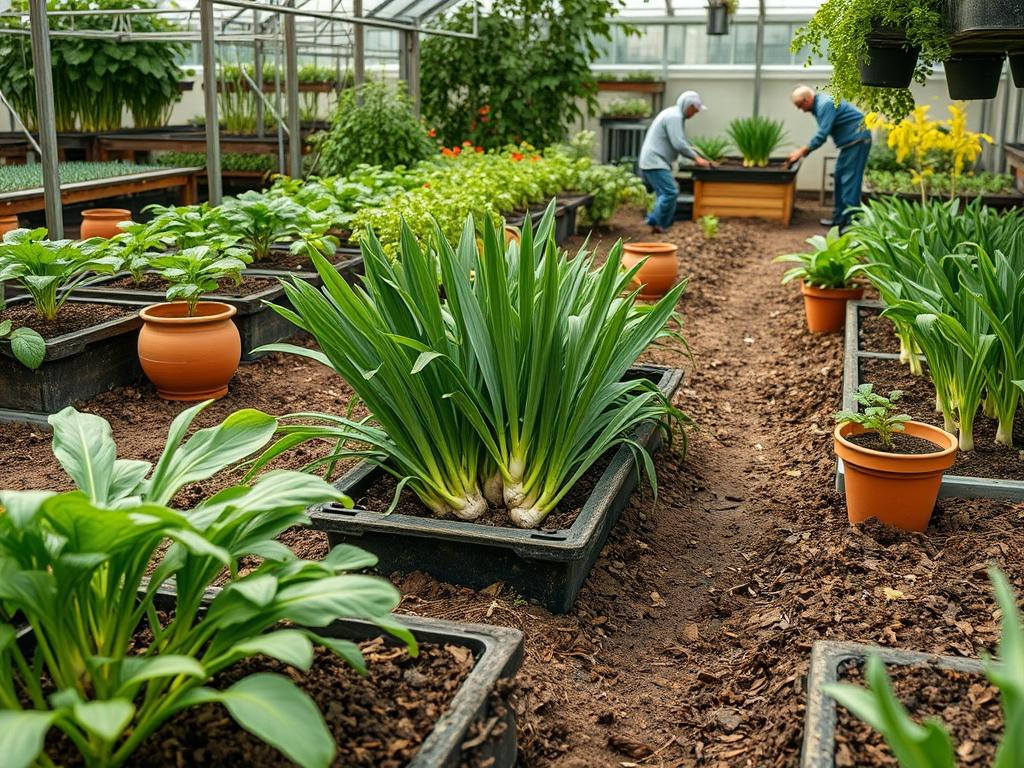
Irrigation planning is another critical design principle. Because leeks destined for seed production will occupy the same space for two years, the irrigation system must be precise. We typically recommend a Drip Irrigation System with Emitter Tubing spaced at 6-inch intervals. This ensures deep root penetration without wetting the foliage, which reduces the risk of fungal pathogens like leek rust. Furthermore, the walkway design surrounding these beds should be wide enough to allow for maintenance access without compacting the soil near the delicate root zones. A 24-inch wide gravel path or flagstone walkway provides a stable surface for the landscape architect to monitor the seed development without disturbing the drainage profile.
Visual balance is maintained by grouping leeks in clusters of three or five. Single plants often look like weeds or accidental growth in a formal landscape, but grouped plantings create an intentional, structured aesthetic. During the second year, the large, spherical flower heads provide a geometric contrast to the linear leaves. This geometry is a hallmark of modern landscape design, allowing the “edible” garden to blend seamlessly with ornamental “hardscaping.”
Plant and Material Selection
| Plant or Material Type | Sun Exposure | Soil Needs | Water Demand | Growth Speed | Maintenance Level |
| :— | :— | :— | :— | :— | :— |
| Leeks (Allium porrum) | Full Sun | Rich, Organic Loam | Moderate | Very Slow | High |
| Shredded Cedar Mulch | N/A | N/A | N/A | N/A | Low |
| River Rock (1-inch) | N/A | N/A | N/A | N/A | Minimal |
| Compost-Based Soil | N/A | High Nitrogen | N/A | N/A | Moderate |
| Bamboo Support Stakes | N/A | N/A | N/A | N/A | Seasonal |
| Drip Irrigation Tape | N/A | N/A | High Efficiency | N/A | Technical |
Implementation Strategy
The implementation process begins with site grading. Proper drainage is the most important factor for a two-year plant cycle. We start by ensuring a 2 percent slope away from any permanent structures to prevent water from pooling around the leek bases during winter. Once the grade is established, we install Landscape Edging, such as 4-inch Steel Edging or Cedar Timbers, to define the boundaries of the seed-saving zone. This helps prevent aggressive turf grasses from encroaching on the leeks during their long residency.
Soil preparation requires a deep blend of Organic Compost and Fine Bark Mulch. Because the leeks will be drawing nutrients for twenty four months, the initial soil charge must be substantial. We recommend amending the soil to a depth of 12 inches. After planting the Leek Seedlings at a depth of 6 inches, we apply a 3-inch layer of Mulch to regulate soil temperature and retain moisture. This mulch layer is vital for overwintering; it prevents the “heaving” of soil that occurs during freeze-thaw cycles, which can expose the roots and kill the plant before it reaches its second year.
In the second spring, as the flower stalks emerge, the implementation shifts to structural support. The heavy flower heads can cause the stalks to bend or snap during summer thunderstorms. A professional consultant installs Green Coated Steel Stakes or Natural Bamboo to provide a vertical scaffold. These supports are secured with Jute Twine, a biodegradable material that maintains the natural aesthetic of the landscape while providing the necessary stability for the heavy seed heads.
Common Landscaping Failures
The most frequent failure in saving leek seeds is improper drainage leading to root rot during the dormant season. Many homeowners place their garden beds in low-lying areas of the yard where water collects. Without a French Drain or elevated Raised Beds, the leeks will likely perish during a wet winter. Soil compaction is another silent killer. If foot traffic is not strictly controlled by designated walkways, the soil density increases, restricting oxygen flow to the roots and stunted growth.
Root overcrowding also presents a significant issue. In a standard harvest-focused garden, leeks can be grown quite close together. However, for seed production, each plant needs at least 10 inches of space to allow for maximum airflow and nutrient uptake. If the plants are too crowded, the seeds will be small and have a low germination rate. Furthermore, irrigation inefficiencies, such as overhead sprinkling, are a common mistake. Water trapped in the tight leaf axils of the leek encourages rot. A professional landscape setup always utilizes sub-surface or ground-level irrigation to keep the transition zones dry.
Seasonal Maintenance
Spring maintenance in the first year focuses on growth and nitrogen delivery. We apply a Slow-Release Organic Fertilizer to establish a strong root system and broad leaves. As summer progresses, the focus shifts to moisture management. It is critical to maintain a consistent moisture profile; fluctuations can cause the plant to stress and attempt to flower prematurely, which results in inferior seeds.
Autumn is the season for protection. Before the first hard frost, we add an additional 2 inches of Straw or Leaf Mold around the base of the plants. This insulates the “heart” of the leek. During winter, maintenance is minimal, though we must check the site after heavy snow or rain to ensure no debris is crushing the dormant plants.
The second spring is the most exciting phase. Once the soil warms, the leeks will send up a central “bold” or stalk. At this stage, we transition to a Low-Nitrogen, High-Phosphorus Fertilizer to encourage flower development rather than foliage. Summer of the second year is dedicated to monitoring the flower heads. When the “umbel” begins to dry and the small black seeds become visible inside the pods, it is time to harvest. This usually occurs in late summer or early autumn, completing the full two-year cycle.
Professional Landscaping FAQ
Why can I not harvest the leeks I plan to save seeds from?
Harvesting the bulb kills the plant. For seed production, the biological structure must remain intact through its entire two-year lifecycle. You are sacrificing the edible stalk to gain thousands of genetically adapted seeds for future landscape plantings.
How does the flowering leek affect the look of my garden?
In the second year, leeks produce architectural, globe-shaped flowers. They function similarly to ornamental Alliums, providing high-vertical interest and attracting pollinators. They add a professional, intentional aesthetic to any structured garden bed or edible landscape.
Is irrigation different for seed-saving beds?
Yes, consistency is vital. Use Drip Irrigation to deliver water directly to the roots. Avoid overhead watering, which can damage the heavy flower heads or cause fungal issues in the dense foliage during the long twenty-four-month growth period.
What is the best way to support tall flower stalks?
Use 5-foot Bamboo Stakes and Soft Garden Ties. Drive the stakes at least 12 inches into the ground to ensure they can withstand wind. Secure the stalk loosely to allow for natural movement while preventing the head from snapping.
What happens to the soil after two years of leeks?
The soil will be nutrient-depleted, specifically in nitrogen and potassium. After the seed harvest, remove the stalks and roots. Replenish the area with 2 inches of Compost and Aged Manure before planting the next ornamental or vegetable crop.