
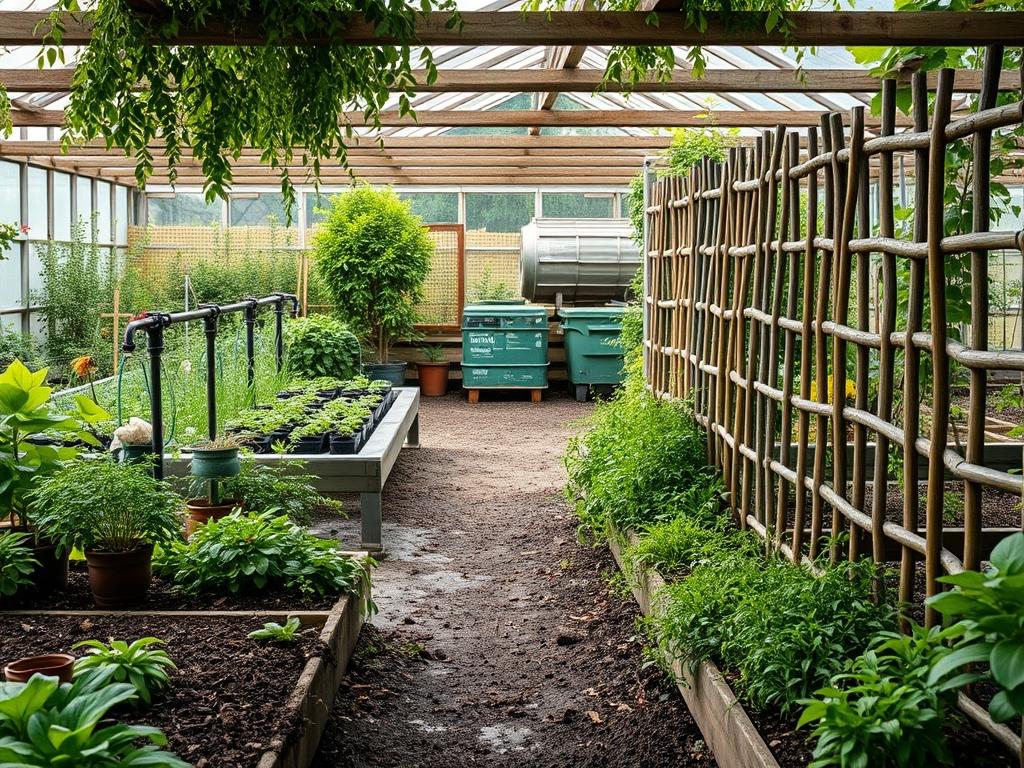
Sustainability in modern landscape architecture often requires looking backward to ancient techniques that prioritize resource efficiency and natural harmony. The landscaping challenge for the contemporary homeowner is frequently a conflict between aesthetic desire and environmental responsibility. Traditional wattle fencing offers a sophisticated solution to this dilemma, providing a biodegradable, permeable, and visually striking boundary that utilizes existing garden waste. When considering curb appeal, a hand-woven fence provides a texture and organic rhythm that pre-fabricated pressure-treated panels cannot replicate. Beyond mere aesthetics, these structures serve critical outdoor functionality goals such as wind mitigation, microclimate creation, and site-specific privacy screening. In regions where high winds are a concern, a solid fence acts like a sail, creating turbulent down-drafts that can damage delicate plantings. Conversely, the semi-permeable nature of wattle allows air to filter through, significantly reducing wind speed without creating the destructive vortexes typical of solid barriers. This functional elegance makes wattle fencing an essential tool for any landscape architect seeking to integrate the built environment with the surrounding ecology.
Landscape Design Principles
Successful landscape design relies on the core principles of symmetry, focal points, and elevation layers to create a sense of cohesion within a space. While a wattle fence is inherently rustic, its placement must be deliberate to avoid a cluttered appearance. Symmetry can be achieved by flanking a garden entrance with two identical wattle panels, creating a formal gateway that leads into a more naturalistic zone. Focal points are established by using the darker tones of aged wood as a backdrop for bright flowering perennials or silver-foliage shrubs. This contrast draws the eye and defines the boundaries of the outdoor room.
Elevation layers play a vital role in how the fence interacts with the rest of the garden. A low wattle border, perhaps only 12 inches high, can define a pathway without obstructing views of lower-tier plantings. Larger installations, reaching 5 feet or more, provide the necessary verticality to balance a high canopy of trees. Furthermore, irrigation planning must account for the fence line. Because wattle stakes are driven directly into the earth, the area must be well-drained to prevent premature rot. Visual balance is maintained by matching the weight of the fence with the surrounding vegetation; a heavy, thick-weaver fence pairs well with large-leafed plants like Hostas or Fatsia japonica, while a fine-willow weave complements the airy texture of ornamental grasses.
Plant and Material Selection
Choosing the correct biological materials is the foundation of structural integrity in wattle construction. The following table outlines the most common species used for both the structural uprights and the flexible horizontal weavers.
| Plant Type | Sun Exposure | Soil Needs | Water Demand | Growth Speed | Maintenance Level |
| :— | :— | :— | :— | :— | :— |
| Willow (Salix) | Full Sun | Moist/Heavy | High | Very Fast | High (Pruning) |
| Hazel (Corylus) | Partial Shade | Well-drained | Medium | Moderate | Low |
| Sweet Chestnut | Full Sun | Acidic/Sandy | Medium | Fast | Moderate |
| Birch (Betula) | Full Sun | Any | Moderate | Fast | Low |
| Oak (Stakes) | Full/Partial | Deep Loam | Medium | Slow | Minimal |
For the vertical posts, also known as zales or sailers, durable hardwoods like Oak or Sweet Chestnut are preferred due to their natural tannins which resist decay. The weavers, or rods, should be harvested from flexible species like Willow or Hazel. Ideally, these are cut during the dormant season, typically between late autumn and early spring, when the sap is low and the wood is most pliable.
Implementation Strategy
The implementation of a wattle fence begins with a rigorous site analysis and layout plan. Before the first stake is driven, the designer must check the grading of the land. If the fence is to be built on a slope, the weaver lines should remain level with the horizon rather than following the pitch of the ground, which creates a more professional and architecturally sound appearance.
Start by marking the fence line with a string line to ensure perfect alignment. Use a Heavy Mallet to drive the 2-inch thick stakes into the ground at intervals of 12 to 18 inches. The depth of the stakes should be at least one-third of the total height of the fence to ensure stability against wind loads. For the weavers, select rods that are roughly 6 to 8 feet long. Begin at the bottom, weaving the first rod in a simple over-under pattern around the stakes. The second rod should follow the opposite pattern, crossing the first.
To ensure longevity, the first layer of weavers should be elevated slightly off the ground by a small layer of crushed stone or gravel to prevent constant contact with moist soil. As you build the layers, use a Hammer or a heavy block of wood to periodically tap the weavers down, ensuring a tight, gap-free structure. Once the desired height is reached, the top rods are often twisted or tied off in a “heathering” or “binder” finish to lock the entire structure in place. Finally, apply a 3-inch layer of mulch along the base to suppress weeds, but keep the mulch an inch away from the stakes to maintain airflow and prevent rot.
Common Landscaping Failures
The most frequent failure in wattle fencing is improper drainage at the base of the uprights. When stakes are driven into compacted clay soil without a drainage strategy, they act as conduits for moisture, leading to fungal growth and total structural collapse within two seasons. Another common error is root overcrowding near the fence line. If new shrubs are planted too close to the wattle, their expanding root systems can heave the stakes out of alignment, ruining the symmetry of the installation.
Improper spacing of the vertical zales is also a significant issue. If the stakes are placed more than 18 inches apart, the weavers will eventually sag under their own weight or become brittle and snap because they lack the necessary tension. Additionally, many DIY landscapers fail to account for the drying process of the wood. As the green prunings dry, they shrink. If the fence is not woven tightly from the start, large gaps will appear, compromising privacy and structural rigidity. Irrigation inefficiencies, such as spray heads hitting the fence directly, will also drastically shorten the lifespan of the wood, causing it to bleach and decay prematurely.
Seasonal Maintenance
To maximize the life of a traditional wattle fence, a proactive seasonal maintenance schedule is required. In the Spring, inspect the base of the fence for any signs of heaving or rot caused by winter frost cycles. This is also the time to apply a mixture of linseed oil and turpentine if a preserved look is desired, though many prefer the natural silvering of the wood.
During the Summer, the focus shifts to vegetation management. Ensure that climbing plants or nearby shrubs are not overly weighing down the weavers. Prune back any aggressive growth that may be trapping humidity against the wood surface. In the Autumn, clear away fallen leaves that have accumulated against the bottom of the fence, as these create a damp mat that encourages decay. This is the optimal time to harvest new prunings for any necessary repairs. Finally, in the Winter, check the structural integrity of the binders at the top of the fence. Heavy snow loads can sometimes compress the weavers; clearing heavy accumulation will prevent the horizontal rods from snapping under the weight.
Professional Landscaping FAQ
How long does a traditional wattle fence typically last?
A well-constructed fence made from Hazel or Willow generally lasts between 5 and 10 years. Using Sweet Chestnut or Oak for the ground-contact stakes can extend this lifespan significantly, especially if the site has excellent drainage and airflow.
Can I use any type of garden prunings for weaving?
While many species work, flexibility is key. Willow, Hazel, and Fruitwood prunings are ideal. Avoid brittle woods like Evergreen Oak or Holly, as they will snap during the weaving process. Ensure the rods are green and recently harvested for maximum pliability.
Do I need to treat the wood with chemicals?
Chemical treatments are usually unnecessary and counterproductive to the ecological goals of wattle fencing. For preservation, a natural solution of Linseed Oil can be applied to the weavers, while the buried portion of the stakes can be lightly charred to resist rot.
What is the best spacing for the vertical stakes?
For most residential garden applications, stakes should be spaced between 12 and 16 inches apart. This creates enough tension to hold the weavers securely while allowing for a smooth, rhythmic aesthetic. Wider spacing often leads to structural sagging over time.
How do I handle corners in a wattle fence?
Corners require a “double-stake” method. Place two stakes close together at the turn to provide a sturdy anchor point for the weavers to wrap around. This reinforces the point of highest tension and ensures the fence remains taut in both directions.