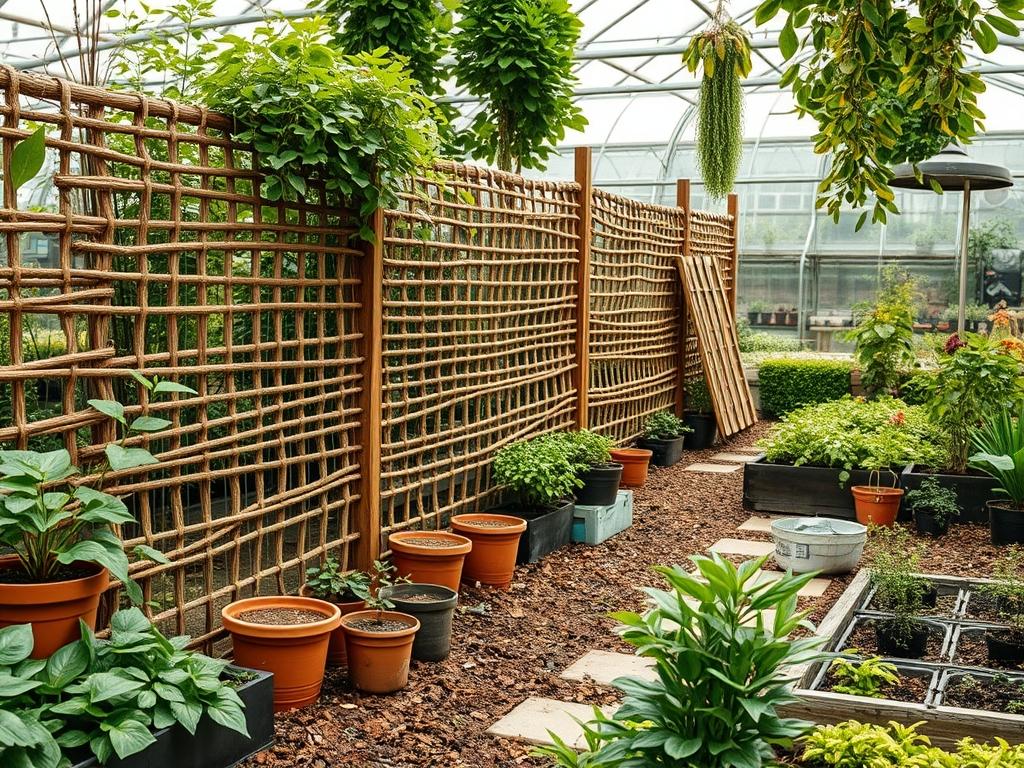
The integration of organic structures into a modern landscape offers a remedy to the sterile lines of contemporary suburban architecture. Traditional woven fencing, often referred to as hurdles or wattle, serves as more than a boundary marker; it acts as a living piece of art that bridges the gap between structured garden design and the wild, uninhibited beauty of nature. For the landscape architect, the challenge lies in choosing materials that harmonize with the local ecology while providing the necessary privacy and wind filtration required for functional outdoor living. Unlike solid timber panels, woven structures allow air to diffuse through the gaps, which prevents the turbulent wind eddies often found behind solid walls. This creates a gentler microclimate for delicate plantings and more comfortable seating areas. When we consider the curb appeal of a property, the tactile quality of hand-woven hazel or willow provides a sophisticated, artisan aesthetic that suggests a deep connection to the land and its history.
Landscape Design Principles
Successful landscape design rests on the mastery of visual balance and the strategic use of focal points. Traditional woven fencing provides a unique texture that can be used to direct the eye or soften the transition between different garden rooms. When planning a layout, symmetry does not necessarily mean identical mirror images; rather, it refers to the distribution of visual weight. A long, continuous run of hazel weaving should be anchored with vertical elements such as taller shrubs or stone pillars to prevent a monolithic appearance. Lowering the elevation of the fence toward the front of the property can improve sightlines, while tiered layers of weaving in the backyard can create intimate, sunken garden spaces.
Elevation layers are critical when using woven materials because these fences follow the contours of the ground more gracefully than rigid panels. In sloped yards, woven fences can be built in-situ to follow the grade of the land, eliminating the unsightly gaps seen with stepped panel fencing. Furthermore, the integration of lighting is a vital design principle. Up-lighting a woven hazel fence at night emphasizes the intricate patterns of the weave, casting elongated shadows that add depth and drama to the perimeter. For walkways, using woven borders at a height of 12 inches to 18 inches creates a clear path definition without obstructing the view of lower-lying perennial beds. This hierarchy of height ensures that the hardscaping supports the horticulture rather than competing with it.
Plant and Material Selection
The longevity and beauty of a woven structure depend heavily on the selection of accompanying vegetation. Plants should be chosen based on their ability to complement the rustic tones of the wood while managing the moisture levels near the base of the fence.
| Plant Type | Sun Exposure | Soil Needs | Water Demand | Growth Speed | Maintenance Level |
| :— | :— | :— | :— | :— | :— |
| Salix viminalis (Willow) | Full Sun | Moist, Clay | High | Very Fast | Moderate |
| Lavandula (Lavender) | Full Sun | Well-drained | Low | Moderate | Low |
| Clematis montana | Partial Shade | Loamy, Moist | Moderate | Fast | High |
| Dryopteris (Fern) | Full Shade | Humus-rich | Moderate | Slow | Low |
| Carpinus betulus (Hornbeam) | Full/Partial | Versatile | Moderate | Moderate | Moderate |
| Rosa rugosa (Wild Rose) | Full Sun | Sandy, Loam | Moderate | Fast | Moderate |
When sourcing your fencing materials, Hazel (Corylus avellana) is preferred for its strength and thicker diameter, making it ideal for structural boundaries. Willow (Salix) is more flexible and is best suited for decorative garden screens or tighter, more intricate patterns. Both materials should be harvested during the dormant season, typically from November to March, to ensure the sap is low and the wood remains supple for weaving.
Implementation Strategy
The process begins with a thorough site survey and grading. Before a single post is driven into the ground, ensure the drainage patterns of the yard move away from the fence line. Standing water is the primary enemy of natural wood. If necessary, install a French drain or a gravel-filled trench along the perimeter to manage runoff. Once the site is prepared, the first step is the installation of the uprights, known as staves or zales. For a permanent in-situ fence, use Sweet Chestnut or Oak posts with a diameter of 3 to 4 inches. These should be driven into the ground at intervals of 12 to 24 inches depending on the desired strength.
Begin the weave at the base, typically starting 2 inches above the soil line to prevent direct contact with moisture. This gap can be hidden later with a thick layer of pine bark mulch or decorative stones. The primary weaving technique involves taking long Hazel rods and intertwining them between the uprights in a pattern called randing. For added stability, use a pairing weave, where two rods are twisted around each other as they pass the staves. Every few rows, use a wooden mallet to compress the weave downward, ensuring there are no large gaps. To finish the top, a technique called capping or binding is used. This involves wrapping several flexible Willow withies around the top rods to lock the structure in place. This prevents the top from unraveling under the weight of snow or climbing plants.
Common Landscaping Failures
The most frequent failure in traditional weaving is neglected post-preservation. Because the posts are constantly exposed to soil microbes, they are the first part of the fence to rot. Using un-treated or non-durable wood species for the vertical supports will lead to structural collapse within three years. Another common mistake is improper spacing of the staves. If the uprights are set too far apart, the horizontal rods will lose their tension and sag over time, ruining the visual rhythm of the fence.
Irrigation inefficiencies also contribute to the premature decay of woven fencing. Positioning sprinkler heads so they spray directly onto the hazel or willow will lead to fungal growth and rapid silvering of the wood. Instead, utilize drip irrigation lines buried under 3 inches of mulch to deliver water directly to the roots of nearby plants. Furthermore, avoid the temptation to plant heavy, woody climbers like Wisteria directly onto a young woven fence. The weight and aggressive twining can snap the hazel rods. Use lighter climbers or provide a secondary wire support system to transition the weight away from the woven structure.
Seasonal Maintenance
Managing a woven landscape is a year-round commitment that changes with the seasons. In the spring, inspect the base of the fence for any signs of heaving caused by the winter freeze-thaw cycle. Use a heavy tamper to firm the ground around the posts. This is also the time to apply a breathable wood preservative or a mixture of linseed oil and turpentine to the weavers. This coating helps the wood retain its flexibility and prevents it from becoming brittle in the summer sun.
During the summer, focus on moisture management. Ensure that tall grasses or weeds are trimmed away from the base of the fence to allow for maximum airflow. This prevents the “wicking” of moisture from the ground into the wood. In the autumn, clear away fallen leaves that may become trapped in the weave, as these can harbor pests and trap moisture. Finally, in the winter, check the tension of the binding at the top of the fence. If any rods have snapped due to cold-weather contraction, they can be easily replaced by sliding new Hazel rods into the existing weave. This modularity is a significant advantage over pre-fabricated fencing; individual components can be repaired without replacing the entire panel.
Professional Landscaping FAQ
How long does a traditional woven fence typically last?
A well-constructed hazel fence usually lasts between 8 and 12 years. If the posts are made of durable oak or sweet chestnut and the weave is treated annually with oil, the lifespan can extend to 15 years or more.
Can I grow climbing plants directly on woven fencing?
Lightweight plants like Sweet Peas or Clematis thrive on woven structures. However, heavy woody vines should be avoided. The gaps in the weave provide excellent natural anchors for tendrils, making additional netting unnecessary for most annual climbers.
Is hazel or willow better for privacy screening?
Hazel is superior for privacy due to its thicker rods which create a more substantial visual barrier. Willow is much thinner and more flexible, making it better for decorative indoor screens or low-level garden borders rather than high-security perimeters.
Does woven fencing require a concrete foundation?
No, concrete is generally discouraged as it traps moisture against the wood. Instead, posts should be driven directly into the ground or set in a deep bed of compacted crushed stone to allow for superior drainage around the base.
What is the best way to prevent the wood from turning grey?
The silvering of wood is a natural reaction to UV exposure. To maintain the original warm brown tones, apply a UV-resistant wood stain or a regular coating of linseed oil every twelve months to nourish the fibers.