
I need to balance the highly technical task of scythe maintenance with the broader context of landscape architecture and garden design.
Specific constraints:
1. No title/H1 at the start.
2. No em dashes (— or –).
3. ASCII only (no smart quotes).
4. Professional/Practical tone.
5. Structural requirements: Intro, Design Principles, Plant/Material Table, Implementation (peening process), Failures, Seasonal Maintenance, FAQ.
6. Bold specific terms: tools, species, measurements, materials.
7. Avoid AI-ish repetitive phrasing.
Semantic Gardening/Relevance Strategy:
– Connect scythe work to modern “No Mow” and meadow landscape trends.
– Use the scythe as a precision tool for “Elevation Layers” (sculpting tall grass).
– Relate peening to the longevity and ROI of landscaping equipment.
– Ensure the table contains both plants suitable for scything and materials for peening.
Drafting logic for “No Em Dashes”: I will use semicolons, colons, or parentheses to create breaks in thought.
Drafting logic for word count: I will expand on the metallurgical science of cold-working the steel (peening) and how that translates to efficient “Outdoor Living” area management.
Key tools to bold: Peening Anvil, Peening Hammer, Whetstone, Scythe Blade, Snath.
Key plants to bold: Festuca rubra, Schizachyrium scoparium, Lupinus perennis.
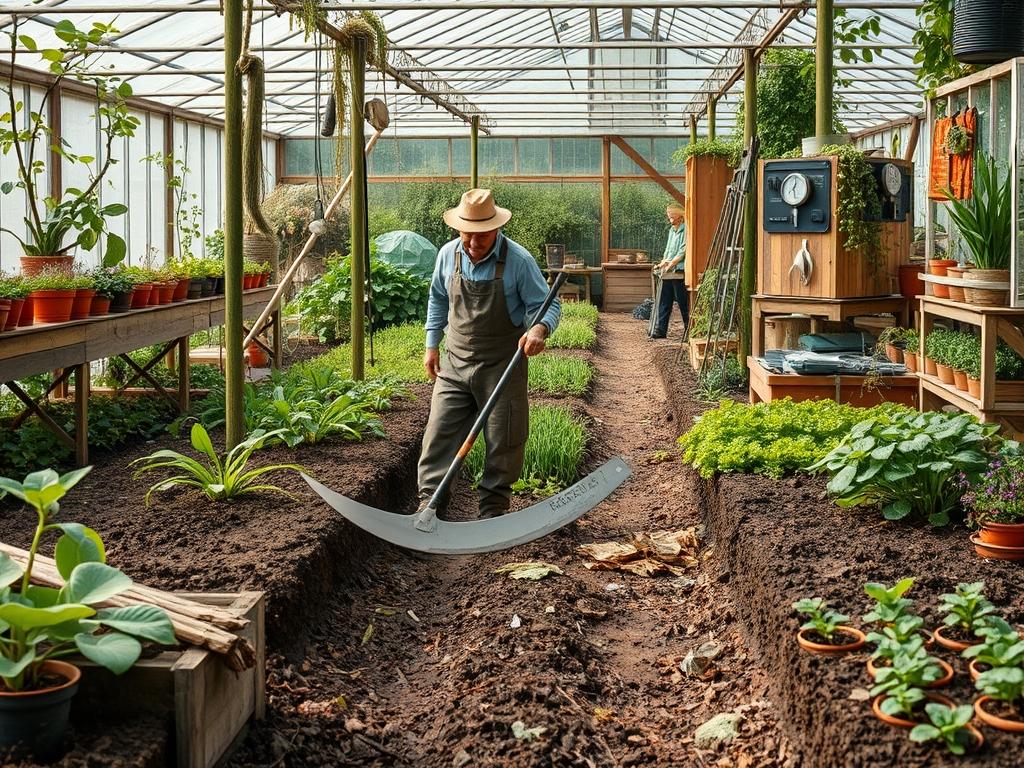
Maintaining a high performing landscape often requires a shift from fossil-fuel-dependent machinery to the quiet precision of manual tools. For the modern estate manager or landscape architect, the challenge lies in balancing aesthetic curb appeal with ecological functionality. Large expanses of meadow or orchard require a management style that encourages biodiversity without appearing neglected. This is where the scythe becomes an indispensable asset. Unlike a loud, vibrating brush cutter, a well-tuned scythe glides through the sward with surgical accuracy, leaving a clean cut that promotes faster plant recovery. However, the efficiency of this tool is entirely dependent on the condition of its edge. Traditional Scythe Peening is the artisan process of cold-hammering the blade to draw out the steel, thinning it to a microscopic fineness that a simple grindstone cannot achieve. Mastering this skill transforms a heavy piece of metal into a responsive instrument, allowing for the effortless sculpting of slopes, drainage swales, and wildflower margins.
The integration of scythe-managed areas into a professional landscape plan serves multiple purposes. It reduces the carbon footprint of the property and creates a sensory experience characterized by bird song rather than engine roar. To achieve this, a landscape architect must understand the relationship between the tool and the terrain. A perfectly peened Scythe Blade allows the gardener to manage steep Retaining Walls and delicate Elevation transitions where a riding mower would be dangerous or destructive. By maintaining a razor edge through traditional methods, the practitioner ensures that the grass is sliced cleanly, preventing the ragged, brown tips often seen after a mechanical mow. This focus on tool maintenance is the foundation of high-level outdoor environment consulting.
Landscape Design Principles
In the realm of grand landscape design, symmetry and focal points act as the visual anchors of the property. When planning a meadow that will be managed by a scythe, designers must consider the geometry of the mown paths. These walkways should be designed with a width of at least 60 inches to allow for a comfortable swinging arc. Visual balance is achieved by contrasting these manicured, low-growth paths against the tall, swaying texture of a native grass meadow. By using the scythe to create varied heights, the architect can guide the eye toward specific vistas or water features.
Elevation layers are critical in professional garden planning. A well-designed landscape utilizes a “stepped” approach, where low-growing groundcovers lead into mid-height perennials, eventually reaching the timber line or high-reach shrubs. The scythe is the primary tool for maintaining these transitions. Irrigation planning must also account for the physical labor involved; paths should be clear of Irrigation Heads or surface-level Drainage Grates that might catch the heel of the blade. Furthermore, the design should incorporate “mow zones” that allow the scythe user to swing without obstruction from trees or boulders. For instance, leaving a 3 foot radius of Mulch around the base of specimen trees protects the bark from accidental nicks while providing a clear boundary for the scythe stroke.
Visual balance is not just about plant placement, it is about the negative space created by maintenance. A meadow that is never cut becomes a stagnant monoculture. Using the traditional scythe technique allows for “mosaic mowing,” where different sections are cut at different times of the year. This creates a patchwork of regrowth that supports various insect life cycles while maintaining a sense of intentionality in the design.
Plant and Material Selection
The following table outlines the essential components for both the living landscape and the tools required to maintain it through Traditional Scythe Peening.
| Component Type | Common Name / Tool | Sun Exposure | Soil Needs | Water Demand | Growth Speed | Maintenance Level |
| :— | :— | :— | :— | :— | :— | :— |
| Plant | Little Bluestem | Full Sun | Rocky, Lean | Low | Moderate | Low |
| Plant | Fine Fescue | Partial Shade | Well-Drained | Low | Slow | Very Low |
| Plant | Wild Blue Lupine | Full Sun | Sandy, Acidic | Moderate | Fast | Moderate |
| Tool | Peening Anvil | N/A | Stable Base | N/A | N/A | Professional |
| Tool | Peening Hammer | N/A | Dry Storage | N/A | N/A | High Precision |
| Material | Natural Whetstone | N/A | N/A | Wet Storage | N/A | Daily Use |
| Material | Hardwood Snath | N/A | Dry Storage | N/A | N/A | Periodic Oil |
Implementation Strategy
Planning the layout of a meadow requires a firm understanding of the site’s Grading and Drainage. Before the first swing of the blade, ensure the ground is free of large stones or hidden debris that could damage the Scythe Blade. Once the landscape is established, the focus shifts to the maintenance of the edge. Traditional Scythe Peening is not a form of sharpening in the way one uses a file; rather, it is a thinning of the metal.
To begin, you must secure a Peening Anvil into a heavy wooden block. This block should be at a height that allows the user to sit comfortably while holding the blade across their lap. The goal is to hammer the primary edge of the blade, which is typically made of relatively soft, high-quality carbon steel. Using a Peening Hammer with a specific weight of 500 grams, the user strikes the steel near the edge, moving in a consistent, overlapping pattern. This process work-hardens the metal, making it tougher and more resistant to wear while simultaneously making it thin enough to be finished with a Whetstone.
The stroke should be light and rhythmic. You are not trying to change the shape of the blade in one hit. Instead, you are moving the metal forward, creating a fine “lip” or bevel. A professional edge should be thin enough that it will deflect slightly when pressed against a thumbnail. Once the entire length of the blade has been peened, usually taking about 20 to 30 minutes, the edge is honed with a Coarse Whetstone and then a Fine Whetstone. This two-step process ensures that the “burr” created by hammering is aligned and polished. In a backyard or garden setting, this work is typically performed in the early morning or evening when the air is cool and the metal is stable.
Common Landscaping Failures
The most common failure in scythe-based landscaping is the neglect of the blade’s profile. Many users attempt to sharpen a thick, dull blade with only a Whetstone. This results in a steep, wedge-like edge that bounces off the grass rather than slicing it. This inefficiency leads to physical fatigue and an uneven finish on the lawn. Another common mistake is improper Grading during the initial lawn installation. High spots or “scalping” points can catch the blade, causing it to dig into the soil, which dulls the edge instantly and can even bend the tip.
Soil compaction is another silent killer of the meadow aesthetic. If the ground is too hard, the grasses will not have the resilience to bounce back after a cut, leading to a patchy, thin appearance. This is often caused by heavy equipment used during the construction phase of a home. To prevent this, professional landscapers ensure that Aeration is performed before seeding. Furthermore, root overcrowding in wildflower patches can make scything difficult. If Native Plants are seeded too densely, they competition for nutrients leads to spindly, weak stems that “lodge” or fall over before they can be cut, making the scything process a frustrating ordeal of lifting and hacking rather than smooth slicing.
Finally, a major failure in “Outdoor Living” design is the lack of a dedicated maintenance space. A scythe user needs a flat, shaded area to set up their Peening Anvil. Without this dedicated station, the tool is often left to rust or is sharpened poorly, leading to the eventual abandonment of the manual method in favor of loud, destructive string trimmers.
Seasonal Maintenance
The rhythm of the landscape dictates the frequency of the peening. In the Spring, focus on the “Clean-Up Cut.” This is when you remove the dead, matted grass from the previous winter. Because this material is often tough and dry, the blade may need a more aggressive peen to handle the resistance. This is also the time to inspect the Snath for any cracks or loose bolts that may have developed during the dry winter storage.
During the Summer, as the Fine Fescue and Little Bluestem reach their peak growth, the scythe is used primarily for maintaining paths and clearings. In this season, the grass is lush and full of moisture, meaning the blade can be peened to its thinnest, most delicate state. A quick “touch-up” peen every 10 hours of mowing will keep the effort at a minimum.
In the Autumn, the focus shifts to seed dispersal. Many landscapers wait until the wildflowers have dropped their seeds before performing the final cut of the year. The blades will encounter tougher, woodier stems during this time, requiring a slightly more robust edge with a less aggressive bevel to prevent chipping.
Winter is the season for major tool overhaul. This is when the Scythe Blade should be thoroughly cleaned of all sap and debris using a light oil. Any major nicks from accidents during the growing season should be ground out carefully, followed by a very thorough peening session to set the “geometry” of the blade for the coming year. Store all tools in a dry, unheated shed to prevent the wood of the Snath from shrinking or swelling excessively.
Professional Landscaping FAQ
How often should I peen my blade?
For residential use, Traditional Scythe Peening is required after every 5 to 10 hours of actual mowing time. If you notice the blade sliding over grass rather than cutting it, it is time to return to the Peening Anvil.
Can I use a grinder instead of peening?
No, a high-speed grinder will overheat the carbon steel and ruin the temper. Traditional peening cold-works the metal, which preserves the steel’s integrity and allows for a much thinner, more durable edge than mechanical grinding ever could.
What is the best way to prevent rust?
After every use, wipe the blade dry and apply a thin coat of vegetable oil or specialized tool oil. Store the scythe in a dry location, away from the ground, to prevent the Hardwood Snath and steel from absorbing moisture.
How do I handle thick, woody weeds?
Use a heavier, shorter “Bush Blade” for woody stems. It should still be peened, but the edge should be left slightly thicker to withstand the impact. Save your long “Grass Blade” for softer meadow grasses and fine lawn areas.
Is scything faster than using a weed whacker?
In heavy, wet grass, a skilled scythe user is often faster and much more efficient than a string trimmer. It eliminates the need for refueling, line changes, and hearing protection while providing a much cleaner, more professional finish.