
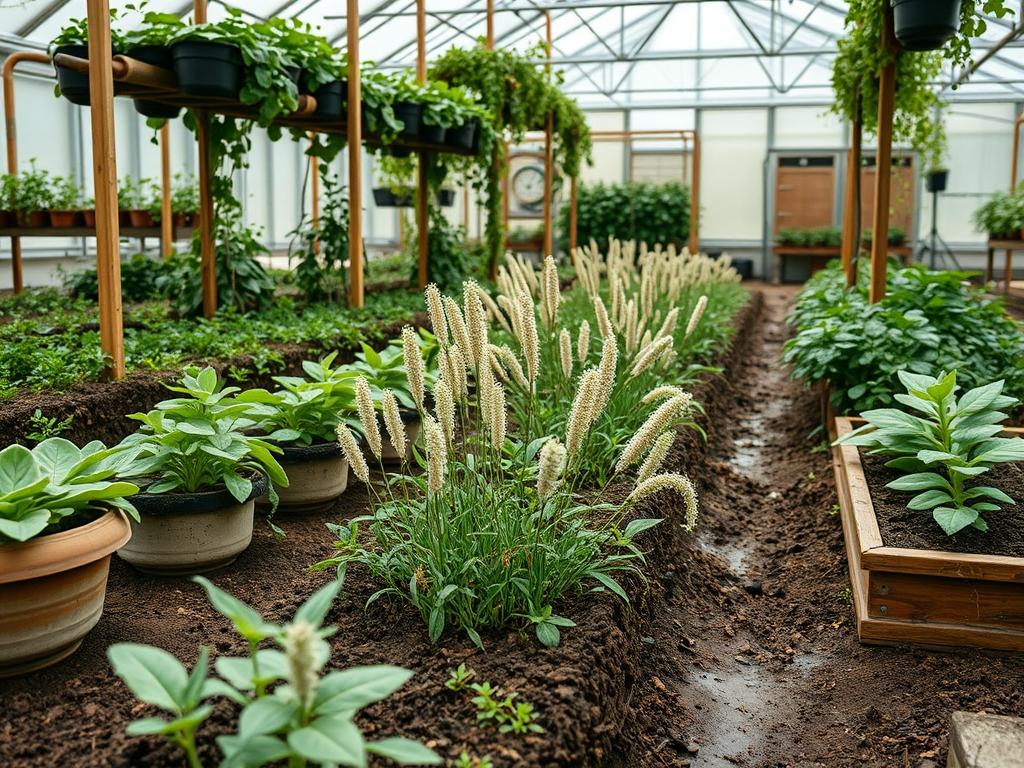
Landscaping an urban or suburban property often presents a frustrating paradox for property owners and professional designers alike. We frequently encounter sites where the soil has been stripped of its vitality through years of neglect, heavy construction traffic, or the overuse of synthetic fertilizers. These “dead zones” lack the structural integrity to support high-end ornamental plants or lush turfgrass. While traditional soil remediation can take years of composting and expensive amendments, the integration of Buckwheat for Soil Carbon represents a high-speed intervention for the modern landscape architect. By utilizing this fast-growing cover crop, we can transform a construction-scarred lot into a nutrient-dense environment in as little as six weeks. This approach addresses the core of curb appeal, which is not merely the surface aesthetics, but the subterranean health that sustains a vibrant outdoor living space.
The primary challenge in any large-scale landscape project is managing the transition between the rough grading and the final planting. Empty soil is vulnerable to erosion, weed infestation, and carbon loss due to oxidation. Implementing Buckwheat for Soil Carbon serves as a biological placeholder that stabilizes the site while actively sequestering atmospheric carbon into the rhizosphere. This process creates a “carbon sponge” that improves water holding capacity and fosters a diverse microbial community. For the consultant, this means the eventual installation of expensive Boxwoods, Japanese Maples, or Native Grasses will have a significantly higher survival rate. We are not just planting seeds; we are engineering an ecological foundation that ensures the long-term functionality of the outdoor environment.
Landscape Design Principles
Applying sophisticated design principles requires looking beyond the immediate flowering season to the underlying site architecture. Symmetry and visual balance are often disrupted by uneven plant growth, which is usually a symptom of inconsistent soil quality across a property. By using Buckwheat for Soil Carbon as a preparatory crop, we level the playing field, ensuring that structural plantings grow at a uniform rate. This uniformity is essential when creating formal hedges or rhythmic alleyways of trees where a single stunted specimen can ruin the entire visual perspective. Focal points, such as a high-end retaining wall or a custom water feature, gain more prominence when framed by soil that is dark, crumbly, and rich in organic matter.
Elevation layers are another critical consideration in the architect’s toolkit. We often design landscapes with varied heights to create a sense of depth and enclosure. However, steep slopes are prone to runoff and nutrient leaching. Buckwheat acts as a rapid stabilizer for these elevation changes, its fine root system knitting the soil together more effectively than many temporary grasses. Furthermore, when we plan irrigation systems, we must account for soil permeability. A site treated with Buckwheat for Soil Carbon exhibits superior drainage and aeration, allowing subsurface irrigation lines to distribute water more efficiently to the root zones. This proactive approach to soil structure is what separates a professional landscape design from a standard garden patch.
Plant and Material Selection
Effective landscaping relies on selecting the right tools and biological agents for specific environmental conditions. While Buckwheat is our primary tool for soil restoration, it must be viewed within the context of the broader plant palette. The following table outlines the characteristics of Buckwheat compared to other common landscape elements used during the site preparation and transition phases.
| Plant/Material | Sun Exposure | Soil Needs | Water Demand | Growth Speed | Maintenance Level |
| :— | :— | :— | :— | :— | :— |
| Buckwheat | Full Sun | Poor to Average | Moderate | Very Fast | Low |
| White Clover | Full Sun/Part Shade | Loamy | High | Moderate | Medium |
| Hardwood Mulch | N/A | Any | Low | None | Low |
| Winter Rye | Full Sun | Heavy Clay/Sand | Moderate | Fast | Medium |
| Compost Tea | N/A | Any | High | N/A | High |
Implementation Strategy
The successful execution of a landscape plan involving soil remediation requires a disciplined, step by step approach. Initially, the site must be cleared of debris and existing invasive species. We use a power rake or tiller to break the surface tension of compacted earth, typically to a depth of 6 inches. Once the soil is friable, Buckwheat seeds should be broadcast at a rate of 2 pounds per 1,000 square feet. This high density ensures a thick canopy that suppresses weeds through shading, a process we call “living mulch.”
After the seeds are spread, a light raking or the use of a turf roller helps ensure proper seed-to-soil contact. Irrigation should be frequent but light during the first 7 days to trigger rapid germination. As the crop matures, it reaches a height of 12 to 24 inches, creating a lush, green carpet that improves the property’s aesthetics even before the final hardscaping is installed. The most critical step occurs just as the plants begin to flower, usually around day 35. At this stage, the biomass is at its peak carbon content. We mow the crop and incorporate the green residue back into the soil using a rotary hoe or simply leave it as a surface mulch. This “green manure” quickly decomposes, releasing locked-up phosphorus and building the soil carbon that will feed the permanent landscape for years to come.
Common Landscaping Failures
Many projects fail not because of poor plant choice, but because of foundational errors during the installation phase. Drainage mistakes are the most frequent culprit; without proper grading and the installation of French drains or catch basins, water pools in low spots, drowning the roots of sensitive ornamentals. When soil is compacted by heavy machinery, it lacks the pore space for air and water to move, leading to anaerobic conditions. This is where Buckwheat for Soil Carbon becomes a lifesaver. Its taproot can penetrate moderately compacted layers, creating pathways for air and water to reach deeper into the profile.
Another common failure is root overcrowding, often caused by improper spacing during the initial planting. Designers frequently over-plant to achieve an “instant” look, but as the trees and shrubs mature, they compete for the limited carbon and nutrients in the soil. By enriching the entire planting bed with Buckwheat prior to installation, we expand the available “nutrient bank,” allowing plants to thrive even in high-density designs. Finally, many homeowners ignore the importance of mulch depth. Applying more than 3 inches of wood chips can actually suffocate the soil and prevent water from reaching the ground. True soil health comes from biological activity, not just topical coverings.
Seasonal Maintenance
A professional landscape is a living entity that requires a seasonal management strategy to maintain its value. In the spring, the focus should be on soil testing and the initial sowing of cover crops like Buckwheat once the danger of frost has passed. This is also the time to inspect irrigation controllers and clear any debris from drainage grates. As we transition into summer, the primary task is moisture management. If Buckwheat is being used as a temporary cover, it must be terminated before it goes to seed to prevent it from becoming a volunteer weed in later seasons.
Autumn is the ideal time for “putting the garden to bed.” This involves applying a thick layer of organic compost and planting over-wintering species that protect the carbon built during the summer. Winter maintenance is less about growth and more about protection. We use burlap wraps for sensitive shrubs and ensure that heavy snow piles are not directed onto delicate planting beds. For the landscape architect, the winter months are for monitoring the “bones” of the garden, checking the integrity of stone walls and walkways to ensure the structural elements remain balanced and safe.
Professional Landscaping FAQ
How does buckwheat improve soil carbon so quickly?
Buckwheat produces massive amounts of biomass in under 45 days. When this green matter is incorporated into the earth, it decomposes rapidly, fueling microbial activity that converts plant sugars into stable soil organic carbon and improving long-term fertility.
Can I plant buckwheat in a shaded backyard?
Buckwheat performs best in full sun settings. While it may germinate in partial shade, its growth will be leggy and its ability to sequester carbon will be significantly diminished compared to its performance in high-light environments.
Is buckwheat invasive in a residential garden?
It is not considered invasive, but it can self-seed if left to mature. To prevent this, mow or till the crop within one week of the first flowers appearing. This ensures the carbon stays in the soil without unwanted volunteers.
What tools do I need for a small-scale installation?
For residential plots, a hand-spreader, a bow rake, and a mower with a mulching blade are sufficient. For larger estates, a tractor-mounted seeder and a flail mower are recommended to handle the volume of biomass efficiently.
Does buckwheat work in heavy clay soils?
Yes, it is excellent for clay remediation. The fine roots help break up the heavy aggregates and increase aeration. Over several cycles, the addition of Buckwheat for Soil Carbon transforms “tight” clay into a more workable, loamy structure.