
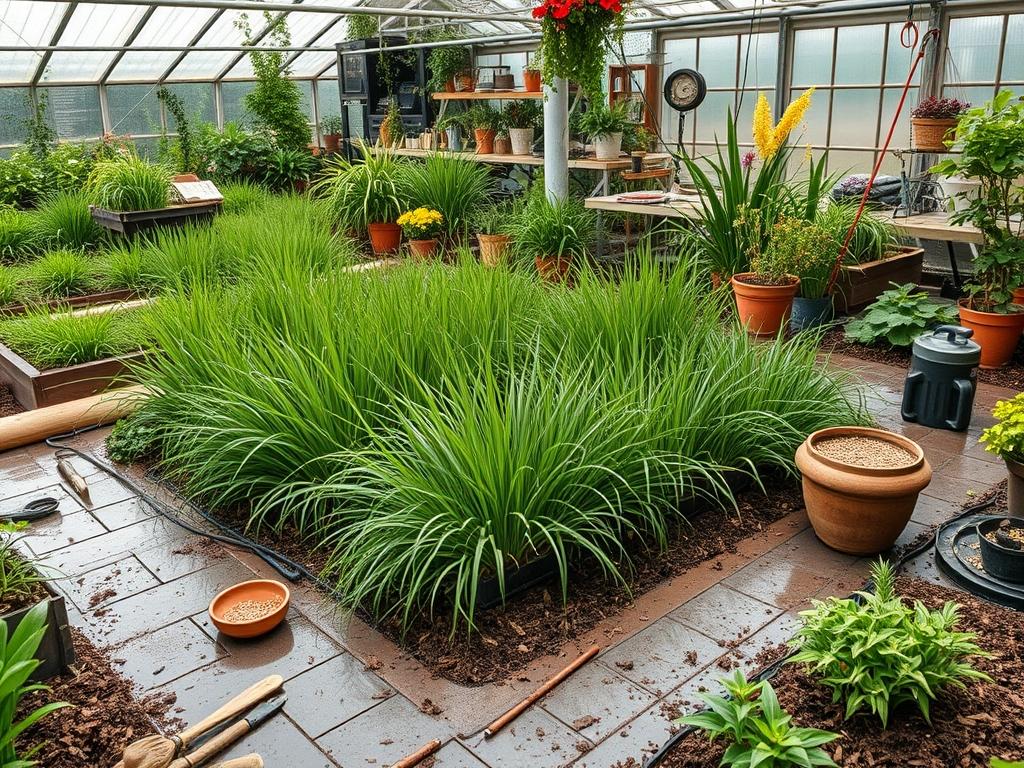
Modern homeowners face a recurring dilemma when attempting to balance curb appeal with environmental sustainability. Traditional turf grasses, while providing a familiar aesthetic, often require excessive chemical inputs, frequent irrigation, and relentless mowing schedules to maintain a pristine appearance. In many climate zones, these high-maintenance lawns struggle with drought or excessive shade, leading to brown patches and soil erosion. Native sedge grass lawns offer a professional solution that reconciles these conflicts. By utilizing members of the Carex genus, landscape architects can design outdoor environments that thrive in local soil conditions while drastically reducing the long-term management burden. These sedges create a soft, undulating carpet of green that functions as a living mulch, suppressing weeds and providing a durable surface for foot traffic. Transitioning to a native sedge lawn is not merely an aesthetic choice; it is a strategic investment in the structural integrity and biodiversity of the residential landscape.
Landscape Design Principles
Integrating native sedges into a professional garden layout requires an understanding of visual balance and spatial hierarchy. Unlike the flat uniformity of Kentucky bluegrass, sedges provide a fine-grained texture that captures light and movement. When designing a sedge lawn, it is vital to establish clear focal points to anchor the space. This might involve the placement of a specimen tree or a large boulder to break the visual continuity of the grass. Symmetry can be achieved by flanking walkways with uniform sedge drifts, which provides a structured feel even in a non-traditional lawn setting.
Elevation layers are another critical consideration for the landscape consultant. Sedges often serve as the ground plane or the “green rug” upon which other architectural elements sit. By varying the height of the surrounding flora, designers create a sense of depth. For example, low-growing Carex pennsylvanica can lead the eye toward taller shrubs or retaining walls, creating a natural transition from the horizontal lawn to vertical structures. This layering ensures that the garden feels intentional rather than overgrown.
Irrigation planning and walkway integration must be solved during the design phase. While established sedges are drought-tolerant, they benefit from a zoned irrigation system during their first two years of growth. Walkways made of flagstone or decomposed granite should be laid out to prevent soil compaction in high-traffic areas. The soft edges of the sedge will naturally spill over these paths, softening the hard lines and creating a more cohesive, integrated outdoor environment.
Plant and Material Selection
Choosing the correct species for a native sedge lawn depends entirely on the specific microclimate of the site. The following table highlights common varieties used in North American professional landscaping.
| Plant Type | Sun Exposure | Soil Needs | Water Demand | Growth Speed | Maintenance Level |
| :— | :— | :— | :— | :— | :— |
| Carex pennsylvanica | Partial Sun/Shade | Well-drained Sandy | Low to Medium | Moderate | Very Low |
| Carex texensis | Full Sun/Shade | Sandy/Clay Loam | Low | Fast | Low |
| Carex leavenworthii | Sun/Shades | Dry to Mesic | Medium | Moderate | Low |
| Carex appalachica | Deep Shade | Rocky/Dry | Very Low | Slow | Minimal |
| Carex praegracilis | Full Sun | Moist/Saline | Medium | Fast | Moderate |
In addition to plant material, the landscape architect must select high-quality hardwood mulch and steel edging to define the boundaries of the sedge lawn. These materials prevent the sedge from wandering into garden beds while providing a clean, professional finish.
Implementation Strategy
The successful establishment of a native sedge lawn begins with rigorous site preparation. The first step involves the complete removal of existing turf. This is best achieved through “solarization” or “sheet mulching,” although some projects require mechanical sod removal for immediate results. Once the site is cleared, grading is performed to ensure that water moves away from the home foundation and toward designated drainage areas. A slope of 2 percent is generally recommended for adequate surface runoff.
After grading, the soil should be tested for nutrient levels. Unlike tall fescue, most sedges do not require heavy fertilization, but they do thrive in soil that has been lightly amended with organic compost. The physical planting typically involves using plugs spaced 8 to 12 inches apart on center. This spacing allows the individual plants to fill in over two growing seasons. Smaller plugs are often preferred because they adapt more quickly to the site soil than larger, pot-bound specimens.
Once the plugs are installed, a 2-inch layer of finely shredded mulch should be spread between the plants. This mulch retains moisture and prevents weed seeds from germinating while the sedge establishes its root system. For larger areas, landscape staples may be used to secure specialized erosion control blankets if the lawn is situated on a slope. Irrigation should be set to provide light, frequent watering for the first six weeks, gradually transitioning to a deep-watering schedule that encourages roots to seek moisture further down in the soil profile.
Common Landscaping Failures
The most frequent mistake in sedge lawn installation is improper drainage management. If water pools in the lawn area, sedges like Carex pennsylvanica will suffer from root rot. Contractors must ensure that the transition between the lawn and hardscaped surfaces like patios or driveways includes a subtle swale or an underground French drain to handle heavy rainfall. Without these features, the lawn becomes a muddy basin that kills the native plants and attracts pests.
Another failure point involves root overcrowding and improper species selection. Many homeowners assume that all sedges are interchangeable. However, planting a shade-loving species in a full-sun southern exposure will lead to scorched foliage and plant death within a single season. Similarly, failing to account for the ultimate spread of the sedge can result in a “lumpy” appearance. To avoid this, designers must select “rhizomatous” species that spread underground to form a continuous mat, rather than “clumping” species that maintain distinct individual mounds.
Soil compaction is a hidden killer of native lawns. During construction, heavy equipment can compress the soil, eliminating the air pockets necessary for root respiration. Professionals should use aeration tools prior to planting to ensure the soil is friable and welcoming to new plugs. Finally, irrigation inefficiencies, such as using high-pressure spray heads that wash away mulch, can stall the establishment of the lawn and lead to unsightly bare patches.
Seasonal Maintenance
The primary appeal of native sedge is its low-mow nature, but this does not mean it is “no-maintenance.” In the Spring, the lawn should be given a “haircut” to remove dead winter foliage. This is typically done with a mower set at the highest setting, usually 4 inches, once the threat of heavy frost has passed. This allows new green shoots to receive sunlight and air circulation.
During the Summer, the focus shifts to monitoring and spot-weeding. While a dense sedge lawn will eventually crowd out most competitors, the first few years require diligence. If the weather is exceptionally dry, an occasional deep watering once every two weeks will keep the sedge looking vibrant. Avoid chemical fertilizers, as sedges are sensitive to salt buildup in the soil.
Autumn maintenance involves managing leaf litter. A thick layer of fallen leaves can smother the sedge and create a habitat for voles. Using a leaf blower or a light raking is necessary to keep the crown of the plants clear. However, a light dusting of shredded leaves can be left to decompose and provide natural nutrients.
In Winter, the sedge lawn provides essential texture and erosion control. Most native sedges remain semi-evergreen or turn a pleasing tawny gold. Avoid walking on the frozen lawn, as the blades are brittle when dormant and can be damaged by heavy foot traffic. This dormant period is also an excellent time to inspect the edges of the lawn and plan for any structural repairs to walkways or drip irrigation components.
Professional Landscaping FAQ
How often does a native sedge lawn need to be mowed?
Most sedge lawns only require mowing once per year. This “cut back” occurs in late winter or early spring to remove old growth and make room for fresh green shoots. This process keeps the lawn looking tidy and healthy.
Can sedge lawns handle heavy foot traffic from pets?
While sedges are tougher than many ornamental grasses, they are not as resilient as traditional turf grass. They perform best in low to moderate traffic areas. For high-traffic paths, it is best to install flagstone or stepping stones.
Do I need to fertilize my native sedge lawn?
Generally, no. Native sedges have evolved to thrive in local soils without supplemental nitrogen. Over-fertilizing can actually harm the plants or encourage the growth of invasive weeds. A light application of organic compost every few years is usually sufficient.
Is native sedge more expensive than traditional sod?
The initial cost is often higher because sedge is typically planted as individual plugs rather than rolls of sod. However, the long-term savings in water, fertilizer, and labor costs usually make the sedge lawn much more cost-effective over several years.
How do I prevent weeds while the sedge is filling in?
Proper mulching is the first line of defense. Use a two-inch layer of clean, weed-free mulch between plugs. Until the sedge forms a solid carpet, occasional hand-pulling of weeds is necessary. Once established, the dense root mats provide excellent weed suppression.